

Short answer
If you already own a box truck or a straight truck under 26,001 pounds, you can run expedited freight without a CDL, but not without the rest of it. At 10,001 pounds your truck is a commercial motor vehicle, so driver qualification, hours of service and maintenance records apply. Getting into the work means a truck that fits the freight, a compliance file a carrier can accept, and a source of loads that is not a public board on its worst day.
Written by Bruce Richmond for Expedited Jobs. Every federal citation on this page was checked against the eCFR Title 49 issue dated 9 September 2026, verified on 14 September 2026. Section numbers and thresholds change; verify before you rely on one.
This page is written for the person who already has the truck. Not the shipper comparing services, and not someone deciding whether to buy a van. You have a box truck or a straight truck, you have heard that expedited pays better than general freight, and you want to know what it takes to get on it. If you want the plain definition of the service first, our explainer on what expedited trucking is covers that ground, and we will not repeat it here.
Can Your Truck Run Expedited Freight?
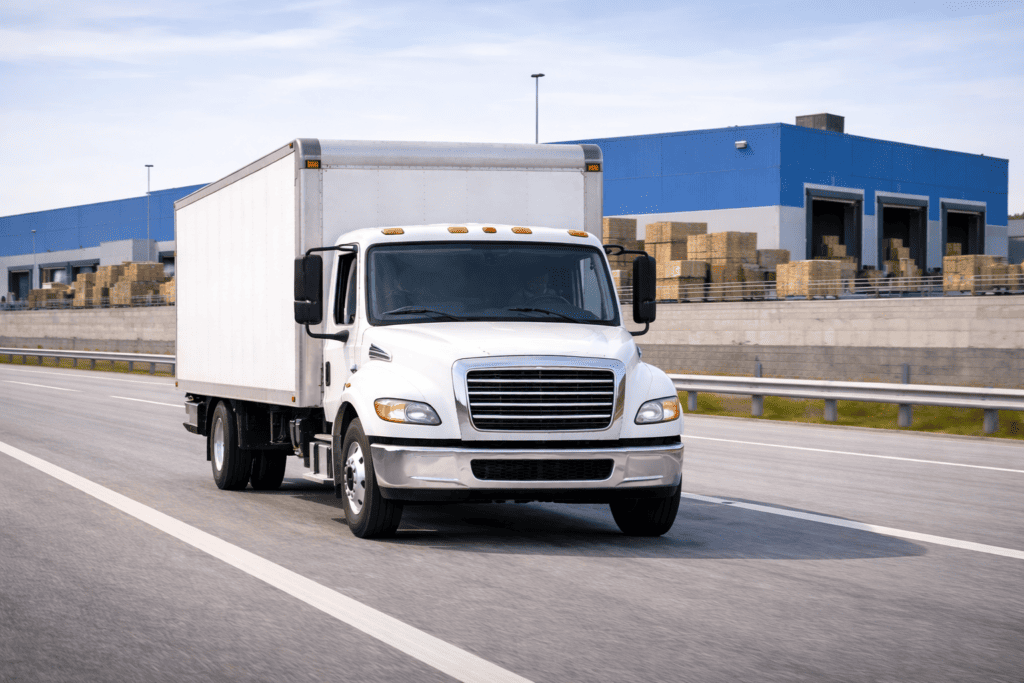
Start here, because the answer decides everything after it. Expedited freight is whatever outgrew a cargo van and does not justify a tractor-trailer, delivered to a window somebody has already paid a premium for. A straight truck sits in that gap, and your truck’s specification decides which half of it you get.
| Factor | Cargo van | Box truck (under 26,001 lb) | Tractor-trailer |
|---|---|---|---|
| CDL required | No | No, below 26,001 lb GVWR | Yes |
| Typical usable payload | ~3,000 to 4,000 lb | ~8,000 to 12,000 lb | 42,000 to 45,000 lb |
| Liftgate common | Rare | Yes | Dock-dependent |
| Access to tight or urban docks | Best | Good | Poor |
| Fits a partial expedited load | Often too small | Usually right-sized | Usually oversized |
Four things about your truck decide how often the phone rings.
- Box length and door height. Sixteen to twenty-six feet covers most of the work. What gets quoted more than length is whether a standard skid fits through your door without being broken down, because the shipper is usually not set up to rebuild the freight for you.
- GVWR and the payload you actually have left. Rated payload is not usable payload once the liftgate, the fuel and the sleeper are on the truck. Know the number on a scale, not from the brochure, because a load that puts you over is a load you have to refuse at the dock.
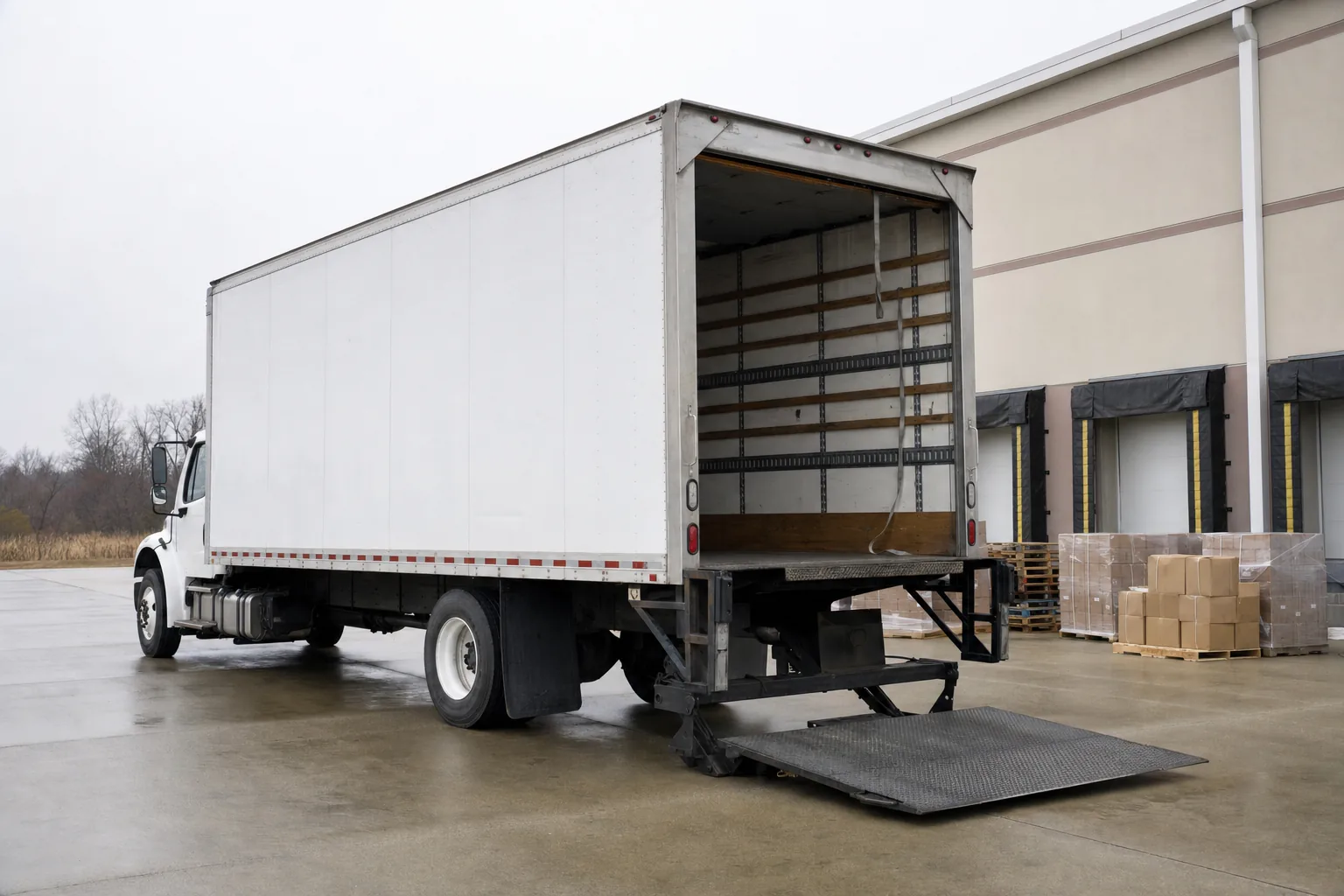
- Liftgate and pallet jack. This is the underrated row in the table. A large share of expedited deliveries go to places that are not freight facilities: a job site, a clinic, a retail back door, a plant receiving area with no dock free at 11pm. A truck that can put a 900-pound skid on the ground without a forklift takes work a trailer physically cannot, and that is a rate advantage rather than a convenience.
- Sleeper or no sleeper. Expedited runs long and direct. A truck the driver can legally rest in near the consignee delivers on time more often than one that has to find a motel 40 miles back.
If your truck checks those four, the equipment side of the question is closed. What is left is paperwork and where the freight comes from, in that order, because the second one is gated by the first.
What a Carrier Checks Before It Puts You on Expedited Freight
Every carrier and every broker runs some version of the same file review before your truck is allowed near a customer’s line-down freight. Knowing the list in advance is the difference between onboarding in two days and onboarding in three weeks.
- Operating authority, and whose it is. Either you hold your own MC and run under it, or you lease onto a carrier and run under theirs. Both are normal. What is not normal is running interstate for-hire freight under neither, which is an out-of-service condition rather than a paperwork nuisance. See the authority section below.
- USDOT number and current MCS-150. Registration that lapsed or was never updated is the most common reason a clean truck fails onboarding.
- Public liability insurance at the federal minimum. For for-hire interstate transportation of nonhazardous property in a vehicle rated 10,001 pounds or more, 49 CFR 387.9 sets the minimum level of financial responsibility at $750,000. Many customers contractually require $1,000,000, which is why most working policies are written there.
- Cargo coverage. The figure asked for is set by the customer and the carrier, not by a single federal number for general freight, and it moves with what you haul. Ask what limit is required before you quote, not after you have accepted.
- Driver qualification file and medical certification. Required by 49 CFR 391.11 at 10,001 pounds, with no CDL involved. A current medical examiner’s certificate is checked on day one.
- Drug and alcohol programme. If you hold your own authority and drive under it, you are the employer as well as the driver, and the programme obligations sit with you.
- Hours of service records, and whether an ELD is required. Read the short-haul section below before you assume you are exempt. Expedited work is the category least likely to qualify.
- Safety record and roadside history. Inspections and violations are public, and they are read before your first load, not after your first problem.
That list is also why the same truck gets different rates from different places. The operator with a clean file gets offered the freight with a penalty attached to it, and that freight pays the premium everybody talks about.
If you would rather have the compliance side reviewed once and then get offered loads instead of chasing them, that is what our box truck owner-operator programme is: we tell you which of the items above we need, we check them once, and the freight comes to you afterwards. Our page on what expedited trucking companies look for walks through the same review from the carrier’s side of the desk.
What Laws and Regulations Apply to an Expedited Box Truck?
This is the section people get wrong, and the errors are expensive. Three federal facts, each cited to the regulation and each checked against the current eCFR rather than quoted from an older article.
Is a Box Truck a Commercial Motor Vehicle Without a CDL?
Yes, and this is the trap. Under 49 CFR 390.5, a commercial motor vehicle is any self-propelled or towed motor vehicle used on a highway in interstate commerce to transport passengers or property when the vehicle “has a gross vehicle weight rating or gross combination weight rating, or gross vehicle weight or gross combination weight, of 4,536 kg (10,001 pounds) or more, whichever is greater.”
Separately, 49 CFR 383.5 sets the commercial driver’s licence threshold much higher: a “Heavy Straight Vehicle (Group B)” is one “having a gross vehicle weight rating or gross vehicle weight of 11,794 or more kilograms (26,001 pounds or more), whichever is greater.”
Read the two together. A 26,000-pound GVWR box truck needs no CDL and is fully subject to the Federal Motor Carrier Safety Regulations. Driver qualification under 49 CFR 391.11, medical certification, inspection and maintenance records, drug and alcohol programme obligations and hours of service all attach at 10,001 pounds, not at 26,001. Operators who read “no CDL” as “not regulated” find out at a roadside inspection. The licence question in its own right is covered on our page for non-CDL owner-operators in expedited work.
Which Hours-of-Service Exception Applies to a Non-CDL Box Truck?
There are two short-haul provisions, and the one written for non-CDL trucks is not the one most articles quote.
The familiar one, 49 CFR 395.1(e)(1), exempts a driver from the record-of-duty-status requirements of §§ 395.8 and 395.11 only if the driver operates within a 150 air-mile radius (172.6 statute miles) of the normal work reporting location, “returns to the work reporting location and is released from work within 14 consecutive hours”, has at least 10 consecutive hours off duty separating each 14 hours on duty, and the carrier “maintains and retains for a period of 6 months accurate and true time records” covering report time, daily on-duty hours, release time and the preceding 7 days.
The second one, 49 CFR 395.1(e)(2), is specifically for “operators of property-carrying commercial motor vehicles not requiring a commercial driver’s license”. It exempts the driver from §§ 395.3(a)(2), 395.8 and 395.11, and it makes the driver ineligible to use § 395.1(e)(1). Its own conditions are a 150 air-mile radius, a return to the normal work reporting location at the end of each duty tour, and a driving limit of no more than the 14th hour after coming on duty on 5 days of any 7 consecutive days and no more than the 16th hour on 2 days of any 7. The same 6-month time records apply.
Expedited work is the category least likely to satisfy either test. The product is a long direct run on short notice, which is precisely what breaks a 150 air-mile radius and a same-day return. Plan on full duty-status records as the normal case and treat the short-haul provisions as the exceptions they are named after.
Is a USDOT Number the Same Thing as Operating Authority?
No. 49 CFR 392.9a states the requirement directly: a motor vehicle providing transportation requiring operating authority must not be operated “without the required operating authority” or “beyond the scope of the operating authority granted”. The same section provides that a carrier operating without it “shall be ordered out of service”.
Registration and authority are two separate obligations with two separate failure modes. Running interstate for-hire freight without the correct authority is not a paperwork nuisance, it is an out-of-service condition at the roadside and a declined claim at the insurer.
A note on sources. Each section above was read from the eCFR Title 49 issue dated 9 September 2026, retrieved 14 September 2026, rather than quoted from memory or from another article. One section frequently cited in older guides on this topic, 49 CFR 390.201, carries an Effective Date Note reading: “At 88 FR 80184, Nov. 17, 2023, § 390.201 was suspended indefinitely, effective Nov. 17, 2023.” We leave it out for that reason. A guide that still leans on it has not been rechecked recently.
What Does an Expedited Box Truck Run Look Like End to End?
The offer arrives by phone or load board at 2:10pm: pick up in Toledo at 4:30pm, deliver outside Greenville, South Carolina by 10:00am tomorrow. About 620 miles.
- 2:10 to 2:20pm, you price it rather than accept it. Deadhead to pickup, loaded miles, the hour you will lose at the shipper, tolls, and whether this strands you somewhere with no outbound freight. A high rate into a dead market is not a high rate.
- 4:30 to 5:40pm, loading. Expedited shippers are frequently not set up for freight. Count the pieces yourself, photograph the load and the seal, and get the paperwork right at the dock. Discrepancies found at delivery become your problem by default.
- 5:40pm to 3:00am, the run, inside hours of service, with the 10-hour break planned before you roll rather than negotiated at 1am.
- 3:00 to 8:00am, reset near the consignee, not 200 miles short of it. Arriving early and sleeping close is the single habit that most reliably protects an on-time delivery.
- 9:15am, deliver, 45 minutes early, with a signature, a timestamp and photographs.
Then the part nobody mentions. You are now in Greenville. Your next load matters more than this one did. Operators who treat the return leg as an afterthought earn a fraction of what the same truck earns for someone who books it before delivering.
How Does Communication Work on an Expedited Load?
Communication is part of the product on an expedited load, not an administrative wrapper around it. The customer bought a promise about a future moment, and the only thing that makes that promise feel kept before it is kept is information arriving on time.
The rhythm that experienced operators keep looks like this.
- On acceptance, confirm the two things that most often turn out to be wrong: the exact pickup address including the gate or door, and who is authorised to release the freight.
- On arrival at the shipper, a timestamp. On departure, a second one with the piece count and a photograph of the loaded freight and any seal.
- Overnight, a position check at an agreed interval. Many expedited customers are tracking against a production clock and will ask if you do not.
- On any deviation, immediately, with an estimate. A closed ramp, a breakdown, a shipper who loaded late. Thirty minutes of warning is a problem the customer can plan around; thirty minutes of silence is a failure they discover.
- On delivery, a signature, a printed name, a timestamp and photographs of the freight in place.
The rule underneath all five is simple: report before you are asked. A dispatcher who has to chase you will price that into the next load offer, and the operators who get called first are almost never the cheapest ones. Our piece on how dispatch increases owner-operator revenue works through the same point from the office side of the phone.
Where Do Expedited Box Truck Loads Come From?
Three sources, and most working trucks use more than one.
- Brokers and load boards. The widest reach and the fastest to start with. The trade-off is that you are quoting against whoever else answered the phone, and the relationship resets on every load until you have a record with that broker. Our comparison of the best load boards for box trucks covers which ones actually carry straight-truck freight.
- Carriers and expedite fleets you contract to. Steadier, because someone else is holding the customer relationship and the freight is already committed. This is where consistent straight-truck expedite volume tends to sit, and it is the route most owners take once the board rate stops covering an empty Monday.
- Direct shippers. The best economics and the slowest to build. A plant will not hand its line-down freight to a truck it has not watched perform, which is usually why direct work arrives after a year of doing the first two well.
We are the second one, and we will say so plainly rather than pretend to be neutral about it. Our box truck owner-operator programme lists the equipment classes we contract and the lanes we run, so you can check whether your truck fits before you spend an afternoon on onboarding.
Geography decides how often the phone rings whichever route you take. Expedited demand concentrates around manufacturing corridors, ports and freight hubs, and a truck parked outside them is a truck with a long weekend. Our breakdown of the best states for box truck loads maps where that density is.
How Does the Money Work in Expedited Freight?
Standard freight is priced by the mile. Expedited freight is priced by the promise, and that changes which numbers matter.
- Loaded-mile rate is the headline and the least useful figure. What pays you is revenue per available hour, counting deadhead, dwell and the reset you are required to take.
- Deadhead is inventory, not overhead. Repositioning into a market that generates expedited freight is the job, not a cost of doing it.
- Dwell time is the quiet killer. Two hours at a shipper on a 400-mile run can cost more than the fuel. Detention terms belong in the conversation before you accept, not after you are sitting.
- Service level is a financial asset. In a market where the customer is buying a time commitment, an on-time record is what gets you called first, and being called first is worth more than a few cents negotiated on any single load.
We do not publish a rate table on this page, and that is deliberate. Expedited pricing moves with fuel, with the lane’s outbound density and with how urgent the individual customer is, so a number printed here would be wrong for most readers on most days. What current box truck freight is paying by lane and by equipment is tracked in our box truck load rates breakdown, and if you want a figure for your truck in your area, ask us for one.
Straight Truck Expediting Versus Box Truck Expediting
The two words get used interchangeably and they mostly are. A box truck is a straight truck: cab and body on one frame, no trailer to drop. In practice the industry uses “straight truck” for the larger end of the range, typically 24 to 26 feet with a sleeper and a liftgate, and “box truck” for everything from 16 feet up.
The distinction matters for one reason: it changes which loads you are offered. A 26-foot sleeper straight truck gets the long direct runs, the multi-skid line-down freight and the team-eligible work. A 16-foot box truck gets the shorter regional work, the tight urban deliveries and the single-skid recoveries. Both are real expedited work and both have owners doing well. What does not work is bidding for one with the other.
If your truck is at the larger end, our straight truck owner-operator programme is the page written for that equipment class, with the lanes and the load profile it actually gets. If you are still weighing which configuration to run, the straight truck versus box truck earnings comparison puts the two side by side on what they take home rather than on what they cost.
Your First 30 Days on Expedited Freight
Actions, in order, for a truck that is already yours.
- Week one, get the file right. Pull your truck across a scale and write down the real usable payload. Confirm the medical certificate date, the MCS-150 date and the insurance limits against the list above. Fix whatever is expired before you talk to anyone, because a file that fails once gets remembered.
- Week one, decide how you will log. Read the two short-haul provisions again and assume neither covers you. Set up duty-status records that work on a 600-mile overnight, not on a local delivery day.
- Week two, pick your market, not your load. Find the nearest manufacturing corridor or freight hub and plan to sit inside it rather than at home. This one decision moves income more than any negotiation you will have.
- Week two, onboard with more than one source. A board and a carrier, not one or the other. The board teaches you what the lane pays; the carrier keeps the truck loaded while you learn.
- Weeks three and four, price every offer before answering. Deadhead in, dwell, reset, outbound density at the destination. Write the number down before the call so you are not doing arithmetic while a dispatcher waits.
- Throughout, report before you are asked. The habit that builds a record faster than anything else, and the record is what turns a first load into a standing one.
Expedited work fits an operator who can leave within the hour, keeps records accurately and can absorb an irregular schedule. It does not fit one who needs predictable home time on fixed days or a set weekly route. Neither answer is a judgement, and the wrong fit shows up as burnout rather than as a bad month. Our look at why many box trucks fail in the first six months is largely a catalogue of people who took the wrong operating model rather than the wrong loads.
Box Truck Expediting: Common Questions
Can I run expedited freight in a box truck without a CDL?
Yes, below 26,001 pounds GVWR, under 49 CFR 383.5. But at 10,001 pounds and above in interstate commerce the truck is a commercial motor vehicle under 49 CFR 390.5, so driver qualification, medical certification, hours of service and maintenance records still apply. No CDL does not mean not regulated.
What does a carrier check before it contracts my box truck?
Operating authority or a lease onto one, a current USDOT registration, public liability insurance at or above the 49 CFR 387.9 minimum of $750,000 for nonhazardous property in a vehicle rated 10,001 pounds or more, cargo coverage at the limit the customer requires, a driver qualification file with a valid medical certificate, drug and alcohol programme compliance, hours-of-service records, and your roadside inspection history.
What regulations apply to expedited trucking in a non-CDL straight truck?
The Federal Motor Carrier Safety Regulations apply in full above 10,001 pounds in interstate commerce: driver qualification (49 CFR 391.11), hours of service (part 395), maintenance records, financial responsibility (49 CFR 387.9) and operating authority (49 CFR 392.9a). Verified against the eCFR Title 49 issue of 9 September 2026.
How much communication does an expedited load require?
Expect a timestamp at arrival and departure from the shipper, a position check overnight at an agreed interval, an immediate call on any deviation with an estimate attached, and a signed, photographed delivery. Report before you are asked rather than after.
How do I get my first expedited box truck load?
Three routes exist: load boards and brokers, contracting to a carrier that already holds the customer relationships, and direct shippers. Most owners start with the first two together, because a board teaches you what a lane pays while a carrier keeps the truck loaded. Direct work usually follows a year of performing on the other two.

Table of Content
- Can Your Truck Run Expedited Freight?
- What a Carrier Checks Before It Puts You on Expedited Freight
- What Laws and Regulations Apply to an Expedited Box Truck?
- What Does an Expedited Box Truck Run Look Like End to End?
- How Does Communication Work on an Expedited Load?
- Where Do Expedited Box Truck Loads Come From?
- How Does the Money Work in Expedited Freight?
- Straight Truck Expediting Versus Box Truck Expediting
- Your First 30 Days on Expedited Freight
- Box Truck Expediting: Common Questions