

The terms get used interchangeably, but in expedited freight they aren’t the same vehicle, and the difference shows up in the paycheck. The straight truck pays more per mile and has higher operating costs. The box truck has more access and a lower ceiling. Which one nets more depends on what the operator is actually running, what authority class they’re under, and whether they have a CDL.
Most online comparisons skip the definitions and jump to the rate. That’s the wrong order. The CDL question, the GVWR threshold, and the freight access all set the rate ceiling before the rate even gets quoted.
Definitions that actually matter
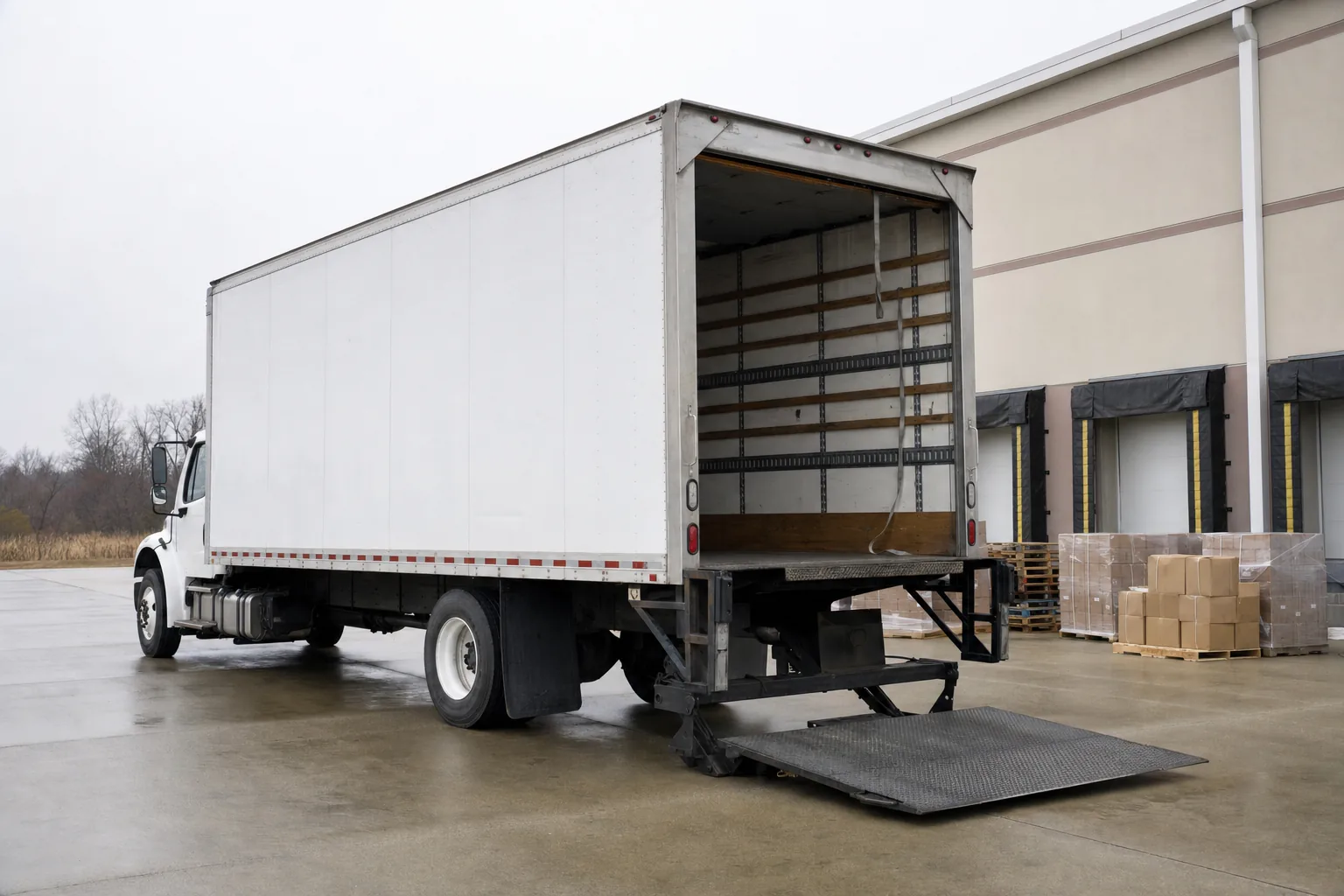
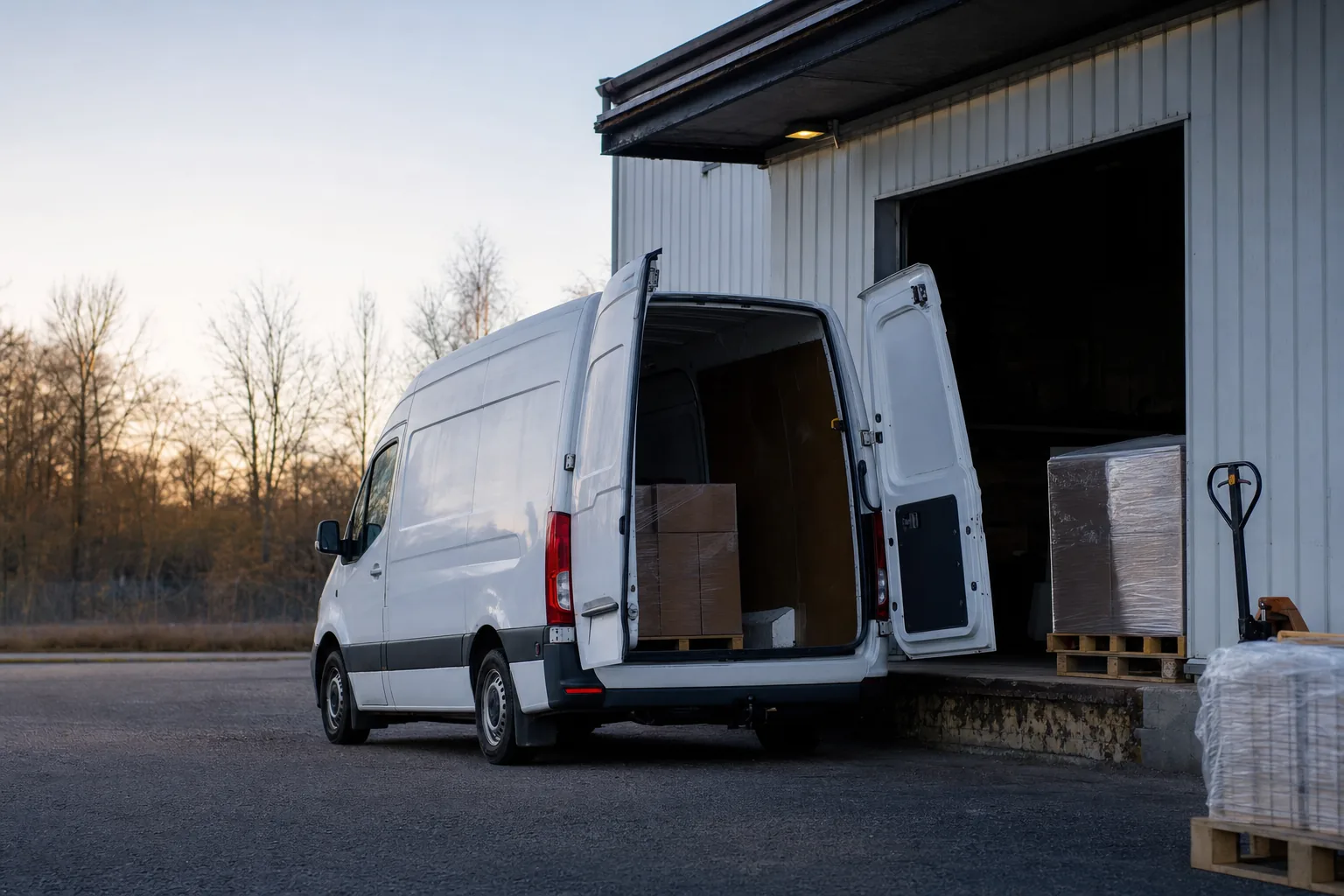
“Box truck” in expedited freight typically means a Class 5 or Class 6 single-unit truck with an integrated cab and a 22 to 26-foot box, GVWR between 16,000 and 26,000 pounds. Most box trucks under 26,001 pounds GVWR can be operated without a Class A or Class B CDL under the FMCSA Commercial Driver’s License rules, which is the entire reason this segment exists as a non-CDL revenue path.
“Straight truck” in this segment usually means a Class 7 single-unit truck with a 24 to 28-foot box, GVWR between 26,001 and 33,000 pounds. The GVWR pushes it over the federal CDL threshold, which means the operator needs a Class B CDL minimum. Some operators run Class A to keep optionality, but the truck itself doesn’t require it.
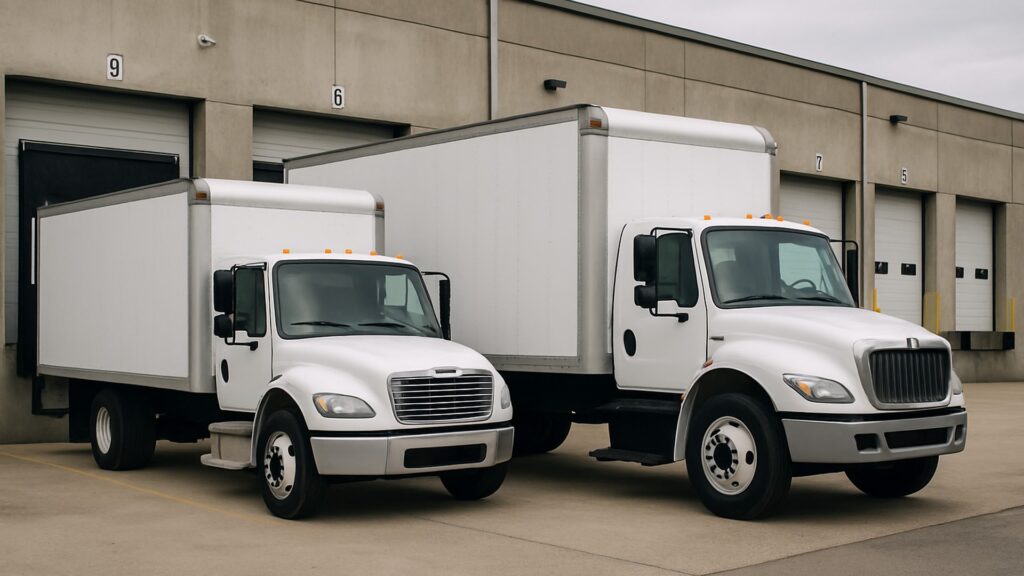
The terms get blurred because the trucks look similar from the outside. The differences are GVWR, payload, CDL requirement, and freight access. None of those are visible on the truck. All of them affect the rate.
Freight access
Box truck under 26,001 GVWR can run almost any expedited freight that fits in the box. The CDL-not-required status broadens the operator pool, which means more competition and tighter rates. Lanes are typically regional, with some long-haul work for operators willing to run team or extended-day loads.
Straight truck (Class 7) gets access to heavier freight, dedicated dock-to-dock industrial routes, time-critical automotive lanes, and higher-paying expedited work that requires the larger payload. The operator pool is smaller because of the CDL requirement, which keeps competition lower and rates more stable.
The freight that pays best in this segment is typically time-critical, manufacturing-related, or specialty (medical, aerospace, defense). That freight rarely sits on public load boards. It moves through dedicated carriers and broker relationships, both of which favor straight truck operators with track records.
Earnings comparison
Average loaded rates in 2026 by truck type:
| Truck class | Average loaded rate | Typical weekly miles | Weekly gross |
|---|---|---|---|
| Class 5-6 box truck (non-CDL) | $1.45-$1.70/mi | 2,200-2,600 | $3,200-$4,400 |
| Class 7 straight truck (CDL-B) | $1.85-$2.20/mi | 2,400-2,800 | $4,400-$6,200 |
The straight truck’s rate advantage is around $0.40 to $0.50 per loaded mile. Across 2,500 loaded miles a week, that’s $1,000 to $1,250 in additional gross revenue. Whether that gross translates to net depends on the cost side.
Cost comparison
The straight truck costs more to run in every line item, and most newer operators underestimate the gap.
Fuel: box trucks run 8 to 10 mpg loaded. Straight trucks run 6.5 to 8 mpg. Fuel cost per loaded mile is around $0.42 to $0.50 for the box and $0.50 to $0.62 for the straight.
Insurance: commercial auto for a non-CDL box truck runs $9,000 to $13,000 a year. For a Class 7 straight truck with a CDL operator, premiums run $13,000 to $18,000. Higher GVWR and higher cargo limits push the premium up.
Maintenance: heavier truck means heavier brake jobs, heavier tires, larger oil capacity, and more downtime per service event. Box truck annual maintenance reserve runs $6,000 to $9,000. Straight truck reserve runs $9,000 to $14,000.
Vehicle cost: a used 2022 Class 6 box truck (Hino, Isuzu, International) in the $42,000 to $58,000 range. A used 2022 Class 7 straight truck (International, Freightliner, Kenworth) runs $65,000 to $95,000 depending on cab style and equipment. Depreciation per loaded mile is roughly $0.18 to $0.22 for the box and $0.25 to $0.32 for the straight.
Net comparison
Operator running 2,500 loaded miles a week, single driver, regional expedited freight.
| Line item | Class 6 box (non-CDL) | Class 7 straight (CDL-B) |
|---|---|---|
| Average rate per mile | $1.55 | $2.00 |
| Weekly gross | $3,875 | $5,000 |
| Fuel | −$1,150 | −$1,400 |
| Insurance (prorated) | −$220 | −$300 |
| Maintenance reserve | −$160 | −$240 |
| Tolls + parking | −$120 | −$140 |
| Depreciation | −$500 | −$700 |
| Weekly net before tax | $1,725 | $2,220 |
| Annual net (50 weeks) | $86,250 | $111,000 |
The straight truck nets around $25,000 more a year at the same loaded mileage. The gap is real, but smaller than the rate-per-mile difference suggests, because the cost side absorbs roughly half of the rate advantage.
The decision factors
The choice between box and straight truck usually comes down to four variables.
CDL status. Operators without a CDL are limited to box truck. Getting a CDL-B takes 4 to 8 weeks and $3,000 to $6,000 depending on state and school. That cost recovers in about 6 to 8 weeks of straight truck revenue, but only if the operator already has the freight access lined up.
Capital available. Box truck startup is $50,000 to $70,000 all-in (truck, setup, insurance, reserve). Straight truck startup is $80,000 to $120,000. The reserve has to be larger because the cost stack is larger and the slow weeks hurt more.
Freight market. Operators in regional metros with strong expedited industrial freight (Detroit, Memphis, Atlanta, Dallas, Indianapolis) get more straight truck access than operators in markets where the freight runs lighter. The same truck nets differently in different markets.
Time horizon. An operator looking to run for 2 to 3 years and exit usually nets more on the box truck path because the lower capital lock-up reduces exit risk. An operator building a 5 to 10 year career usually nets more on the straight truck path because the rate advantage compounds over time.
| Quick reality check |
| If you don’t have a CDL, this isn’t a comparison. It’s a box truck or a $5,000 detour to get the CDL first. |
| If your reserve is under $40,000, the straight truck’s slow weeks will end the operation before the rate advantage compounds. |
| If your market doesn’t have dedicated industrial expedited freight, the straight truck’s rate ceiling is theoretical. |
Where the freight is
Box truck operators looking for the highest weekly net should focus on regional medical, automotive aftermarket, and dedicated retail expedite lanes. Straight truck operators get access to higher-paying industrial, dock-critical, and time-sensitive manufacturing freight that doesn’t live on public load boards.
Both vehicles benefit from a structured operating discipline. The expense breakdown covers where the actual operating cost goes for either class. The best-states-for-owner-operators piece covers which markets keep these trucks loaded and which ones leave them parked.
The honest version
The straight truck pays more and costs more. The box truck pays less and costs less. The net gap is real, around $20,000 to $30,000 a year at the same loaded mileage, but it depends on the operator having the CDL, the capital, the market, and the freight access to run the straight truck without losing weeks to slow freight.
Most operators starting fresh in 2026 should run the box truck for 12 to 18 months, build the broker relationships, prove the lane discipline, then consider the straight truck step up with the CDL already in hand and the capital reserve already proven. Skipping that progression is how operators end up with a Class 7 truck and a Class 5 reserve, which is the version of this decision that ends in the truck going back to the auction.
For operators comparing the two in practice, looking at current straight truck and box truck jobs is often the fastest way to see how the market treats each class.