
Find Freight You Can Count On
Find consistent freight, fair pay, and routes that fit your lifestyle. Whether you run one truck or manage a fleet, we'll connect you with reliable loads and trusted partners who help you stay on the road and keep earning.
- 100%of earnings go to you
- 93%loads come directly from customers
- $15M+paid to drivers
- 38k+monthly loads count


Owner-Operator
Insights & Load Strategy
All the insights you need to build a successful trucking business from managing loads and payments to growing your fleet and network. Stay up to date on industry trends and get practical tips for every stage of your journey on the road.

Amazon Relay for Box Trucks: Requirements and Alternatives
Short answer Yes, Amazon Relay accepts box trucks, but only two kinds: a 16 foot or a 26 foot box truck with a functional tuck-under liftgate. The carrier also needs its own DOT number with interstate authority active for at least 180 days, a valid MC number, safety scores under Amazon’s limits, and insurance well […]

Load Boards for Cargo Vans and Sprinter Vans: A 2026 Guide
Short answer There is no load board built only for cargo vans and sprinter vans, but a few treat them as a real equipment class rather than an afterthought. DAT sells a $59 per month Standard plan it recommends for box truck and sprinter van operators. Sylectus is a carrier-only network that describes its freight […]

Expedited Trucking Companies: Who They Are, and What They Look For in an Owner-Operator
Short answer An expedited trucking company is a for-hire carrier or logistics provider that moves time-critical freight on direct, non-stop runs. Before it signs an owner-operator, it checks operating authority, insurance limits, Drug and Alcohol Clearinghouse status and roadside safety history. Of 1,380,898 active for-hire carriers in the FMCSA census, 765,007 run a single power […]

Reading the Freight Market Before It Reads You: Early Signs a Lane Is Drying Up
A fading lane warns you for weeks before it hits your bank account. Here is how owner-operators read the early signs and reposition while moving is still a choice.
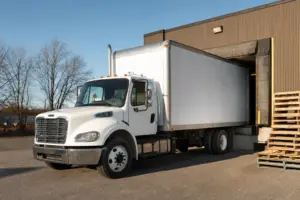
Box Truck Loads After Peak: What the Q4 2026 Freight Market Is Actually Doing
Short answer Freight rates going into Q4 2026 are higher than a year ago but falling since May. Producer prices for long-distance truckload were 8.1% above July 2025 yet 4.1% below May 2026 (BLS, July 2026). Diesel is up 50% year over year. Higher rates, thinner margins. By Bruce Richmond. Market data as of 3 […]
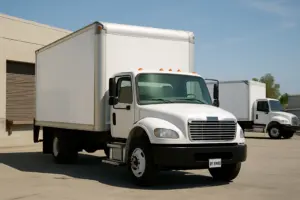
When to Add a Second Box Truck (and How to Know You’re Not Ready)
Adding a second box truck is a freight question, not a money question. Here’s the readiness test that tells you if your freight can keep two trucks loaded.

What Staying Broker-Only Actually Costs You Over a Year
Broker-only feels free until you add up a full year: empty days, cheap loads, deadhead, and the base you never built. Here is what queue dependence really costs.

The First Broker Who Calls You Back
Most owner-operators always call and never get called back. Here is how one steady broker relationship gives your week a floor and ends the cold Monday restart.
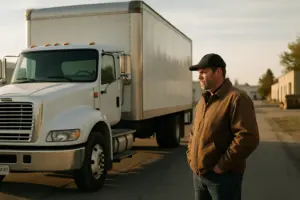
Why Your Best Week and Your Worst Week Pay the Same: What Cargo Van Owner-Operators Really Make
Your best week and your worst week often pay the same once fixed costs clear. Here is why owner-operator income swings, and how to smooth the curve with a floor you can plan around.

What Expedited Trucking Is and How to Get Into It With a Van
Short answer Expedited trucking is freight that moves because something is late or a production line is down. The load is dedicated to one vehicle, dispatched with a few hours of notice, and driven point to point until it is delivered. Urgency prices it rather than miles or weight, which is why a cargo van […]

How to Start a Cargo Van Business in 2026: The Expedited Route
Short answer Start a cargo van business by picking the freight, not the paperwork. There are three different cargo van businesses (last-mile delivery, local courier work and expedited freight), with different rate-setters, ceilings and risks. Expedited freight has the highest ceiling for a single van, because urgency prices the load rather than distance. The order […]

Cargo Van Owner-Operator Requirements: What You Need Before Your First Load
Short answer You need a full-size cargo van with a usable deck, a legal way to haul interstate (your own FMCSA authority or a lease onto a carrier), insurance that meets the federal floor and whoever tenders the load, and documents that survive a compliance check. No CDL. The federal liability minimum under 10,001 lbs […]

Cargo Van or Box Truck: Which One Keeps You Loaded in 2026
One vehicle, one budget. The decision is not which pays more per load. It is which one keeps you loaded, what each costs to get into, and whether your freight access can feed the bigger machine.
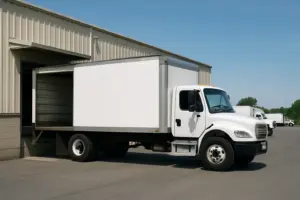
The Box Truck Lane That Looks Good on Paper and Loses Money in Practice
A box truck lane can clear a fine rate per mile and still lose money once reposition, wait time, and lumpers are counted. Learn to price the day, not the mile.
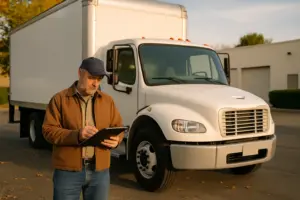
Get Your Freight Lined Up Before the Slow Season Hits
The slow season hits hardest when the open board is your only freight source. Here is why box truck operators should line up consistent freight before the dip, not during it.

Why Some Owner-Operators Never Run Out of Freight (And It Isn’t Luck)
The operator who’s always loaded isn’t lucky or grinding harder. He built freight access through more than one channel before the slow week ever hit. Here’s the pattern.
Before we start, how can we address you?