

Short answer
Yes, Amazon Relay accepts box trucks, but only two kinds: a 16 foot or a 26 foot box truck with a functional tuck-under liftgate. The carrier also needs its own DOT number with interstate authority active for at least 180 days, a valid MC number, safety scores under Amazon’s limits, and insurance well above the federal minimum, including $1,000,000 auto liability and $100,000 cargo. If you are not there yet, the realistic path is to haul under a carrier that already has authority and freight, and build your own record while you earn.
Amazon Relay is Amazon’s own freight platform. Approved carriers book Amazon loads directly through the Relay web portal and app, without a broker in the middle. For a box truck owner-operator, it looks like a way to get steady freight from one very large shipper. Whether it works for you depends on your truck, your authority and your insurance, and Amazon spells out all three on its own pages. Everything below comes from the Amazon Relay site and its FAQ, read on 28 September 2026, and from federal regulations where noted.
Can a Box Truck Haul Amazon Relay Loads?
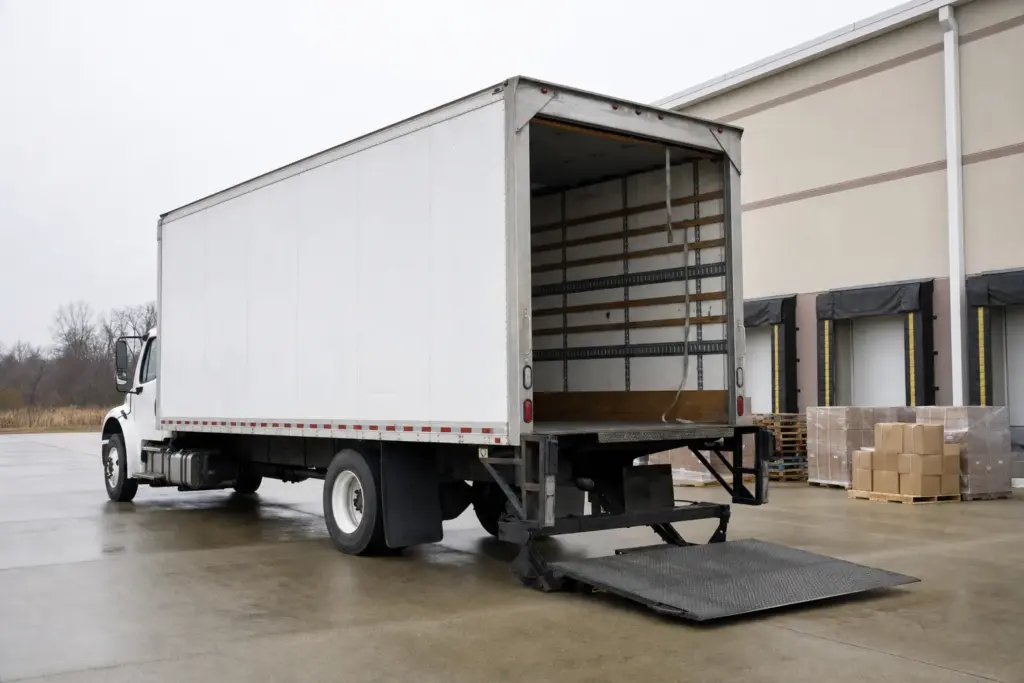
Some can. Relay publishes a short list of the equipment it accepts, and box trucks appear on it in exactly two sizes:
- 26′ box truck with a functional tuck-under lift-gate
- 16′ box truck with a functional tuck-under lift-gate
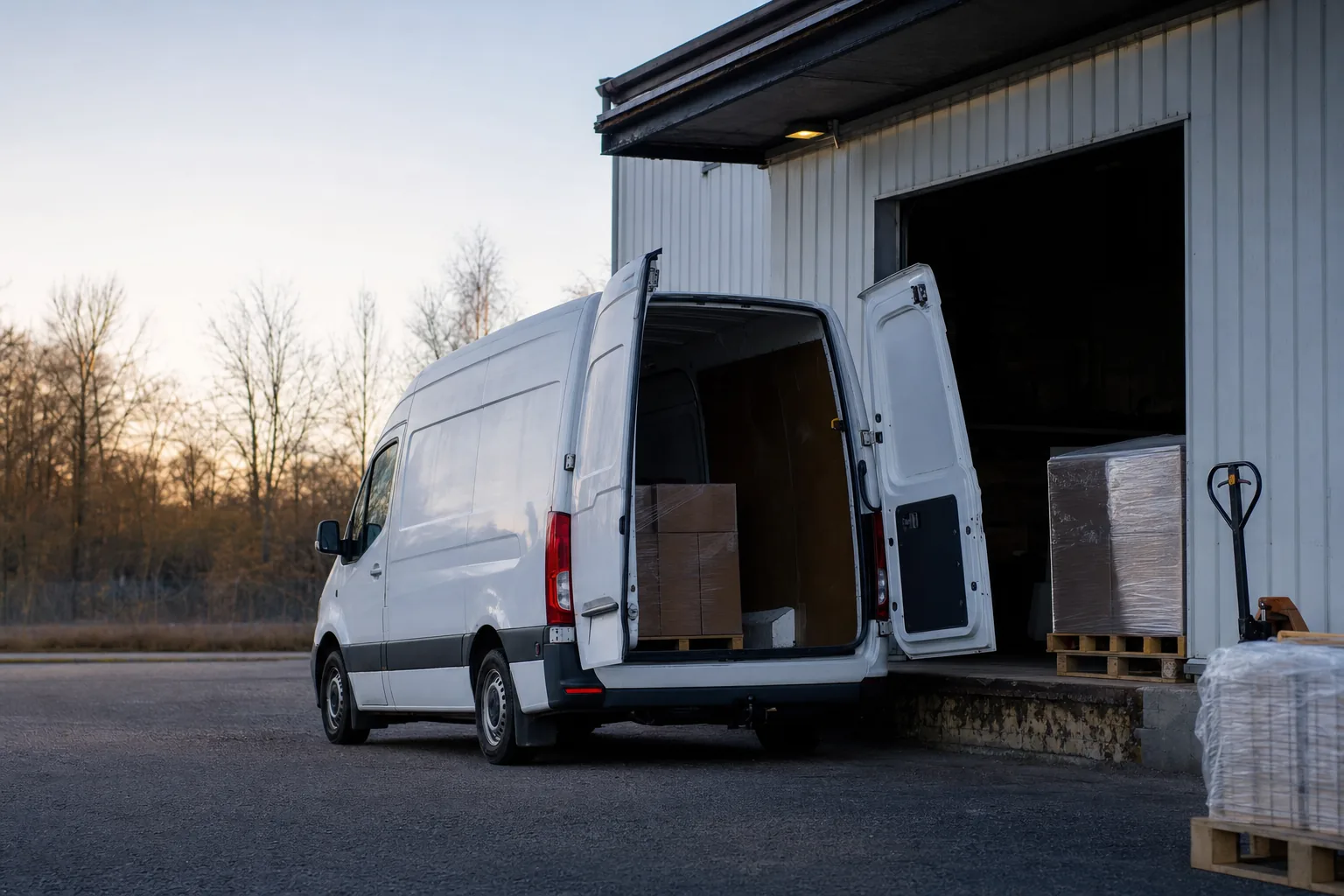
The rest of the list is tractors (day cab and sleeper cab) and trailers: 48 foot and 53 foot dry vans, 53 foot reefers, and high cube containers. Cargo vans and sprinter vans are not on it. A box truck without a liftgate, or with a liftgate that is not the tuck-under type, does not match the list either, so check the gate before anything else.
Tuck-under liftgate
A hydraulic lift that folds and stows underneath the truck body when not in use, leaving the rear door clear. It is the gate type Relay names for both accepted box truck sizes. The word “functional” in Amazon’s wording means it has to work, not just be fitted.
It also helps to know how the platform describes its freight. The Relay homepage says that on its load board “most loads are lightweight drop-and-hook.” Drop-and-hook means leaving a loaded trailer and picking up another, which is how tractors work. A box truck cannot drop its box, so the loads that fit a box truck are a different, smaller slice of what Relay posts. Amazon does not publish how many box truck loads it offers, so treat the size of that slice as something you find out after approval, not something you can count on before.
What Authority Does Amazon Relay Require?
Relay’s carrier requirements are written for a company that holds its own operating authority. Amazon lists them like this:
- A DOT number with interstate authority that has been active for a minimum of 180 days, and a valid MC number. Amazon says you can apply before the 180 days are up and it will keep you updated while you wait, but onboarding typically needs the DOT number to be at least 180 days old.
- A “Carrier” entity type that is authorized for property and for hire.
- An FMCSA safety rating of “Satisfactory,” “None,” or “Not Rated.”
- BASIC scores below these limits: Unsafe Driving under 60%, HOS Compliance under 60%, Vehicle Maintenance under 75%, Controlled Substances/Alcohol under 75%, and Driver Fitness under 75%.
- Violation rates at or below 35% for drivers and at or below 50% for vehicles.
Every item on that list belongs to the carrier: its DOT number, its MC number, its safety rating, its scores. A box truck owner-operator who is leased onto another carrier runs under that carrier’s authority, so the numbers Amazon checks are the carrier’s, not yours. In practice that means Relay is an application for the company whose name is on the authority. If you are building toward your own, our guide to leasing onto a carrier versus running your own authority compares the two paths in the first year.
The 180 day rule is the one that catches new operators. A brand new authority, however clean, cannot finish onboarding until it is six months old, and the safety scores Amazon checks only build up as you run and get inspected under that authority.


How Much Insurance Does Amazon Relay Require?
This is where many small carriers stop. Relay lists five policies, and every one of them has to be in place:
| Policy | Amazon Relay minimum |
|---|---|
| Commercial general liability | $1,000,000 per occurrence and $2,000,000 in the aggregate |
| Auto liability | $1,000,000 per occurrence, including $50,000 trailer replacement coverage |
| Cargo | At least $100,000 |
| Workers’ compensation | In all jurisdictions where your company operates |
| Employer liability | $100,000 per occurrence |
Compare that with what federal law requires just to hold for-hire authority. Under 49 CFR 387.303, the minimum liability for a carrier of nonhazardous property is $750,000 for vehicles of 10,001 pounds GVWR or more, and $300,000 if every vehicle in the fleet is under 10,001 pounds. Relay’s $1,000,000 auto liability is above both. A policy written to the federal floor will not qualify, and the higher limit plus the extra policies will cost more than a policy written to the federal minimum.
Two items deserve a direct conversation with your insurance agent before you apply. The auto liability line includes trailer replacement coverage, which Amazon lists as part of the requirement even though a box truck does not pull a trailer. And workers’ compensation is required in every jurisdiction where you operate. How that applies to a one-truck company whose only driver is the owner depends on the state, so ask your agent how to meet it for your setup rather than assuming either way.
Amazon also says that when an application is delayed, the delay is usually the validation of insurance information, and it urges carriers to have everything ready before applying.
Do You Need a CDL to Run a Box Truck on Relay?
Relay’s requirement pages do not set a CDL rule of their own. The federal rule decides it, and it turns on your truck’s weight rating, not its length. Under 49 CFR 383.5, a single vehicle with a gross vehicle weight rating of 26,001 pounds or more is a heavy straight vehicle (Group B), and driving one requires a CDL. Below that line, a straight truck hauling nonhazardous freight does not need one on weight grounds.
“26 foot box truck” describes the body, not the weight rating, and trucks with that body are built on chassis with different ratings. Read the GVWR on the manufacturer’s plate or door sticker. If it says 26,001 pounds or more, you need a CDL. The same plate tells you which side of the 10,001 pound line you are on, which also decides whether the truck counts as a commercial motor vehicle under 49 CFR 390.5.
Whatever the license, every driver goes through Relay’s own checks. A carrier invites each driver into the Relay app, where the driver submits a selfie and a photo of their driver’s license and then provides details for a background check. Amazon says all drivers must meet its standardized background check requirements before hauling Relay loads.
How Do Onboarding and Pay Work on Amazon Relay?
According to Amazon, a completed application is typically approved or rejected within 1 to 3 weeks. If you hear nothing within 2 weeks, Amazon’s advice is to check that your FMCSA contact information matches your Relay application exactly, “down to the dash or comma,” because the onboarding team uses the details on file with FMCSA. Amazon also verifies the identity of the business and of every beneficial owner, meaning anyone who owns more than 25% of the company.
Once approved, the steps are to complete the Relay 101 course in Relay’s Learning Center, which Amazon says takes about 10 minutes, add your drivers and equipment, and start booking. If your application is rejected, Amazon says that in many cases you may be able to reapply, though serious compliance issues can rule that out.
Relay gives approved carriers several ways to find work:
- Load board: one-off spot loads from Amazon facilities.
- Post A Truck: you post your minimum rate and where and when you want to go, and matching loads can book automatically.
- Auctions: bidding on lanes, single or in bulk. Amazon says most auctions are one-way.
- Round-trip contracts: single or multi-week schedules booked in advance.
Pay runs on a weekly cycle from Sunday to Saturday. Work completed before 23:59 on Saturday is paid the following week on Friday, and payment disputes can be filed in the Relay portal within 30 days of reviewing your weekly invoice. Amazon also runs a safety rewards program that pays $0.02 to $0.05 extra per collision-free mile to approved carriers with an eligible dash cam from Motive, Netradyne or Verizon Connect. If Amazon supplies the dash cam, you must haul at least 12,000 miles a year with Relay.
One more point from Amazon’s FAQ: Amazon does not tender loads through third-party load boards. An Amazon load you see elsewhere is still tendered only to approved Relay carriers through the Relay portal or app. Anyone offering you “Amazon loads” without Relay approval is not offering you an Amazon tender.
What If Your Box Truck Doesn’t Qualify for Relay Yet?
A new box truck owner-operator can easily miss at least one line on that list: the 180 day authority, the insurance stack, or the liftgate. That does not mean waiting six months with the truck parked. It means choosing which gap to close first while the truck earns.
Run under a carrier while your own record builds
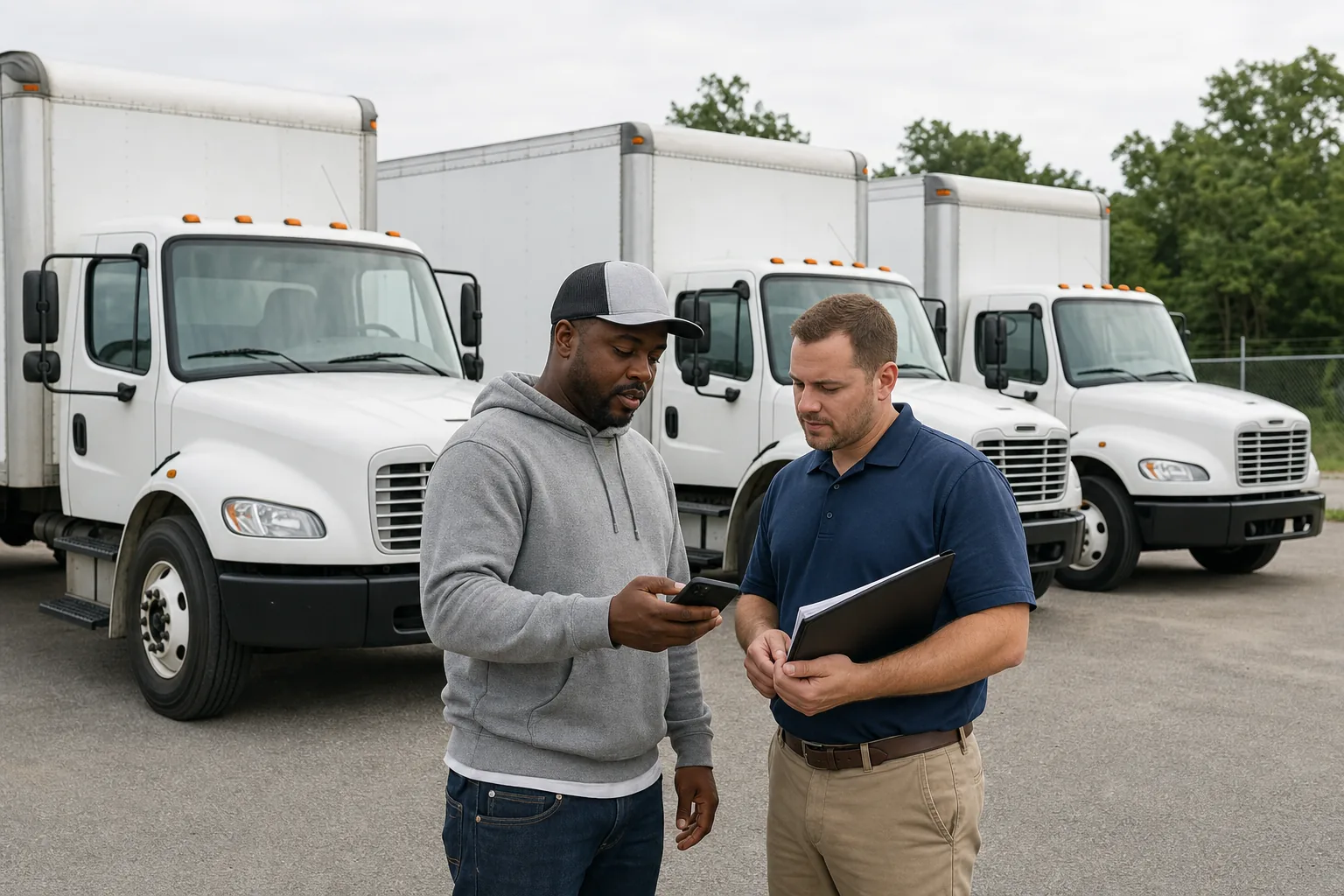
Working under an established carrier puts your truck on the road now, under that carrier’s authority and insurance. Expedited Jobs, for example, works with box truck owner-operators in both 16 foot and 26 foot trucks and states on its box truck page that an MC number is not required to start. Our article on getting box truck loads without an MC number explains how that arrangement works and what to check in the agreement.
If you want your own authority, start the clock early
If Relay is the goal, the 180 days only start once your own authority is active, and the safety scores only build under it. Price the insurance Amazon asks for before you file, not after, so you know whether Relay freight will cover that premium. Then compare it honestly with what you earn in the meantime.
Do not build a business on one shipper
Even after approval, Relay is one customer. Amazon does not publish how many loads it posts for box trucks, and the loads it describes most prominently fit tractors and trailers. A box truck operation that also has other freight sources is in a stronger position than one that depends on a single platform.
Frequently Asked Questions
Does Amazon Relay accept box trucks?
Yes, two sizes. Amazon lists a 26 foot box truck and a 16 foot box truck, each with a functional tuck-under liftgate. Other box trucks, cargo vans and sprinter vans are not on Relay’s equipment list.
Can I join Amazon Relay without an MC number?
No. Amazon requires a DOT number with interstate authority active for at least 180 days and a valid MC number, plus a carrier entity type authorized for property and for hire. You can start the application early, but onboarding typically waits for the 180 days.
What insurance does Amazon Relay require?
Commercial general liability of $1,000,000 per occurrence and $2,000,000 aggregate, auto liability of $1,000,000 per occurrence including $50,000 trailer replacement, cargo of at least $100,000, workers’ compensation in every jurisdiction you operate in, and employer liability of $100,000 per occurrence.
Do I need a CDL for a 26 foot box truck on Relay?
It depends on the weight rating, not the length. Under 49 CFR 383.5, a single vehicle rated at 26,001 pounds GVWR or more needs a CDL. Check the GVWR on your truck’s plate or door sticker.
How does Amazon Relay pay carriers?
Weekly. The cycle runs Sunday to Saturday, and work completed before 23:59 Saturday is paid the following Friday. Payment disputes can be filed in the Relay portal within 30 days of reviewing the weekly invoice.
Not Relay-Ready Yet?
Expedited Jobs works with 16 foot and 26 foot box truck owner-operators, with your own dispatcher and weekly pay, and no MC number required to start.
See Box Truck Jobs →Written by Bruce Richmond. Amazon Relay requirements as published on relay.amazon.com on 28.09.2026; regulatory text as of the 24.09.2026 issue of 49 CFR. Amazon can change its requirements at any time, so confirm them on the Relay site before you apply.

Table of Content
- Can a Box Truck Haul Amazon Relay Loads?
- What Authority Does Amazon Relay Require?
- Looking for an Alternative to Amazon Relay?
- How Much Insurance Does Amazon Relay Require?
- Do You Need a CDL to Run a Box Truck on Relay?
- How Do Onboarding and Pay Work on Amazon Relay?
- What If Your Box Truck Doesn’t Qualify for Relay Yet?
- Frequently Asked Questions