

Short answer
Box truck contracts come from four places: dedicated routes from shippers and large freight buyers, final mile delivery work, spot and direct customer freight, and leasing onto a carrier that already has freight. The first three are signed in your own company’s name, so they ask for your own DOT and MC numbers, insurance and, often, a track record. Leasing on is the one you can start without an MC number, and the federal lease rules decide what that contract has to put in writing.
Most box truck owner-operators who search for “contracts” already have the truck. What they want is freight they can count on next week, instead of refreshing a load board every morning. The word covers very different deals, though, and each one asks different things of you before anyone signs. This guide takes the four sources one at a time: who gives out the work, what they check, and what you should expect the paper to say.
What Counts as a Box Truck Contract?
Dedicated contract vs. spot load
A dedicated contract fixes a schedule, a route and a price for a period of time, before the freight moves. A spot load is priced and booked one shipment at a time. Many “contracts” offered to box truck owners are really a steady supply of spot and direct loads, which can keep you busy but does not promise the same lane next month.
Here is how the four sources compare at a glance:
| Source | Whose name is on the contract | What it asks of you first |
|---|---|---|
| Dedicated routes | Your company | Own DOT and MC, insurance at the buyer’s limits, registration with the buyer, usually a record |
| Final mile delivery | Your company, often as a subcontractor | The right equipment (often a liftgate), insurance, and a crew if the work includes handling |
| Spot and direct freight | Your company | Own MC for broker setups, plus the time to find and price every load |
| Leasing onto a carrier | You and the carrier, under the carrier’s authority | A qualifying truck and driver, and a written lease that meets 49 CFR 376.12 |
Source 1: Dedicated Routes From Shippers and Freight Buyers
This is what most people picture: the same run, on a schedule, at an agreed rate. The buyers are shippers, 3PLs and large freight platforms. They sign with a motor carrier, which means a company with its own operating authority. Two public examples show what that looks like in practice.
Amazon Relay. Relay offers “round-trip contracts” that let carriers “secure full schedules and steady revenue in advance with single or multi-week contracts.” Box trucks are on its equipment list in two sizes, 16 foot and 26 foot, each with a functional tuck-under liftgate. To get in, the carrier needs a DOT number with interstate authority active for at least 180 days and a valid MC number, plus insurance well above the federal minimum. Our Amazon Relay guide for box trucks goes through every requirement.
The U.S. Postal Service. USPS moves mail between its facilities on highway contract routes (HCRs), which the Postal Service describes as “the largest single group of transportation services used by USPS,” ranging “from long-haul tractor trailers to box delivery routes.” The money is real. A 2025 USPS Office of Inspector General audit found that from April 2022 through March 2024 the Postal Service spent about $2.3 billion on HCR dedicated service contracts, which run on a set schedule at a fixed trip rate, and about $918 million on “as needed” freight auction contracts. Surface transportation suppliers register in the USPS Logistics Gateway, and USPS posts its opportunities on SAM.gov. USPS also states plainly that registering does not guarantee you will be invited to bid or awarded a contract.
What it asks of you: your own authority, insurance at whatever limits the buyer sets, registration in the buyer’s system, and patience. A route is awarded to a company, not to a truck, and the buyers above check the company’s record before they commit a schedule to it.
Source 2: Final Mile and Liftgate Delivery Work
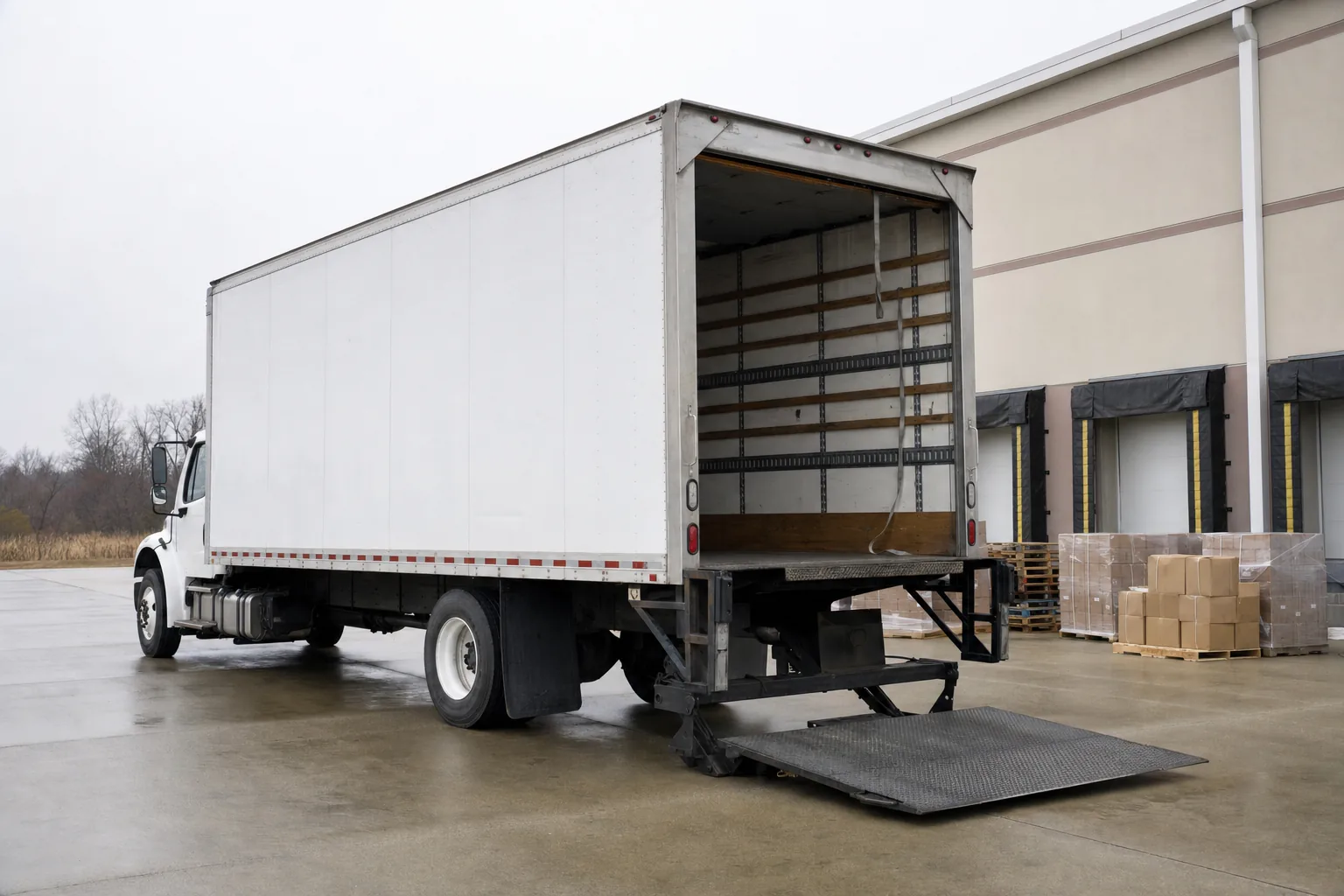
Final mile means the last leg to a store, a business or a home: appliances, furniture, building supplies, retail restocks. A box truck fits this work well because it can back into a tight dock or a driveway, and a liftgate lets you unload where there is no dock at all.
The contracts here are usually route agreements with a delivery company or a retailer’s logistics partner, and terms vary a lot from one to the next. Before you sign one, ask four things: whether pay is per stop, per route or per day; who handles inside delivery and assembly; what happens on a day the route is cut; and whose insurance covers damage to the goods and to the customer’s property. Also check whether the work keeps you local, because some owners want exactly that and others find the daily miles too short to cover the truck.
What it asks of you: the right equipment (a liftgate is often the deciding item), insurance, and sometimes a second person on the truck. If the work is for hire across state lines, you also need authority of your own or a carrier to run under.


Source 3: Spot Market and Direct Customer Freight
This is freight priced one load at a time, either through brokers and load boards or straight from shippers you build a relationship with. It is not a contract in the dedicated sense, but it is where most box truck owners with their own authority earn their first months, and a shipper who keeps calling you back is how many dedicated arrangements start.
The catch is the setup. Brokers sign carrier agreements with companies that hold authority, so without an MC number of your own you cannot book from them directly. We explain why in box truck loads without an MC. With authority, the work becomes finding loads, pricing them and filling the return trip, and a good load board subscription becomes part of your costs.
What it asks of you: your own MC, insurance that brokers accept, and the hours to find, price and book every load yourself, or the money to pay someone to do it.
Source 4: Leasing Onto a Carrier
Here you keep your truck, and a carrier with authority and freight puts you to work under its operating authority. The contract is an equipment lease between you and the carrier. It is the one source on this list that does not start with your own MC number, which is why many new owners begin here and build a record while they earn.
Federal law sets the minimum this contract has to say. Under 49 CFR 376.12, the written lease must spell out, among other things:
| What the lease must state | The rule in 49 CFR 376.12 |
|---|---|
| Your pay | Clearly stated on the lease or an attached addendum, delivered to you before your first trip. It can be a percentage of revenue, a rate per mile or another agreed method. |
| When you get paid | Within 15 days after you submit the delivery documents for a trip. |
| Chargebacks | Every item the carrier may deduct from your pay, and how each amount is calculated. You get copies of the documents behind each charge. |
| Purchases from the carrier | That you are not required to buy or rent products, equipment or services from the carrier as a condition of the lease. |
| Insurance | The carrier’s duty to carry public liability coverage, who provides any other coverage, and the amount of any insurance charged back to you. |
| Escrow | If one is required: the amount, what it can be used for, an accounting of it, interest at least quarterly, and its return no later than 45 days after the lease ends. |
If a lease you are offered is missing any of these, ask why before you sign. For a clause by clause read of a lease, see what to know before you sign an owner-operator contract.
Be clear about what kind of freight a carrier offers, too. At Expedited Jobs, freight comes from the spot market and direct customer loads, and we do not offer dedicated lanes at this time. That gives you variety in routes and steady work to build on, but it is not a fixed schedule on one lane. If a fixed lane is what you need, ask any carrier that question directly and get the answer in writing.
What it asks of you: a truck and a driver that meet the carrier’s checks, and a careful read of the lease. Many owners run this way while they decide whether their own authority is worth the cost.
Which Source Fits Your Truck Right Now?
- No MC number yet: leasing onto a carrier is the source open to you today. Spot, direct and dedicated work all need authority in your company’s name.
- New MC, under six months old: spot and direct freight, and final mile work that does not ask for a long record. Programs like Relay want 180 days of active authority before onboarding.
- Established authority with a clean record: dedicated routes become realistic. Register with the buyers you want, watch SAM.gov if postal routes interest you, and expect a bid process rather than a phone call.
- A truck with a liftgate: final mile and Relay both open up. Without one, check what the buyer requires before you apply.
Whatever the source, a contract is only as steady as the buyer behind it. Read who can cancel, on what notice, and what you are paid if a run is cut, before you plan your month around it.
Ready to Put Your Box Truck to Work?
Expedited Jobs connects 16 foot and 26 foot box truck owner-operators with companies running spot and direct customer freight, with your own dispatcher and weekly pay. No MC number is required to start.
Box Truck Jobs →Frequently Asked Questions
Can I get box truck contracts without an MC number?
Not in your own name. Dedicated routes, broker freight and most direct shipper contracts are signed with a company that holds operating authority. Without an MC number, the usual way in is to lease your truck onto a carrier and haul under its authority.
Does USPS give contracts to box truck owners?
USPS contracts surface transportation through highway contract routes, which range from long-haul tractor trailers to box delivery routes. Suppliers register in the USPS Logistics Gateway, and opportunities are posted on SAM.gov. Registration does not guarantee an invitation to bid or a contract.
How fast does a carrier have to pay me under a lease?
Under 49 CFR 376.12, the lease must provide for payment within 15 days after you submit the delivery documents for a trip. The carrier cannot set a time limit for you to submit those documents.
Does Expedited Jobs offer dedicated box truck lanes?
Not at this time. Freight is based on the spot market and direct customer loads, with your own dispatcher, non-forced dispatch and weekly pay. No MC number is required to start.
Written by Bruce Richmond. Amazon Relay terms as published on relay.amazon.com, USPS supplier registration as published on about.usps.com, and regulatory text from the eCFR, all read on 7 October 2026. Buyers can change their requirements at any time, so confirm them with the buyer before you apply.

Table of Content
- What Counts as a Box Truck Contract?
- Source 1: Dedicated Routes From Shippers and Freight Buyers
- Source 2: Final Mile and Liftgate Delivery Work
- Want Direct Customer Freight Without Your Own MC?
- Source 3: Spot Market and Direct Customer Freight
- Source 4: Leasing Onto a Carrier
- Which Source Fits Your Truck Right Now?
- Frequently Asked Questions