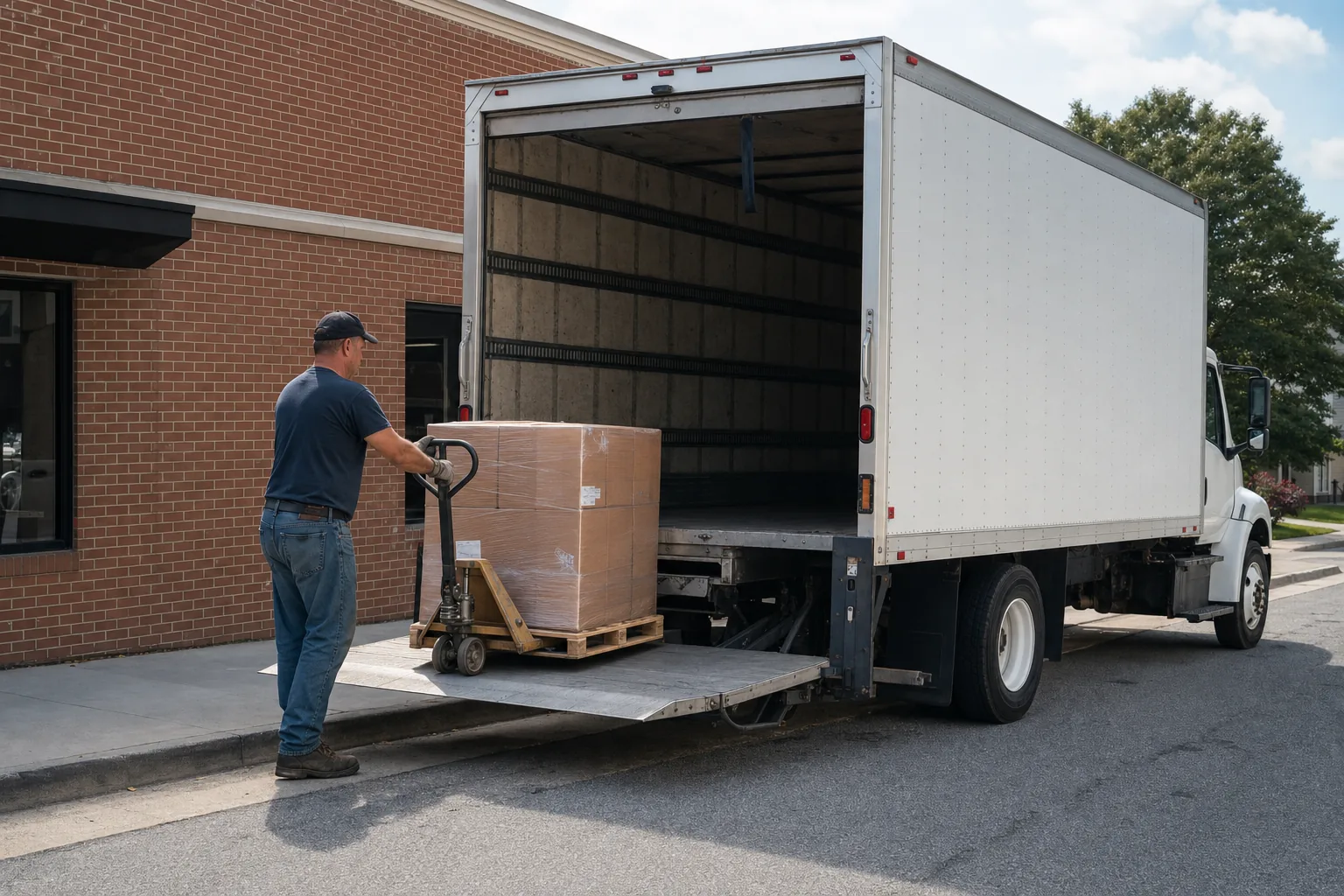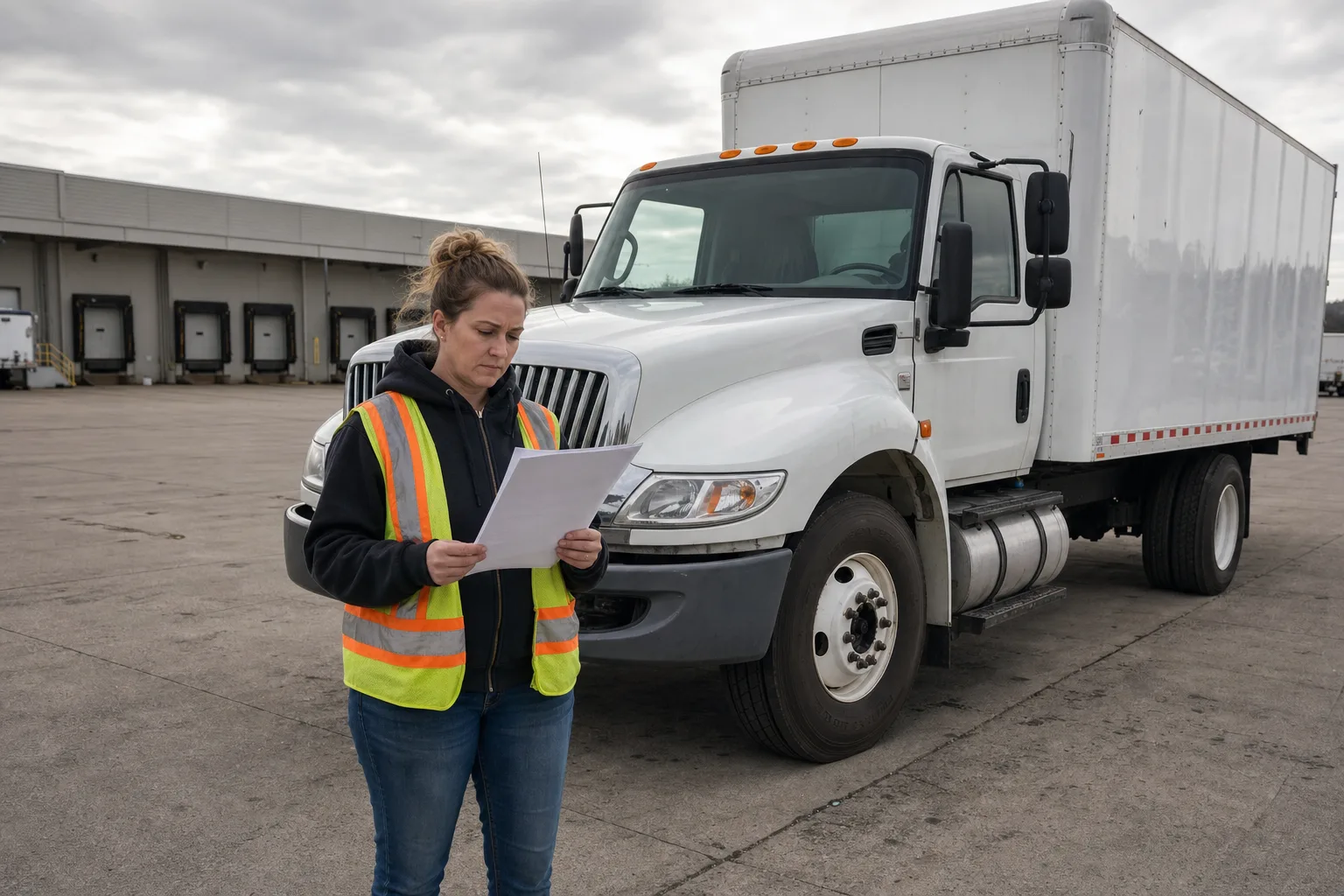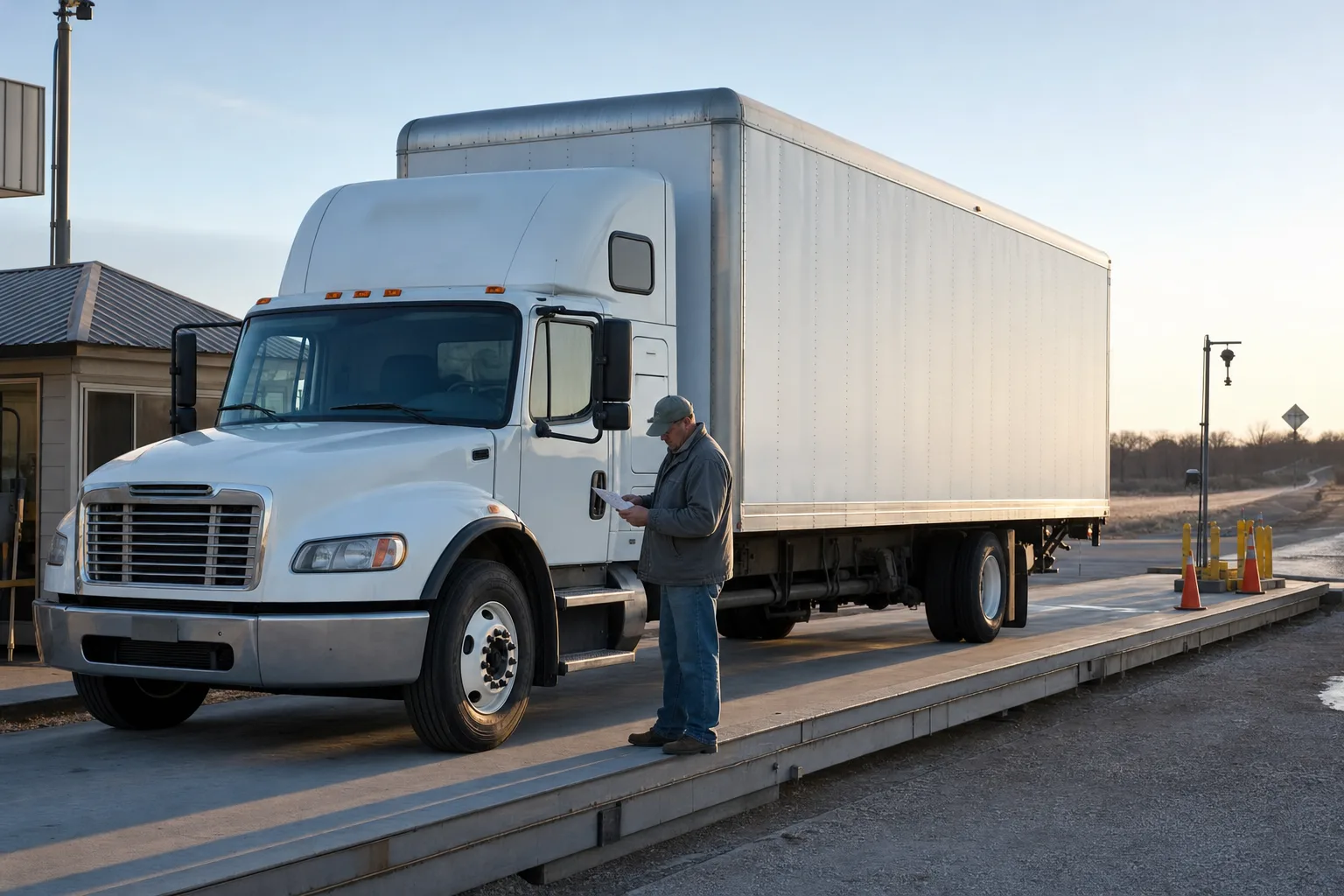



Short answer
Most of the paperwork a carrier asks for when you lease on a box truck is the carrier’s own legal duty, not a preference. If your truck is rated 10,001 pounds or more and runs interstate, federal rules treat you as a driver the carrier employs, so it has to keep a driver qualification file on you: an application covering the last 3 years, your driving record from every state that licensed you, a road test or an accepted equivalent, and a current medical card. Add your truck registration, a signed written lease with receipts for the truck, and a W-9 for your pay. Drug and alcohol testing under Part 382 comes with a CDL, so it does not apply to a non-CDL box truck by law, though a carrier can still require it.
You found a carrier, the rate works, and then the onboarding email arrives with a list of documents. It can feel like a test. It is mostly not. Nearly every item on that list maps to a rule the carrier has to follow before it can put you on a load, and knowing which rule is behind each one tells you what to prepare and how long it takes.
This guide is for owner-operators who already have a box truck and plan to run it under someone else’s authority. It walks through the documents in the order a carrier usually needs them and shows where each requirement comes from.
Why the Carrier Needs Your Paperwork at All
Under 49 CFR 390.5, a truck used in interstate commerce is a commercial motor vehicle when its gross vehicle weight rating, or its actual weight, is 10,001 pounds or more, whichever is greater. That is a much lower line than the CDL line. Check the rating on the sticker in your driver door jamb: if it is 10,001 pounds or higher, the federal driver rules apply to you even without a CDL. Our box truck expediting guide covers what else attaches at that weight.
The same section defines “employee” to include “an independent contractor while in the course of operating a commercial motor vehicle”. So when you lease on, the carrier is treated as employing you as a driver, even though you own the truck and send it an invoice, not a timesheet. That single definition is the reason the next section exists.
The Driver Qualification File
Part 391 says “Each motor carrier shall maintain a driver qualification file for each driver it employs.” The file has a fixed list of contents. The application, the road test and the medical card have to be in place before you drive; the driving record can follow within 30 days. Here is what goes in it and what you will be asked for.
The application
The carrier supplies the form, and you complete and sign it. Section 391.21 sets what it must contain, and most of it is history you should write down before you start:
- every address you lived at during the 3 years before the application;
- each unexpired license or permit, with the state, number and expiration date;
- the type of equipment you have driven, such as trucks or tractors;
- all motor vehicle accidents in the last 3 years, with the date, what happened and any injuries or fatalities;
- traffic convictions in the last 3 years, other than parking;
- any license denial, revocation or suspension, or a statement that there was none;
- your employers in the last 3 years, with dates and the reason you left.
If you are applying to drive a vehicle that needs a CDL, the employer history reaches back further: the 7 years before those 3, for any job where you drove a commercial motor vehicle. For a non-CDL box truck, the 3-year list is what the rule requires.
Your driving record from every state
Within 30 days of the date you start, the carrier has to ask each state that licensed you in the past 3 years for your motor vehicle record covering that period, and place a copy in your file. If you moved states recently, expect that request to go to more than one state. The carrier must also investigate your safety record with any DOT-regulated employers from the past 3 years, so former employers may get a request about you.
After that, the check repeats. At least once every 12 months the carrier pulls a fresh record and reviews it to decide whether you still meet the minimum requirements for safe driving.
A road test or its equivalent
Section 391.31 says a person shall not drive a commercial motor vehicle until they have passed a road test and received a certificate. A carrier may accept a valid CDL in place of the road test under 391.33, so a CDL holder may not need one. Without a CDL, plan for a short road test in your truck, given by the carrier or someone it designates.
The medical examiner’s certificate
This one surprises non-CDL drivers the most. Under 391.41, a person subject to Part 391 must not operate a commercial motor vehicle unless they are medically certified, and when on duty they must carry the original, or a copy, of a current medical examiner’s certificate. The carrier keeps a copy in your file. If your card expires during the lease, you cannot drive until it is renewed, so check the date before you apply.


Truck and Lease Documents
The second half of the list is about the truck and the agreement you run it under.
- Registration. The carrier will want to see the truck is registered and that the registration matches the truck it is leasing.
- The written lease. Part 376 lets a carrier haul in equipment it does not own only under “a written lease granting the use of the equipment”. The lease has to be signed by the carrier and the owner and say when it begins and ends.
- Receipts for the truck. When the carrier takes possession, it has to give you a receipt that identifies the truck and states the date and time possession transferred. Keep it. It marks when the lease started.
- Marking. While the lease runs, the truck has to display the carrier’s legal name or trade name and its USDOT number, under 390.21. Ask whether the carrier supplies removable signs or expects you to apply them.
Insurance is part of the lease too. The rules require the lease to state the carrier’s duty to carry public liability coverage and to name who provides any other coverage, such as bobtail. We cover that split in box truck insurance when you are leased on.
Tax and Pay Paperwork
Because you are paid as a contractor, the carrier will ask for a Form W-9. The IRS describes it as the form you use to provide your correct Taxpayer Identification Number to the person who is required to file an information return to report income paid to you. Use the name and Taxpayer Identification Number your business files taxes under.
You will also be asked where to send your settlements. Have your bank details ready and make sure the name on the account matches the name on the W-9.
Drug and Alcohol Testing: CDL or Not
Part 382, the federal drug and alcohol testing rule, applies to people who operate a commercial motor vehicle and are subject to the CDL requirements of Part 383. For a single truck, the CDL line is a gross vehicle weight rating, or actual weight, of 26,001 pounds or more. So if your box truck is rated under 26,001 pounds and you are not hauling placarded hazmat, Part 382 does not require pre-employment or random testing for you.
That is the legal floor, not a promise. A carrier can require a test as its own company policy. If your truck is rated at 26,001 pounds or more, you need a CDL and the full testing program applies.
The Documents at a Glance
| Document | Why the carrier asks | Rule |
|---|---|---|
| Signed application | Required in your qualification file | 391.21 |
| Driving record from each state, last 3 years | Pulled within 30 days of start, then every 12 months | 391.23, 391.25 |
| Road test certificate or CDL | No driving before the road test or an accepted equivalent | 391.31, 391.33 |
| Medical examiner’s certificate | Carried on duty, copy kept in the file | 391.41 |
| Truck registration | Confirms the truck being leased | Carrier onboarding |
| Written lease and receipts | No hauling in your truck without them | 376.11, 376.12 |
| Carrier name and USDOT number on the truck | Identifies whose authority the truck runs under | 390.21 |
| Form W-9 | Lets the carrier report what it pays you | IRS |
| Drug and alcohol test | Required by law only with a CDL; may be carrier policy | 382.103 |
How to Get Ready Before You Apply
- Write down 3 years of addresses, employers with dates and reasons for leaving, accidents and tickets.
- Check your medical card expiration date and renew it if it runs out in the next few months.
- Photograph the door jamb sticker with the weight rating, your registration and your license, front and back.
- Have a completed W-9 and your bank details ready.
- Read the lease for the start and end terms, the insurance section and any chargebacks before you sign it.
Applying through ExpeditedJobs starts with your truck registration and driver’s license, and once all documents are provided, onboarding typically takes about 24 hours. You do not need an MC number to start working. Any carrier that leases your truck still has to build its own qualification file under Part 391, so having the items above ready is what keeps that step short. See current box truck jobs for the truck sizes we work with, and our guide to box truck loads without your own MC for how running under a carrier works.
The full text of the driver qualification rules is in 49 CFR Part 391.
Paperwork Ready? Put Your Truck to Work
Apply for free with your box truck details. No MC number is required to apply, and we’ll share your information with carriers that may match your equipment and qualifications.
Find Box Truck Opportunities →Box Truck Lease-On Documents: Common Questions
Do I need a medical card for a non-CDL box truck?
Yes, if the truck is rated 10,001 pounds or more and runs interstate. That makes it a commercial motor vehicle under 49 CFR 390.5, and 391.41 requires a current medical examiner’s certificate to operate one, whether or not you hold a CDL.
Will the carrier pull my driving record if I don’t have a CDL?
Yes. Within 30 days of your start date, the carrier must request your motor vehicle record from each state that licensed you in the past 3 years, and it reviews a new record at least once every 12 months.
Do I have to take a drug test for a box truck under 26,001 pounds?
Not under federal law. Part 382 testing applies to drivers subject to CDL requirements, and a single truck needs a CDL at 26,001 pounds or more. A carrier can still require testing as its own policy.
How far back does the application go?
3 years for addresses, accidents, traffic convictions and employers. If the job needs a CDL, the employer list also covers the 7 years before that for jobs where you drove a commercial motor vehicle.
What does ExpeditedJobs ask for to get started?
Apply for free with your box truck details. No MC number is required to apply, and your information is shared with carriers that may match your equipment and qualifications. Once all documents are provided, onboarding typically takes about 24 hours.