

Short answer
The CDL line is set by the weight rating of what you drive, not by the kind of job. A cargo van, a Sprinter or a box truck rated 26,000 lb or less needs no CDL, and a pickup with a trailer stays out of CDL territory as long as the combination is rated 26,000 lb or less or the trailer is rated 10,000 lb or less. Pay is a different question: most carriers recruiting non-CDL owner-operators do not publish a number, and the ones that do publish a percentage or a per-mile figure you have to check against your own costs.
Written by Bruce Richmond for Expedited Jobs. The rules on this page were read from the Code of Federal Regulations (49 CFR Parts 382, 383, 390, 391 and 395) and the IFTA Articles of Agreement on 23 September 2026. Carrier pay was read from each company’s own website on 23 September 2026; job boards and salary aggregators were not used.
Which Jobs Don’t Need a CDL?
A commercial driver’s license is required by the vehicle, not by the freight or the job title. Under 49 CFR 383.5, you need a CDL if you drive, in commerce, any of the following:
- Group A, combination: a truck and trailer with a gross combination weight rating of 26,001 lb or more, when the towed unit is rated over 10,000 lb.
- Group B, heavy straight truck: a single vehicle rated 26,001 lb or more.
- Group C, small vehicle: anything smaller that is built to carry 16 or more people including the driver, or that carries hazardous materials in a quantity that requires placards.
Two details in that rule decide most borderline cases. First, the test is the rating or the actual weight, whichever is greater, so a box truck rated at 26,000 lb and loaded to 26,500 lb has crossed the line. Second, Group A needs both halves: a heavy combination and a trailer rated over 10,000 lb. Everything else, from a minivan to a 26-foot box truck, is non-CDL work.
| Vehicle | Typical rating | CDL? |
|---|---|---|
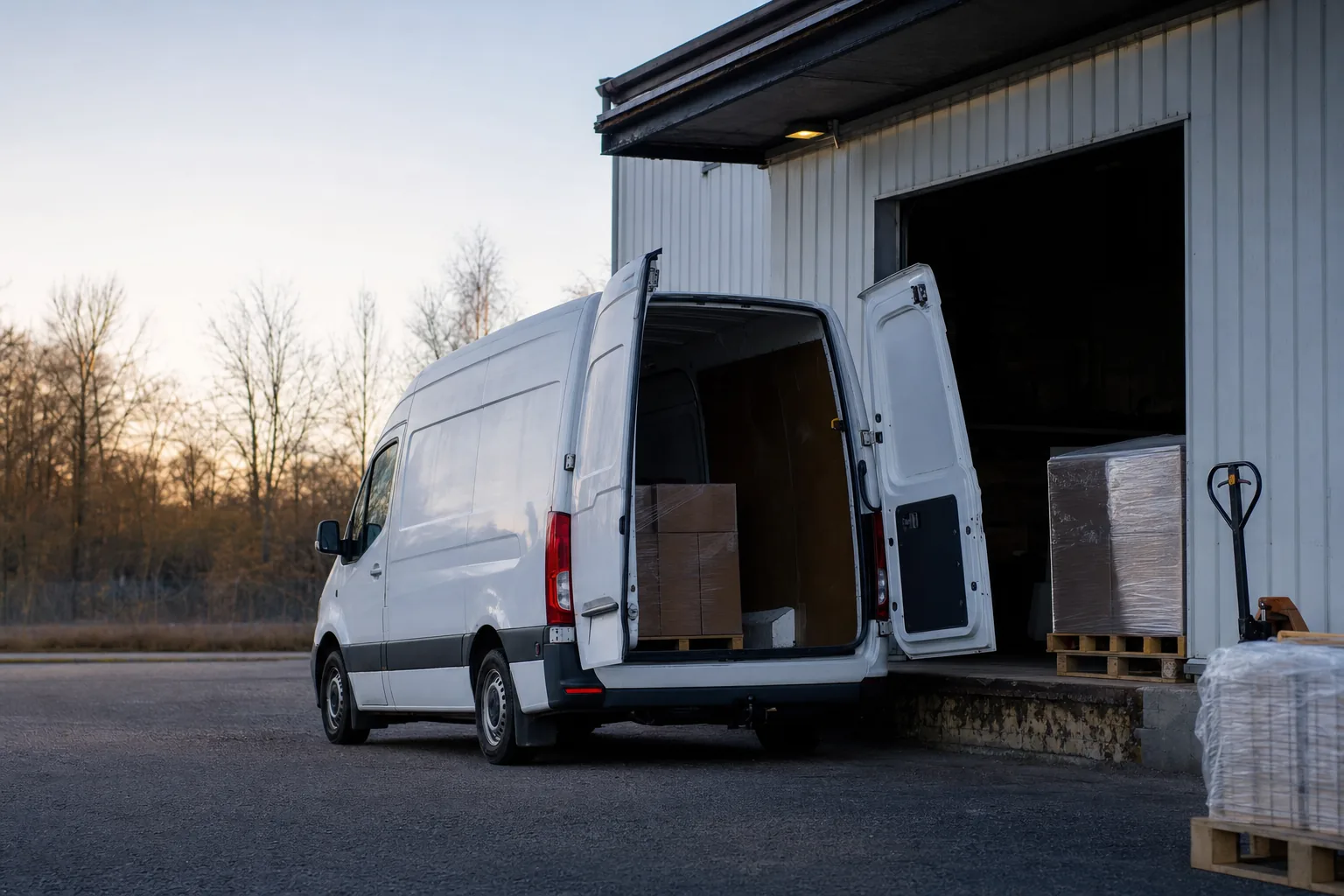
| Cargo van or Sprinter | Varies by model, far below 26,001 lb; read the door-jamb sticker | No |
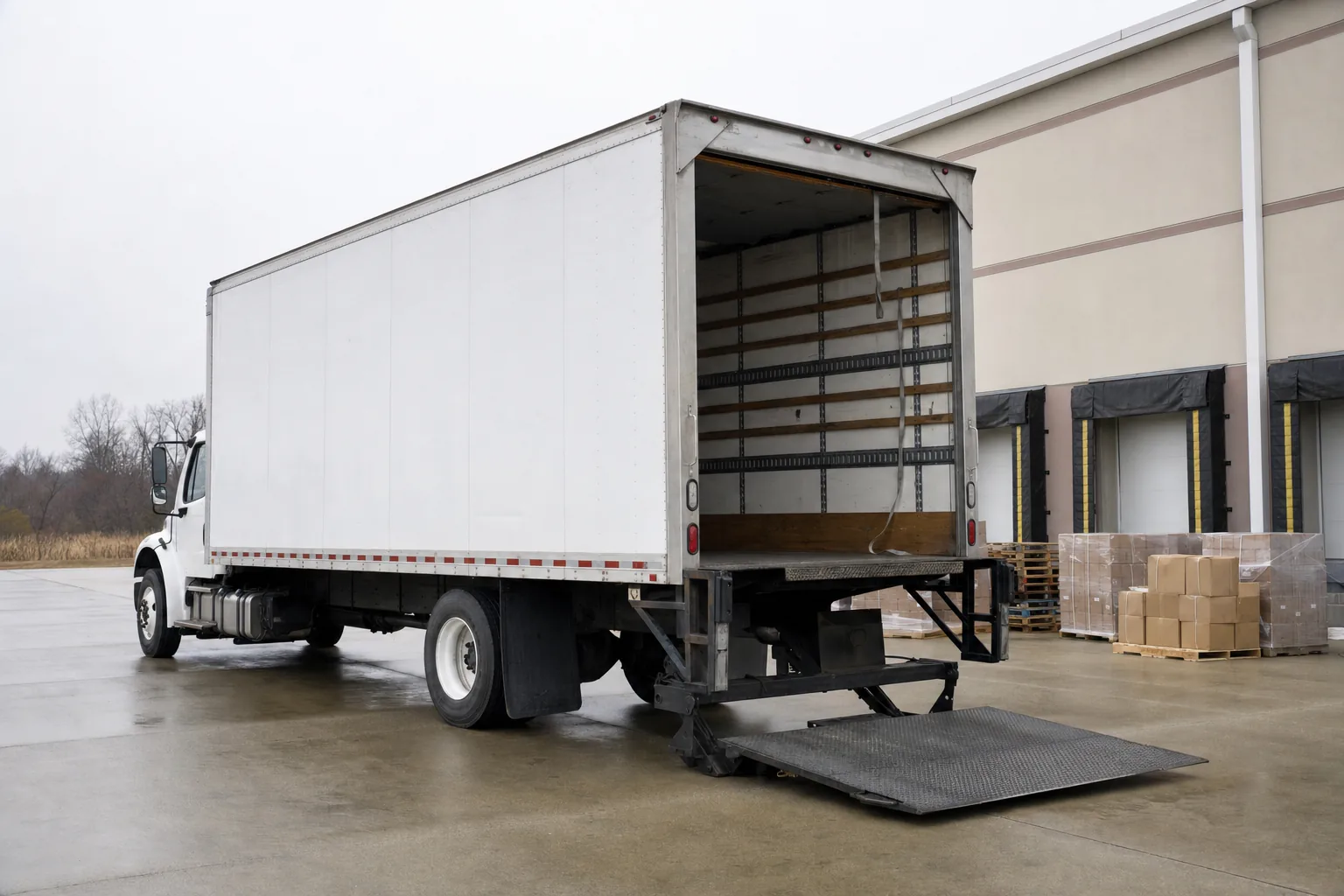
| Box truck, 16 to 26 ft | 26,000 lb or less | No, if it stays at or under 26,000 lb loaded |
| Straight truck, heavy | 26,001 lb or more | Yes, Class B |
| Pickup plus trailer (hotshot) | Depends on both ratings | See the next section |
| Any vehicle hauling placarded hazmat | Any | Yes, with a hazmat endorsement |
Can You Run Hotshot Without a CDL?
Yes, and it is the one lane where the answer depends on arithmetic you have to do yourself. Add the pickup’s GVWR to the trailer’s GVWR. You stay non-CDL if either of these is true:
- the combined rating is 26,000 lb or less, or
- the trailer is rated 10,000 lb or less, and the pickup itself is under 26,001 lb.
| Pickup GVWR | Trailer GVWR | Combined | Trailer over 10,000? | CDL? |
|---|---|---|---|---|
| 14,000 lb | 10,000 lb | 24,000 lb | No | No |
| 14,000 lb | 12,000 lb | 26,000 lb | Yes | No, the combination is under 26,001 |
| 14,000 lb | 14,000 lb | 28,000 lb | Yes | Yes, Class A |
| 19,500 lb | 10,000 lb | 29,500 lb | No | No, but see IFTA below |
The ratings in the table are worked examples, not model specifications. Read yours from the door-jamb sticker and the trailer’s VIN plate. The same “rating or actual weight, whichever is greater” test applies to the trailer, so a trailer plated at 10,000 lb and loaded to 11,000 lb counts as over 10,000.
This is also why hotshot pay is hard to compare across operators. A heavier gooseneck opens heavier freight, and once its rating passes 10,000 lb on a combination of 26,001 lb or more, it puts the driver in Class A. A non-CDL hotshot setup is a real business, but a lighter one, built around a trailer rated 10,000 lb or less.
Non-CDL Is Not Unregulated: What Changes at 10,001 lb
Crossing 10,001 lb does not bring a CDL, but in interstate commerce it does bring you under the general safety rules. 49 CFR 390.5 defines a commercial motor vehicle at 10,001 lb, a much lower line than the CDL rule uses.
| Requirement | Applies from | Source |
|---|---|---|
| CDL | 26,001 lb (or a heavy combination, placarded hazmat, 16+ people) | 49 CFR 383.5 |
| DOT medical card | 10,001 lb, interstate | 49 CFR 391.41 with 390.5 |
| Hours of service and logs | 10,001 lb, interstate (short-haul exceptions exist) | 49 CFR Part 395 with 390.5 |
| Federal DOT drug and alcohol testing | Only drivers who need a CDL | 49 CFR 382.103 |
| IFTA fuel tax licence | Two axles over 26,000 lb, three or more axles at any weight, or a combination over 26,000 lb | IFTA Articles of Agreement, R245 |
Three consequences follow for a non-CDL owner-operator:
- A Sprinter rated under 10,001 lb sits below all of it. No medical card and no federal hours-of-service logs apply to that vehicle in interstate commerce, although a carrier you lease to can still require both as a condition of the contract.
- A 26,000 lb box truck is non-CDL but not light. It needs the DOT medical card and falls under hours of service when it runs interstate. It does not need IFTA, because it has two axles and does not exceed 26,000 lb.
- Federal DOT drug testing under Part 382 applies to CDL drivers only. That does not mean no test: a carrier can require its own screening. V3 Transportation, for one, lists a pre-employment drug test for its no-CDL Sprinter drivers.
Operating authority is a separate question from the licence. To haul for hire across state lines you either lease on to a carrier that has authority, or register your own USDOT number and get your own authority. That choice changes who finds your freight and who takes a cut, and we cover it in leasing onto a carrier vs your own authority.
What Companies Pay Well? What Carriers Actually Publish
Most “best non-CDL jobs” lists quote a salary range with no source. We did something narrower: we opened the owner-operator and driver pages of carriers and delivery platforms that recruit van, box truck and light hotshot drivers, and wrote down what each one actually says about pay. Every line below is the company’s own wording, read on 23 September 2026.
Carriers and brokers you lease on to or haul for
| Company | Who the page says it takes | How pay is stated | Rate published? |
|---|---|---|---|
| Landstar (expedited) | Recruiting form asks for “a valid CDL-A (or CDL-B for Expedited)” | “Percentage pay” | No |
| ArcBest (Panther expedited) | Mentions cargo vans, but lists “CDL-A + minimum 6 months experience” as a requirement | “Weekly settlements” | No |
| FedEx Custom Critical | Cargo vans need “an unrestricted commercial class C (or higher)” CDL with a hazmat endorsement; “currently at capacity for cargo/sprinter vans” | “Flat-rate and percentage-based compensation programs”, weekly settlements | No |
| V3 Transportation | “Sprinter Van Owner Operators and Fleet Drivers – No CDL required”; at least 23 years old; pre-employment drug test | “50% load on EFS Card” (a fuel card advance), fuel surcharge, “Tolls Reimbursed” | No |
| Forward Air (LTL pickup and delivery) | Owner-operators and company drivers “with CDL A, B, and Non-CDLs”, home daily | “Competitive compensation” | No |
| Expedite All | Carrier sign-up form asks for an MC number | “Standard Net 30 terms”, or quick pay “in as little as 48 hours for a 4% fee” | No |
Delivery apps and on-demand platforms
| Platform | Vehicle and driver rules on the page | What the page says about pay |
|---|---|---|
| GoShare | Membership fee $49 ($154 with any New York history) | Cargo van “average earnings up to $105 per hour”, box truck “up to $188 per hour”; its FAQ adds “We do not make any guarantees of earnings or income” |
| FRAYT | Vans and small box trucks “under 10,000 GVW”, driver 21 or older; box trucks need their own DOT and MC number | “An average of $20-$30 per hour” |
| Curri | Gig drivers and carriers/couriers | “Weekly or Instant payouts (for a fee)”; carriers “place bids” |
| Roadie | Deliveries “in passenger vehicles”, per its own FAQ | “Up to $12 per local trip” |
| Dropoff | 21 or older; car, SUV or van “less than 10 years old” | “We pay by the delivery” |
Three things stand out.
- None of the carriers publishes a non-CDL rate. They publish the basis (percentage, flat rate, weekly settlement) and leave the number to the recruiter. The only per-week figure we found for vans came from an explainer page by Filic Express, which describes $2,000 to $4,000+ gross per week before expenses as what van owner-operators “commonly gross”, not as its own offer.
- Published platform figures are ceilings or averages, not offers. “Up to” and “average” describe someone else’s best week. GoShare’s own FAQ says it guarantees nothing, and it charges a membership fee before the first job.
- A carrier can require a CDL the law does not. FedEx Custom Critical asks cargo van drivers for a class C CDL with hazmat, and ArcBest lists CDL-A even though its page invites cargo vans. Read the qualification list before the pay line.
We could not open the U.S. Bureau of Labor Statistics occupational pages on 23 September 2026 (the site refused the request), so this section does not quote a government wage figure.
What About Cargo Vans?
A cargo van or Sprinter is the lightest way into expedited freight, and the least regulated one: a van rated under 10,001 lb sits below the federal medical card and hours-of-service line. The trade-off is capacity. You carry less per load, and some carriers are not adding vans at all (FedEx Custom Critical said so on its own page when we read it).
What you earn depends far more on miles, deadhead and costs than on the job title. We break down the numbers in the cargo van owner-operator salary guide, the requirements in cargo van owner-operator requirements, and the full start-up path in the cargo van expediting starter guide. If you are choosing between vans, see Sprinter vs cargo van.
What About Box Trucks?
A box truck rated 26,000 lb or less is the largest vehicle you can run without a CDL. It hauls more than a van, so it is the non-CDL option with the most freight per trip, but it also brings the DOT medical card and hours of service once it runs interstate. Its running costs are a subject of their own: see box truck owner-operator expenses before you price a lane.
Two questions decide whether a box truck pays: whose authority you run under, and whether the truck stays at or under its rating when loaded. For the first, read box truck loads without an MC number. If you are still choosing a vehicle, compare cargo van vs box truck.
Five Checks Before You Sign With a Non-CDL Carrier
- Read the rating, not the listing. Confirm the GVWR (and GCWR for a trailer) on the sticker. The CDL question, the medical card and IFTA all follow from it.
- Ask how pay is stated. Percentage of what, per which miles, loaded or all miles, and whether fuel surcharge is inside or on top. Our fuel surcharge explainer shows how much that last question can move.
- Ask what is deducted. Insurance, plates, a satellite or tracking unit, escrow. A high percentage with heavy deductions can pay less than a lower one without them. See percentage pay vs per-mile pay.
- Ask what the carrier requires that the law does not. Medical card, drug screen, background check, age, years of experience. Several of the pages we read ask for more than the federal minimum: a minimum age of 21 or 23, a clean driving record, a drug test, or a CDL the law does not require.
- Know your own floor. Before you compare offers, know the rate below which a mile costs you money: owner-operator break-even rate.
Non-CDL Owner-Operator Jobs on Expedited Jobs
If your vehicle is a cargo van, a Sprinter or a box truck under 26,001 lb, you can see the carriers and freight programs that take non-CDL owner-operators on non-CDL owner-operator jobs.
Non-CDL Jobs: Common Questions
Do you need a CDL for a 26 ft box truck?
Not if it is rated 26,000 lb GVWR or less and stays at or under that weight loaded. At 26,001 lb or more, by rating or by actual weight, it needs a Class B CDL.
Can you do hotshot without a CDL?
Yes, if the pickup and trailer together are rated 26,000 lb or less, or the trailer is rated 10,000 lb or less. A heavier combination with a trailer over 10,000 lb needs a Class A CDL.
Do non-CDL drivers need a DOT medical card?
In interstate commerce, yes, once the vehicle is rated or weighs 10,001 lb or more. Below 10,001 lb, as with most cargo vans, the federal rule does not require one, though a carrier can.
Do non-CDL drivers get DOT drug tested?
The federal DOT drug and alcohol testing rule, 49 CFR Part 382, applies only to drivers who need a CDL. A carrier can still require its own test as a condition of the contract.
What non-CDL job pays the most?
None of the carriers we read on 23 September 2026 publishes a non-CDL pay rate; they state the basis (percentage, flat rate, weekly settlement) and give the number through a recruiter. The figures that are published come from delivery platforms and are averages or “up to” amounts, such as GoShare’s “up to $105 per hour” for a cargo van, which its own FAQ says is not guaranteed. The job that pays most for you is the one whose rate clears your own cost per mile.

Table of Content
- Which Jobs Don’t Need a CDL?
- Can You Run Hotshot Without a CDL?
- Non-CDL Is Not Unregulated: What Changes at 10,001 lb
- What Companies Pay Well? What Carriers Actually Publish
- What About Cargo Vans?
- What About Box Trucks?
- Five Checks Before You Sign With a Non-CDL Carrier
- Non-CDL Owner-Operator Jobs on Expedited Jobs
- Non-CDL Jobs: Common Questions