


Short answer
A cargo van keeps a single operator loaded more days; a box truck pays more per load but sits longer between them. The van pulls from a deep pool of small urgent freight that posts through the day, at the lowest cost of entry in expedited trucking and with no CDL. A box truck reaches heavier palletized loads and still needs no CDL under 26,001 lbs GVWR, but its larger payment, insurance and fuel make every idle day more expensive. Decide on loaded days and the cost of sitting, not on pay per load.
Which Pays More, a Cargo Van or a Box Truck?
You have money for one vehicle. Cargo van or box truck. Almost everyone starts this decision by comparing what each one pays per load, picks the bigger number, and signs. Six months later they are parked on a Wednesday afternoon wondering why the math stopped working. The pay per load only matters on the days you have a load. What actually covers the payment is loaded days, and a cargo van and a box truck do not get the same number of them.
Cost of sitting
The fixed cost a vehicle runs up on a day it does not move: payment, insurance, plates and depreciation. Fuel stops when the wheels stop. Nothing else does.
Treat them as two different freight markets rather than two sizes of the same one. A cargo van pulls from a deep, fast pool of small urgent loads that posts more or less all day. A box truck pulls from a shallower pool of heavier freight that pays more per load but posts in bursts, with real quiet stretches between them.
Neither pool is better in the abstract. The right one depends on how long you can stand a vehicle sitting, how much of a payment you are carrying while it sits, and how reliable your access to that pool is in the first place.
Cost of entry is the other half of the decision, and it gets skipped almost as often as loaded days. A cargo van is the cheapest legitimate way into expedited freight: no CDL, a light payment, insurance in a lower class, fuel you barely notice next to a straight truck. That low floor is not a consolation prize.
It is what lets a slow week be a slow week instead of a crisis. If you are weighing whether the van is a real business or just a starting point, the cargo van owner-operator jobs lane is where most single-vehicle operators run for years, not months.
What Are You Actually Buying With Each One?
Start with the line that decides everything else about a box truck: gross vehicle weight rating. Stay under 26,001 pounds and you are still in non-CDL territory, which is the threshold the FMCSA uses to divide commercial vehicles. Cross it and you are into a new qualification, a new insurance conversation, and a different hiring pool.
A lot of van operators do not realize there is a non-CDL box truck lane sitting between the two, and it changes the shape of the step-up entirely. Know which side of that number you intend to be on before you look at a single listing.
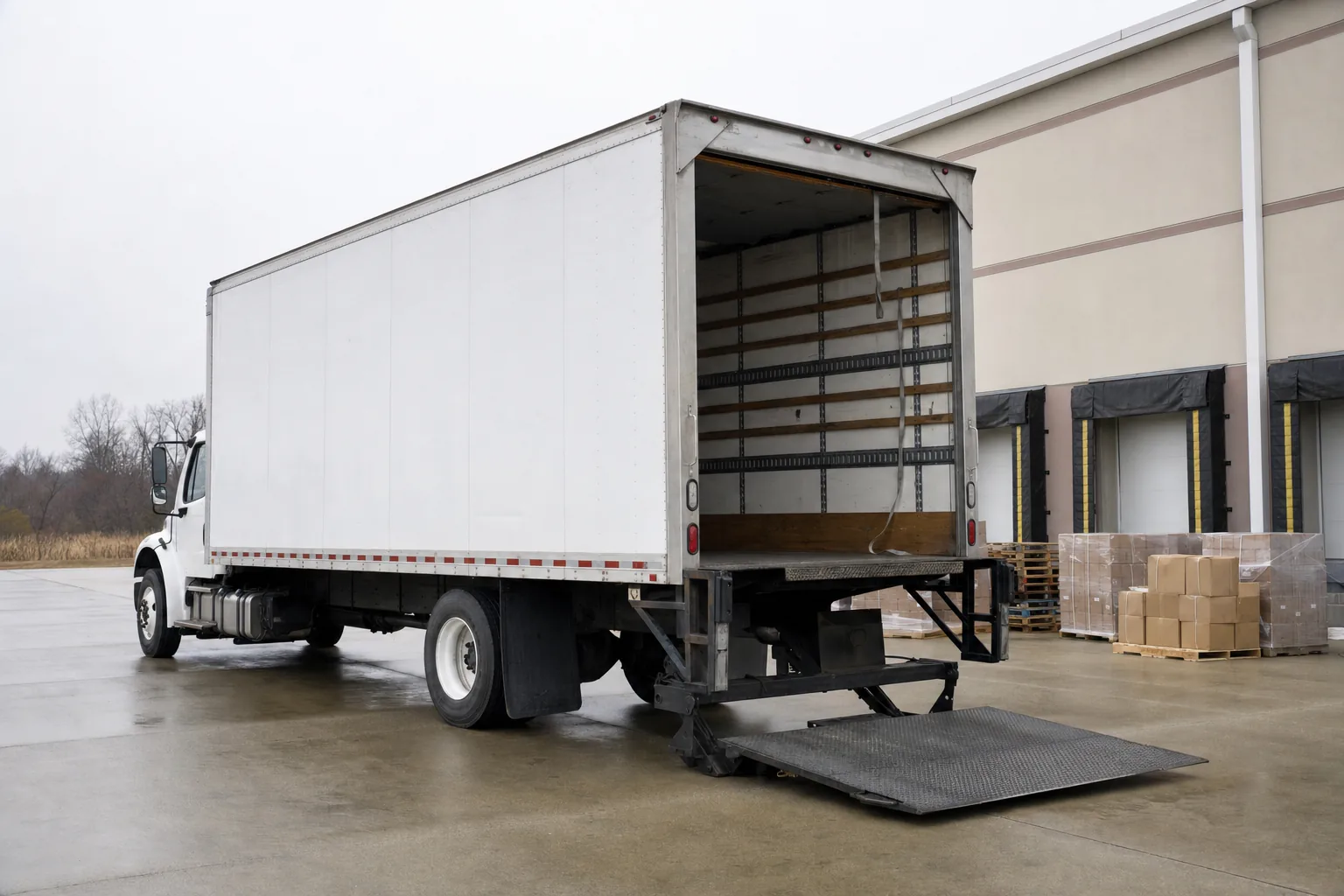
Then be honest about capacity. The box truck’s argument is that it reaches freight a van physically cannot carry (palletized loads, heavier expedited runs, the freight you have to turn down today). That is true and it matters. But capacity only pays when it is full. An empty box truck costs more to sit than an empty van does, because the payment, the insurance and the fuel are all larger. Unused capacity is not an asset. It is overhead with a schedule.
So the comparison worth running is not van revenue against box truck revenue on your best week. It is what each one clears across a normal month once the bigger vehicle’s bigger costs come out, and how reliably you can feed the larger machine. The table below lines the two up on the things that actually drive loaded days and cost of entry, not the per-mile figure everyone fixates on. Read it as a decision frame, not a quote, since lanes, insurance and financing land differently for every operator.
| What you are weighing | Cargo van | Box truck |
|---|---|---|
| Cost of entry | Lowest in expedited (light payment, lower insurance class) | Higher on every line: purchase, insurance, fuel, maintenance |
| License needed | None | None under 26,001 lbs GVWR; CDL above it |
| Freight pool depth | Deep, posts through the day | Shallower, posts in bursts |
| Typical load profile | Small, urgent, time-critical: parts, medical, AOG | Palletized and heavier expedited freight |
| Length of dead gaps | Short, rarely a full day | Longer, whole quiet days happen |
| Cost of sitting empty | Light fixed costs absorb it | Heavier fixed costs eat idle days fast |
| Best fit for | Steady cash flow, cannot afford to sit | Bigger paydays, can ride out the gaps |
Read the top row and the bottom row together, because that is the whole trade. The van keeps your floor low so a thin week does not hurt much. The box truck raises your ceiling but raises your floor with it. One protects you on the bad weeks, the other pays you on the good ones, and which of those you need depends far more on your cash position than on the vehicle you would rather be driving.
When Is a Box Truck the Right Answer?
There is a clean test for this, and it does not involve a spreadsheet. Are you regularly turning down freight because the van is too small? If brokers keep calling with loads you have to pass on, that is a real ceiling and the bigger vehicle has demand already waiting for it. If it almost never happens, a box truck solves a problem you do not have, and the van’s low overhead is quietly working in your favor every week.
The second test is the slow week. Take the box truck payment, insurance and fuel, and ask what your month looks like if you sit two or three days waiting on a heavy load to post. If open boards are your only freight source, those gaps are coming, and the larger vehicle converts them into larger losses. If you have a base layer of consistent freight underneath you, those same days are covered and the higher ceiling turns into actual upside instead of a bet.
Operators who step up well do it because they have freight the van cannot hold and a reliable way to keep the bigger vehicle loaded, and not because a box truck feels like progress. If that describes where you are, box truck owner-operator jobs is the lane to look at next.
And if you want the ceiling without the license, aim deliberately at that 26,001-pound wall rather than drifting past it. Plenty of operators add real capacity and stay non-CDL by staying just under it. Going above it is a legitimate move with a bigger ceiling, but it is a different decision with a different timeline, and it should never get made by accident on a dealer lot.
Why Does Freight Access Decide This More Than the Vehicle?
Here is the part the equipment debate misses completely. Whichever one you buy, if every load comes off an open board then your loaded days are capped by what brokers happen to post while you happen to be looking. The vehicle sets the ceiling on the freight you can reach. Your access sets the floor on how much of it actually reaches you, and that floor drops out from under both classes the same way on a slow midweek.
The Cost-of-Sitting Test
Four numbers settle the van-versus-box-truck question better than any rate comparison. Run them for both vehicles, using your own last month rather than a good one.
- Daily fixed cost: Add payment, insurance, plates and your maintenance reserve for one month, then divide by 30. That is charged whether you move or not.
- Loaded days: Count the days the vehicle actually ran under load last month. Loaded days, not days you were available and not loads you were offered.
- Net per load: Average pay per load minus the fuel and tolls for that run.
- Compare: Loaded days times net per load, minus 30 times daily fixed cost. Do it for the van and for the box truck. The winner is often not the vehicle with the bigger rate.
This market is built almost entirely out of operators in exactly that position. Roughly nine in ten carriers run ten trucks or fewer, according to ATA’s trucking industry data. That is a queue of single vehicles and tiny fleets all pulling from the same posted freight. Two box truck operators in the same market can run completely different loaded-day counts, and the difference is almost never the truck. It is whether they have more than one way to find work.
Which is why the answer to the original question changes depending on your access. If open-board freight is all you have, the van is the safer buy. Its pool is deep enough to keep you moving most days even when access is thin, and its low floor means a quiet week is survivable.
If you have a steady second channel feeding you, the box truck’s higher pay per load becomes genuinely reachable, because the long gaps that normally punish it get filled in. Solve the access question first and the vehicle question mostly answers itself.
So: cargo van or box truck for 2026? Pick the one whose freight pool keeps you loaded on the days you would otherwise sit, price it against the floor you can survive rather than the ceiling you would like, and build the freight access before you build the payment. If you want to see what consistent expedited work looks like alongside the boards for either vehicle, start with the owner-operator program and pick the lane that matches what you drive.
Key Takeaways
- A cargo van keeps a single operator loaded more days; a box truck pays more per load but sits longer between them.
- Neither vehicle requires a CDL under 26,001 lbs GVWR, so licensing does not decide this.
- The deciding number is monthly loaded days times net per load, minus what the vehicle costs while parked.
- A box truck payment, insurance and fuel make every idle day more expensive than a van idle day.
- Freight access changes the answer more than the vehicle does: the same box truck is a good or a bad decision depending on where its loads come from.
Cargo Van vs Box Truck: Common Questions
Is a cargo van or a box truck better for expedited freight?
For an operator who cannot afford to sit, the cargo van is usually better: its freight pool is deeper and posts through the day, and its light fixed costs make a quiet week survivable. A box truck is the better buy when you are regularly turning down loads because the van is too small, and you have freight access reliable enough to keep the bigger vehicle loaded.
Do you need a CDL to drive a box truck?
No CDL is required for a box truck rated at 26,001 pounds gross vehicle weight or less, the threshold the FMCSA uses to divide commercial vehicles. Above that rating you need a commercial driver’s license, a different insurance class and a smaller hiring pool. Many operators add real capacity deliberately while staying just under the line.
Does a box truck make more money than a cargo van?
A box truck earns more per load, but not automatically more per month. Pay per load only counts on the days you have a load, and box truck freight posts in bursts with longer quiet stretches between them. The payment, insurance and fuel keep running through those gaps, so more revenue per load can still clear less across a normal month.
When should you upgrade from a cargo van to a box truck?
Two tests. First, are you regularly turning down freight because the van is too small? If not, a box truck solves a problem you do not have. Second, could you absorb two or three idle days a month at box truck fixed costs? If open load boards are your only freight source, those gaps are coming.
Pick the Lane That Fits What You Drive
ExpeditedJobs runs a steadier channel of expedited freight for single-vehicle operators (cargo van or box truck), so your week does not ride on the load boards alone.
Cargo Van Opportunities → Box Truck Opportunities →