

Short answer
You need a full-size cargo van with a usable deck, a legal way to haul interstate (your own FMCSA authority or a lease onto a carrier), insurance that meets the federal floor and whoever tenders the load, and documents that survive a compliance check. No CDL. The federal liability minimum under 10,001 lbs GVWR is $300,000 under 49 CFR 387.9. Model-year caps come from the carrier, not regulation.
Could You Be Put on a Load Tomorrow?
Most people researching cargo van requirements are asking one thing: am I eligible, or am I about to waste three weeks finding out I am not? The requirements fall into four buckets (the van, your authority, your insurance, your paperwork), and each is checkable today, before you talk to anybody. No CDL is involved, which is why a van is the cheapest legitimate entry into expedited freight, and the work it unlocks is the cargo van owner-operator jobs lane. That lane is broken out by state: Texas, Georgia, North Carolina, Alabama.
Operating authority
The FMCSA registration, identified by an MC number, that lets you accept freight across state lines in your own name. Leasing onto a carrier means running under theirs. Both are legal; the difference is whose name carries the filings.
What Van Do You Need for Expedited Work?
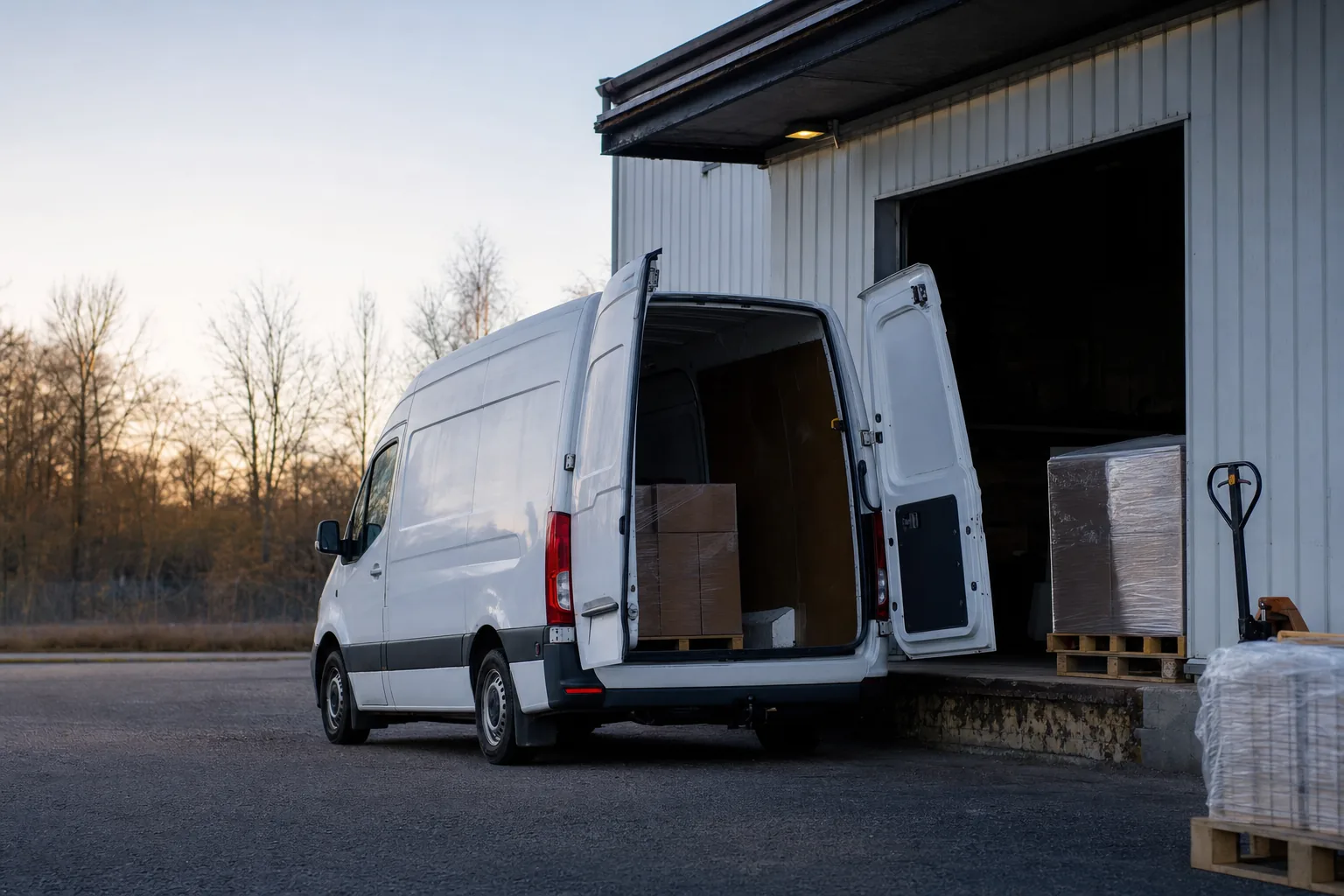
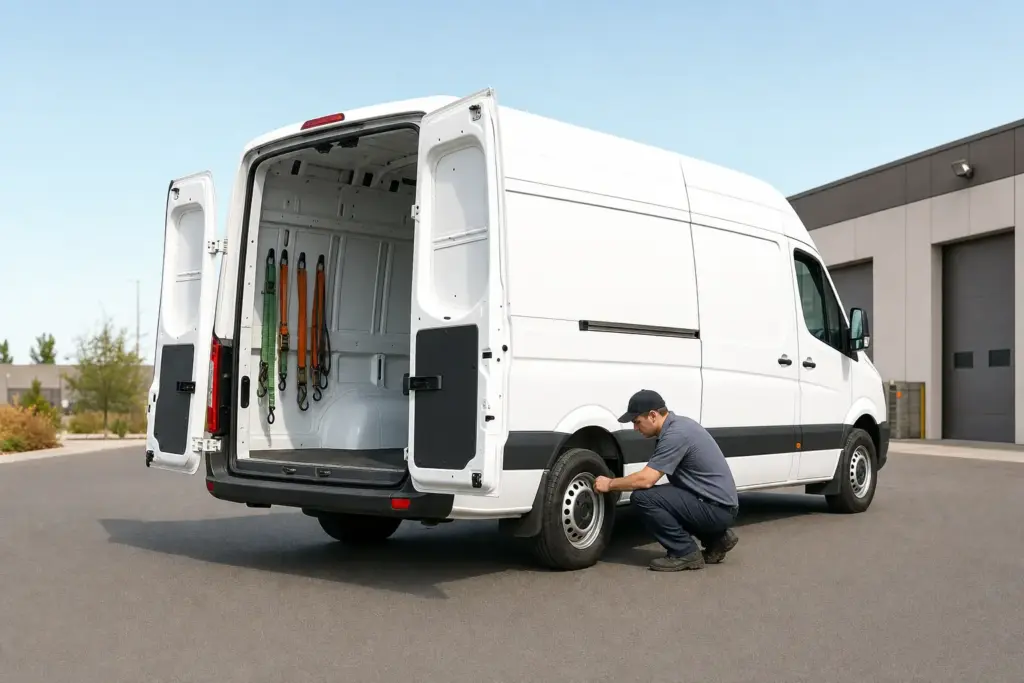
Expedited freight is small and time-critical, so the van is judged on whether it can take a load intact and get it there. What counts is usable cargo space, not the badge on the grille. A full-size cargo van, long wheelbase, is the baseline: interior length and roof height decide whether a skid fits, payload capacity decides whether it fits legally.
Age matters for a practical reason: a carrier underwrites your reliability on every run, so most set a maximum model-year age and expect maintenance records behind it. Clear the cargo area out too, because permanent shelving costs you the loads that need the full deck.
The practical test: empty the van, measure deck length, width and height at the narrowest point, and read the payload rating off the door jamb sticker. Those three numbers plus the model year are what a dispatcher needs. Guessing on payload is how operators refuse a load at the dock.
Should You Run Your Own Authority or Lease On?
To haul across state lines for money you either run your own federal authority or lease the van onto a carrier and run under theirs. Both are legitimate; neither is equally cheap.
Under your own authority you are the carrier: USDOT number and operating authority, a BOC-3 designation, annual UCR registration, insurance in your name. The federal liability floor for non-hazardous freight in a vehicle under 10,001 pounds GVWR is $300,000 under 49 CFR 387.9. Above that weight it jumps to $750,000. Treat it as a floor: brokers routinely require more, plus cargo coverage they specify.
Leasing on takes most of that off your plate: you run under the carrier’s authority and their liability coverage while under dispatch, which is why most first-time operators start here. You supply non-trucking liability for when the van is off a load, and occupational accident coverage for yourself.
| What it takes | Your own authority | Leased on to a carrier |
|---|---|---|
| Federal registration | USDOT, operating authority, BOC-3, UCR (all yours) | You run under the carrier’s |
| Liability insurance | In your name. $300,000 federal floor under 10,001 lbs, usually more | Carrier’s coverage while under dispatch |
| What you still carry | Cargo, physical damage, general liability | Non-trucking liability, occupational accident |
| Time to first load | Weeks, since registration and insurance must clear | Days once onboarding documents are in |
| Who finds the freight | You, on the open market | The carrier, plus what you work yourself |
| Best when | You have capital, customers and admin patience | You want to earn while you learn the freight |
Own authority is a business you are building; leasing on is one you are starting. Many operators lease on for a year, learn which lanes pay, then file with real numbers instead of optimism. If a non-CDL vehicle is what you have, non-CDL owner-operator jobs covers both paths.
What Documents Do You Need, and What Actually Disqualifies People?
The onboarding set is short: driver’s license, proof of work eligibility, motor vehicle record, registration, a certificate of insurance naming the right parties and tax details. Own authority adds the authority letter and your filings. What slows people down is not having it ready, since a reissued certificate takes days.
The Dispatch-Tomorrow Check
One question with five gates: if a carrier wanted to put you on a load tomorrow morning, what would stop them?
- Vehicle: A full-size cargo van, empty deck, measured length, width and height, payload rating off the door jamb.
- Authority: Your own MC number, or a signed lease onto a carrier authority.
- Insurance: Meets the federal floor ($300,000 under 10,001 lbs GVWR under 49 CFR 387.9) and whatever cargo limit the party tendering the load requires.
- Documents: License, registration, certificate of insurance, W-9, and a clean driving record where asked.
- Availability: Reachable, and able to leave within a couple of hours of a call.
What disqualifies applicants is rarely dramatic. Usually one of four: the van is outside spec; the driving record shows a pattern rather than one old mistake; the insurance name does not match the registration; or the operator cannot run interstate on short notice, which is the whole product here.
Availability catches good candidates out. If yours is really evenings and weekends, this is not the work. The product you would sell is speed you cannot supply. Otherwise: van measured, path chosen, insurance quoted, documents in a folder, and the next step is a carrier conversation rather than more research.
Key Takeaways
- No CDL is involved.
- You need a legal way to haul interstate: your own FMCSA operating authority, or a lease onto a carrier.
- The federal liability floor is $300,000 for a for-hire vehicle under 10,001 lbs GVWR, under 49 CFR 387.9.
- Model-year caps and cargo limits come from the carrier, not regulation, so ask and do not assume.
- What disqualifies people is usually documents and availability, not the van.
Cargo Van Owner-Operator Requirements: Common Questions
Do you need a CDL to be a cargo van owner-operator?
No. A cargo van sits well below every weight threshold that triggers a commercial driver’s license, which is why it is the cheapest legitimate entry point into expedited freight. What you need instead is a compliant van, authority to haul interstate (your own or a carrier’s), insurance that meets the federal floor, and your documents in order.
How much insurance does a cargo van owner-operator need?
The federal minimum for a for-hire carrier hauling non-hazardous freight in a vehicle under 10,001 pounds GVWR is $300,000 in liability coverage under 49 CFR 387.9. Treat that as a floor only. Brokers and shippers routinely require higher limits plus cargo coverage they specify themselves, and the load goes to whoever meets the requirement.
Should I get my own authority or lease onto a carrier?
Leasing on is faster and cheaper to start: you run under the carrier’s authority and liability coverage and can be dispatched within days of onboarding. Own authority takes weeks, because federal registration and insurance filings have to clear first. Plenty of operators lease on for a year, learn which lanes actually pay, then file for authority.
What disqualifies a cargo van owner-operator?
Four things account for most rejections: a van outside spec (too small, too old, or too full of permanent shelving to take a real load); a driving record that shows a pattern rather than one old mistake; paperwork that does not match, such as the insurance name differing from the registration; and an operator who cannot leave on short notice.
What size cargo van do you need for expedited freight?
A full-size, long-wheelbase cargo van, not a minivan or an SUV with the seats folded down. Interior length and roof height decide whether a skid fits, and the payload rating on the door jamb sticker decides whether it fits legally. Measure the deck at its narrowest point and know all three numbers before your first conversation.
Think You Qualify? Find Out in One Conversation
ExpeditedJobs will tell you straight whether your van and your setup fit and, if they do, put you on consistent expedited freight instead of the open board alone.
See Cargo Van Opportunities →