


Owner-Operator
Insights & Load Strategy
All the insights you need to build a successful trucking business from managing loads and payments to growing your fleet and network. Stay up to date on industry trends and get practical tips for every stage of your journey on the road.

How to Get an MC Number for a Cargo Van or Box Truck: USDOT, BOC-3, UCR and Insurance
If you plan to haul other people’s freight for pay across state lines in your own cargo van or box truck, you need operating authority from FMCSA (your MC number) on top of a USDOT number. A first-time applicant requests both on one online application through FMCSA’s Unified Registration System, and the authority […]

Cargo Insurance for a Cargo Van or Sprinter: Own Authority vs Lease-On
Federal rules do not set a cargo insurance minimum for a cargo van or sprinter hauling general freight. The only federal cargo coverage rule is for household goods movers. Your exposure for the freight comes from somewhere else: the carrier on the bill of lading is liable for loss or damage to it. […]
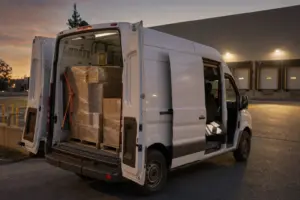
Cargo Van or Sprinter: Dispatch Service vs Lease-On Math
A dispatch service only works for a van that already has its own operating authority, so the choice is really your own MC plus a dispatcher versus a lease onto a carrier. In our example, a light cargo van on its own authority comes out ahead once it grosses about $806 a week. […]

New Entrant Safety Audit: What FMCSA Checks and How to Prepare
Once you get a USDOT number as a new interstate carrier, FMCSA watches your operation for 18 months under the New Entrant Safety Assurance Program. You keep running loads during that period. At some point in it, usually after you have at least 3 months of records, a certified auditor reviews your files: […]
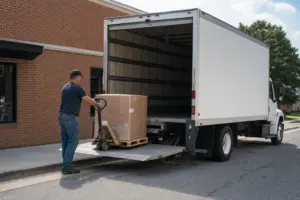
Box Truck Liftgate vs Dock High: Which Loads Fit Your Truck
A dock high box truck is built for freight that moves between buildings with loading docks: warehouses, distribution centers and cross-docks. A liftgate truck can also deliver where there is no dock at all, such as stores, offices, job sites and homes. Neither one is better in general. What matters is matching the […]

Box Truck Lease-On Documents: What Carriers Ask For
Most of the paperwork a carrier asks for when you lease on a box truck is the carrier’s own legal duty, not a preference. If your truck is rated 10,001 pounds or more and runs interstate, federal rules treat you as a driver the carrier employs, so it has to keep a driver […]
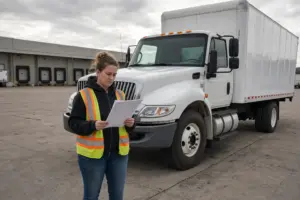
Box Truck Insurance When You Are Leased On: What the Carrier Covers, What You Pay
When you lease your box truck onto a carrier, the carrier has to carry the public liability insurance its authority requires, and the lease has to say so. That is the one coverage federal rules put on the carrier. Everything else, such as non-trucking liability, physical damage on your truck, cargo and occupational […]

Paying a Dispatch Service vs Leasing Onto a Carrier: The Math for a Box Truck
Paying a dispatch service only makes sense if you already run under your own authority, because a dispatcher books freight but does not bring insurance or an MC number. So the real comparison is your own authority plus a dispatch fee, versus leasing onto a carrier that keeps a share of each load. […]
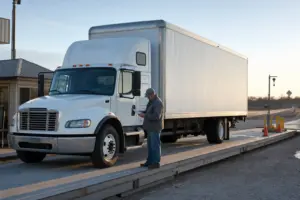
Straight Truck Expediting: What Carriers Check Before You Load
With a straight truck, most of what a carrier checks comes back to weight. Under the federal CDL rules the line is 26,001 pounds, counting the truck’s rating or its actual loaded weight, whichever is greater. Cross it and you need at least a Class B CDL, and you fall under drug and […]
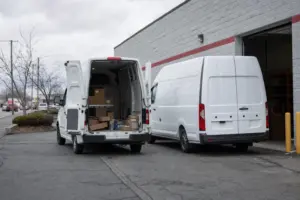
How to Get Cargo Van Contracts: 4 Sources and What Each Asks
Medical courier routes, parts runs, spot freight or leasing on: where cargo van and sprinter van contracts come from and what each one asks of you.
How to Get Box Truck Contracts: 4 Sources and What Each Asks
Dedicated routes, final mile, spot freight or leasing on: where box truck contracts come from, what each source asks of you, and what a lease must state.
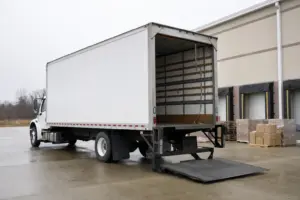
Amazon Relay for Box Trucks: Requirements and Alternatives
Yes, Amazon Relay accepts box trucks, but only two kinds: a 16 foot or a 26 foot box truck with a functional tuck-under liftgate. The carrier also needs its own DOT number with interstate authority active for at least 180 days, a valid MC number, safety scores under Amazon’s limits, and insurance well […]

Load Boards for Cargo Vans and Sprinter Vans: A 2026 Guide
There is no load board built only for cargo vans and sprinter vans, but a few treat them as a real equipment class rather than an afterthought. DAT sells a $59 per month Standard plan it recommends for box truck and sprinter van operators. Sylectus is a carrier-only network that describes its freight […]

Expedited Trucking Companies: Who They Are, and What They Look For in an Owner-Operator
An expedited trucking company is a for-hire carrier or logistics provider that moves time-critical freight on direct, non-stop runs. Before it signs an owner-operator, it checks operating authority, insurance limits, Drug and Alcohol Clearinghouse status and roadside safety history. Of 1,380,898 active for-hire carriers in the FMCSA census, 765,007 run a single power […]

Reading the Freight Market Before It Reads You: Early Signs a Lane Is Drying Up
A fading lane warns you for weeks before it hits your bank account. Here is how owner-operators read the early signs and reposition while moving is still a choice.
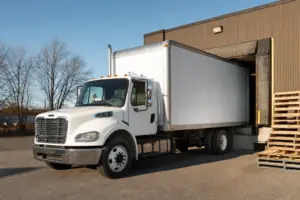
Box Truck Loads After Peak: What the Q4 2026 Freight Market Is Actually Doing
Freight rates going into Q4 2026 are higher than a year ago but falling since May. Producer prices for long-distance truckload were 8.1% above July 2025 yet 4.1% below May 2026 (BLS, July 2026). Diesel is up 50% year over year. Higher rates, thinner margins. By Bruce Richmond. Market data as of 3 […]