

After nearly three years of contraction, the U.S. trucking market is entering 2026 in a fragile but more stable position. Recent movement in spot rates and signs of tightening capacity have sparked a familiar debate across the industry: is the market finally starting to turn, or is this just another seasonal bounce that will fade as quickly as it appeared?
For owner-operators and small fleets, 2026 is unlikely to reward aggressive growth. It will favor discipline, careful lane selection, and tighter control over cash flow rather than chasing volume.
Demand Outlook for the U.S. Trucking Market in 2026
Freight demand heading into 2026 remains subdued by historical standards. Key macro drivers – consumer spending, industrial production, and housing – are no longer collapsing, but they are not accelerating meaningfully either.
Retail inventories have largely normalized after the pandemic-era whiplash, removing a major drag on the freight market but offering little upside. Manufacturing activity spent much of 2024 and 2025 in contraction territory, pressuring flatbed and industrial freight volumes. Import activity has recovered modestly, but remains far below the peaks of 2021, limiting upside for port-centric truckload freight markets.
Most forecasts point to freight volumes growing roughly 1–2% in 2026, essentially tracking population growth rather than economic expansion, based on recent freight demand trends.
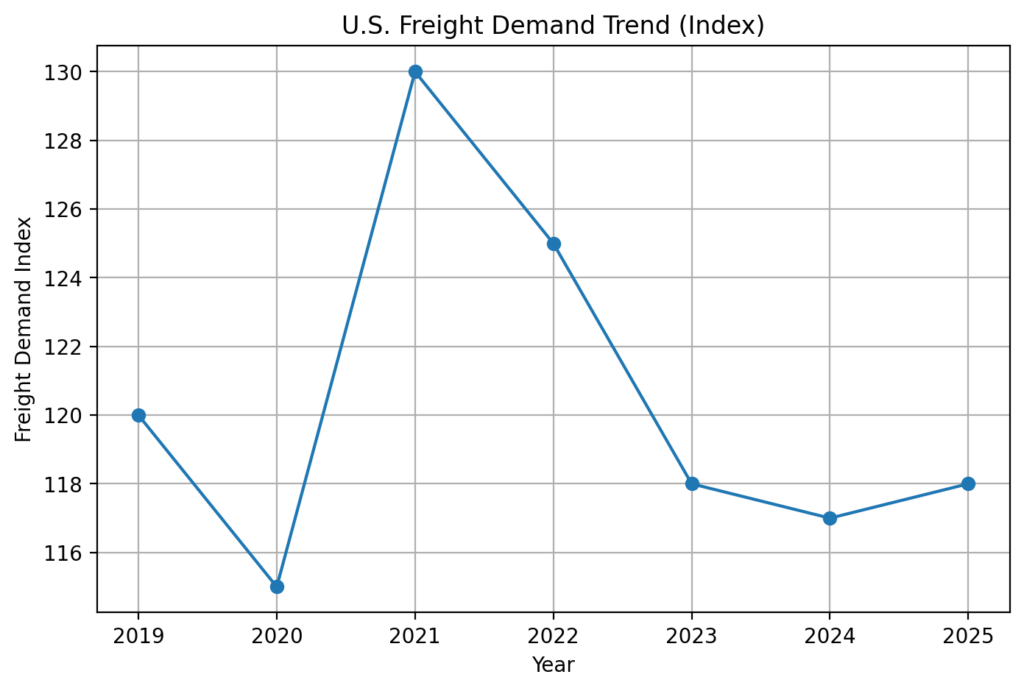
That level of demand supports stability – not pricing power – unless trucking capacity tightens further.
Trucking Rates in 2026: Spot vs. Contract Rebalancing
The most important pricing development entering 2026 is not growth, but convergence.
Throughout 2024 and much of 2025, spot truckload rates remained well below contract freight rates – a classic recessionary signal that excess capacity continued to weigh on the market. By late 2025, that gap began to narrow as contract rates reset lower and spot rates lifted modestly off their cycle lows. But market direction alone doesn’t determine what owner-operators actually take home.
This spot-versus-contract rebalancing matters because a healthy trucking market does not require soaring prices – it requires alignment. When spot and contract pricing move closer together, it signals that supply and demand are slowly returning to balance.
That said, expectations should remain grounded. Even with improvement, trucking rates remain well below inflation-adjusted peaks, and margins remain thin for carriers carrying elevated fixed costs.
Trucking Capacity in 2026: Why the Shakeout Isn’t Over
Carrier exits since 2023 have been historically severe, particularly among small fleets and single-truck owner-operators. Yet despite the scale of those exits, overall trucking capacity remains above pre-pandemic levels.
The explanation is straightforward: capacity has fallen faster than demand has grown, but not fast enough to restore meaningful pricing power.
Looking into 2026, the most likely outcome is continued gradual tightening, not a sudden collapse. High insurance costs, expensive financing, and regulatory pressure continue to discourage rapid re-entry, helping prevent another capacity glut.
From an industry-cycle perspective, this reflects a late-downturn repair phase – slow, uneven, and unforgiving.
Trucking Operating Costs in 2026: Fuel Relief vs. Structural Pressure
Fuel prices are one of the few areas offering measurable relief. Diesel prices have fallen meaningfully from 2022 highs and are expected to remain relatively stable into 2026, providing cash-flow support for owner-operators.
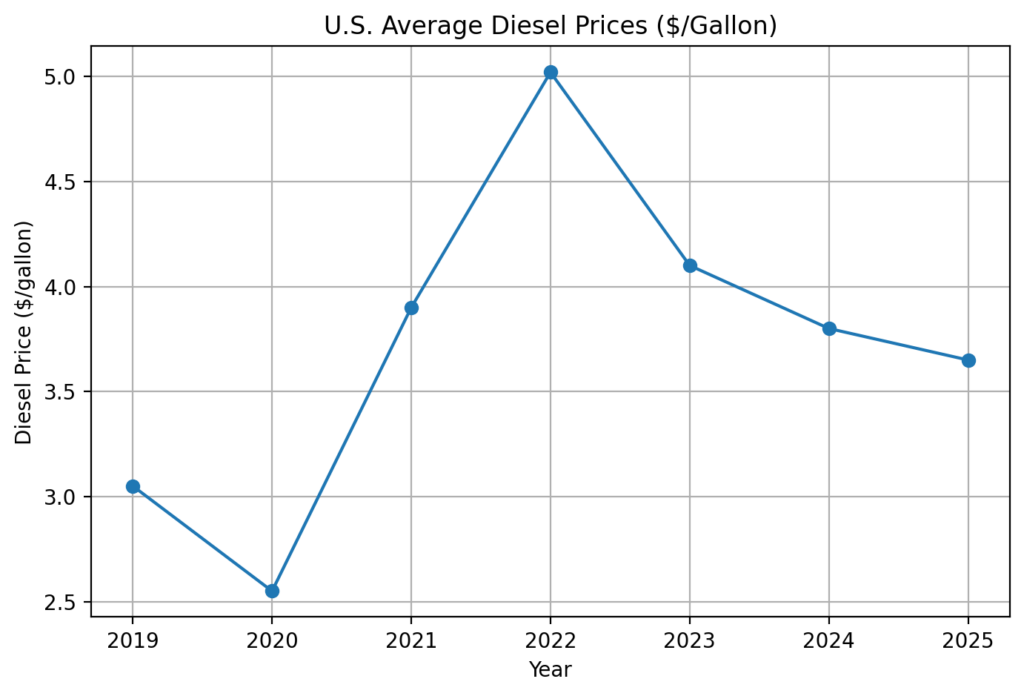
But fuel is no longer the dominant cost lever it once was.
Insurance premiums, equipment financing, maintenance, compliance, and labor costs have structurally reset higher. Even with cheaper fuel, cost per mile remains near record levels for small carriers. That is why it’s important to know your true break-even cost per mile.
Fuel relief eases pressure – it does not restore margins on its own.
Late 2025 Freight Market Inflection Signals Heading into 2026
After much of 2025 was defined by false starts and short-lived rebounds, late-year freight data points to a meaningful shift in market behavior.
In the weeks following Thanksgiving, spot freight rates accelerated sharply. Pricing excluding fuel moved from the mid-$1.70s per mile to near $2.00 in a compressed time frame – one of the strongest short-term moves of the year. Importantly, the increase was not isolated or purely seasonal. It occurred alongside a rapid tightening in capacity indicators.
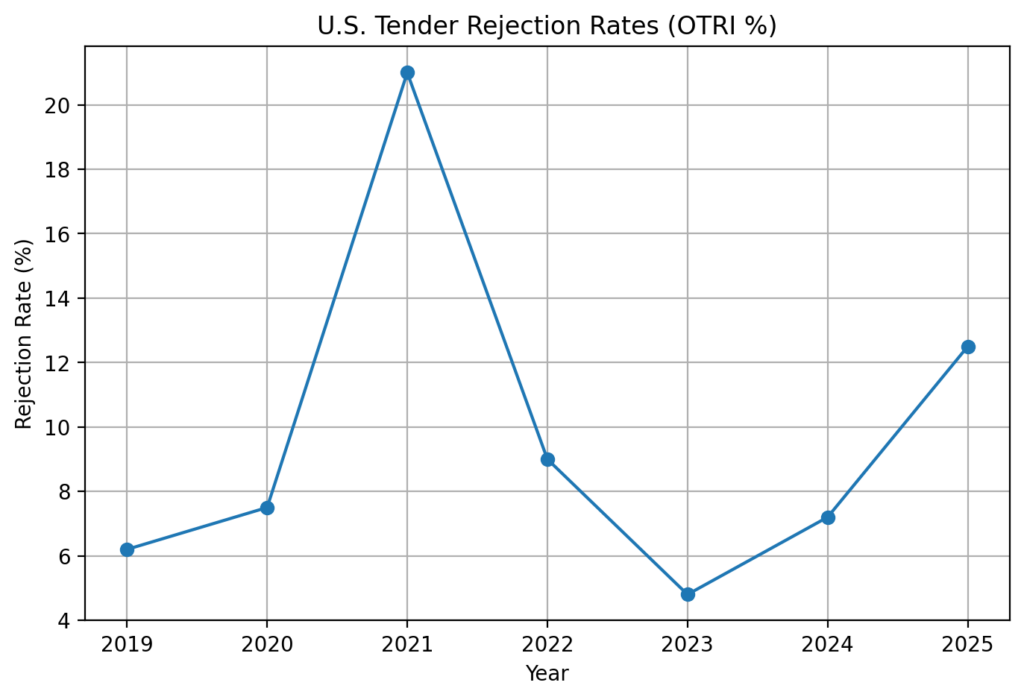
Tender rejection rates climbed into the low double digits and now sit meaningfully above last year’s year-end levels, signaling that excess capacity is being absorbed more aggressively than during the 2024 holiday period.
Beyond aggregated data, on-the-ground behavior has also begun to change. Brokers increasingly report difficulty covering loads at posted prices, particularly for dry vans, reefers, and certain open-deck equipment types. In some regions, brokers acknowledge resorting to less reliable capacity simply to keep freight moving.
At the same time, a disconnect has emerged between posted spot rates and actual transaction prices. While load boards often show weak pricing, carriers report that negotiations have become easier. In many cases, brokers initially reject higher rate requests, only to return hours later and accept them after failing to secure coverage. Historically this pattern appears as capacity tightens faster than pricing data reflects.
A critical question is whether this tightening reflects a foundational market shift or merely a seasonal year-end effect. Seasonality clearly plays a role, but current data suggests something more. Tender rejection rates are now hovering around 12–13% and are projected to potentially rise further – levels not seen at the end of last year, even during peak holiday shipping.
In other words, while seasonality is contributing, year-over-year comparisons point to a structurally tighter market than carriers experienced at the same time in 2024. That distinction matters. Seasonal spikes fade quickly. Structural shifts persist and alter negotiating dynamics.
In tighter cycles, disciplined load selection matters more than volume.
Trucking Insurance and Litigation Risks for Owner-Operators
Insurance continues to function as an invisible regulator in the trucking market. Premiums remain elevated, driven by litigation risk and rising claim severity, with little sign of relief heading into 2026.
For many owner-operators, insurance has shifted from a manageable expense to a strategic constraint – influencing routing decisions, equipment choices, and even business survival. This environment disproportionately pressures undercapitalized carriers, contributing to ongoing capacity exits even as freight conditions stabilize.
Equipment, Credit, and Financing Outlook for Truckers in 2026
Used truck prices have corrected sharply from pandemic-era highs, creating selective buying opportunities. However, financing remains expensive, and lenders remain cautious.
For most small carriers, 2026 is not an expansion year. It is a balance-sheet repair year – paying down debt, extending equipment life, and avoiding leverage that could become fatal in the next downturn.
The carriers best positioned for the next cycle are not adding trucks – they are reducing fixed risk.
Summary: What 2026 Looks Like for Owner-Operators
From an industry-cycle perspective, 2026 looks less like a recovery and more like a return to balance.
There is no macro catalyst pointing toward a freight supercycle. There is also no evidence suggesting another collapse is imminent. Instead, the U.S. trucking industry is grinding toward equilibrium through slow capacity discipline and incremental pricing repair.
For owner-operators and small fleets, success in 2026 will hinge less on market timing and more on execution:
- Running fewer, higher-quality miles
- Reducing deadhead and idle time
- Managing cash flow aggressively
- Avoiding long-term commitments in a still-uncertain environment
The boom days are over. The bust days may be ending. What comes next is harder – and more professional.
And in trucking, that’s often where the real money is made.
Looking for steadier freight in an uneven market?
As the market continues to tighten selectively, access to the right loads matters more than chasing every load. ExpeditedJobs connects owner-operators and small fleets with vetted, time-sensitive freight opportunities without long-term contracts or unnecessary complexity.
If 2026 is about running fewer, better miles and protecting cash flow, joining ExpeditedJobs may be worth a closer look.
Frequently Asked Questions About the 2026 U.S. Trucking Market
Is the U.S. trucking market recovering in 2026?
The market is stabilizing rather than fully recovering. Capacity is tightening and spot rates are improving, but demand remains modest.
Will trucking rates go up in 2026?
Rates are expected to improve gradually, particularly in the spot market, but a return to peak-cycle pricing is unlikely without stronger demand.
Is 2026 a good year for owner-operators?
It may be better than 2024–2025, but success will depend on cost control, cash-flow discipline, and avoiding over-expansion.
What are the biggest risks for truckers in 2026?
High insurance costs, expensive financing, regulatory pressure, and uneven freight demand.
Is capacity still leaving the market?
Yes. Carrier exits continue, particularly among smaller and undercapitalized operators, contributing to gradual tightening.

Table of Content
- Demand Outlook for the U.S. Trucking Market in 2026
- Trucking Rates in 2026: Spot vs. Contract Rebalancing
- Trucking Capacity in 2026: Why the Shakeout Isn’t Over
- Trucking Operating Costs in 2026: Fuel Relief vs. Structural Pressure
- Late 2025 Freight Market Inflection Signals Heading into 2026
- Trucking Insurance and Litigation Risks for Owner-Operators
- Equipment, Credit, and Financing Outlook for Truckers in 2026
- Summary: What 2026 Looks Like for Owner-Operators
- Frequently Asked Questions About the 2026 U.S. Trucking Market