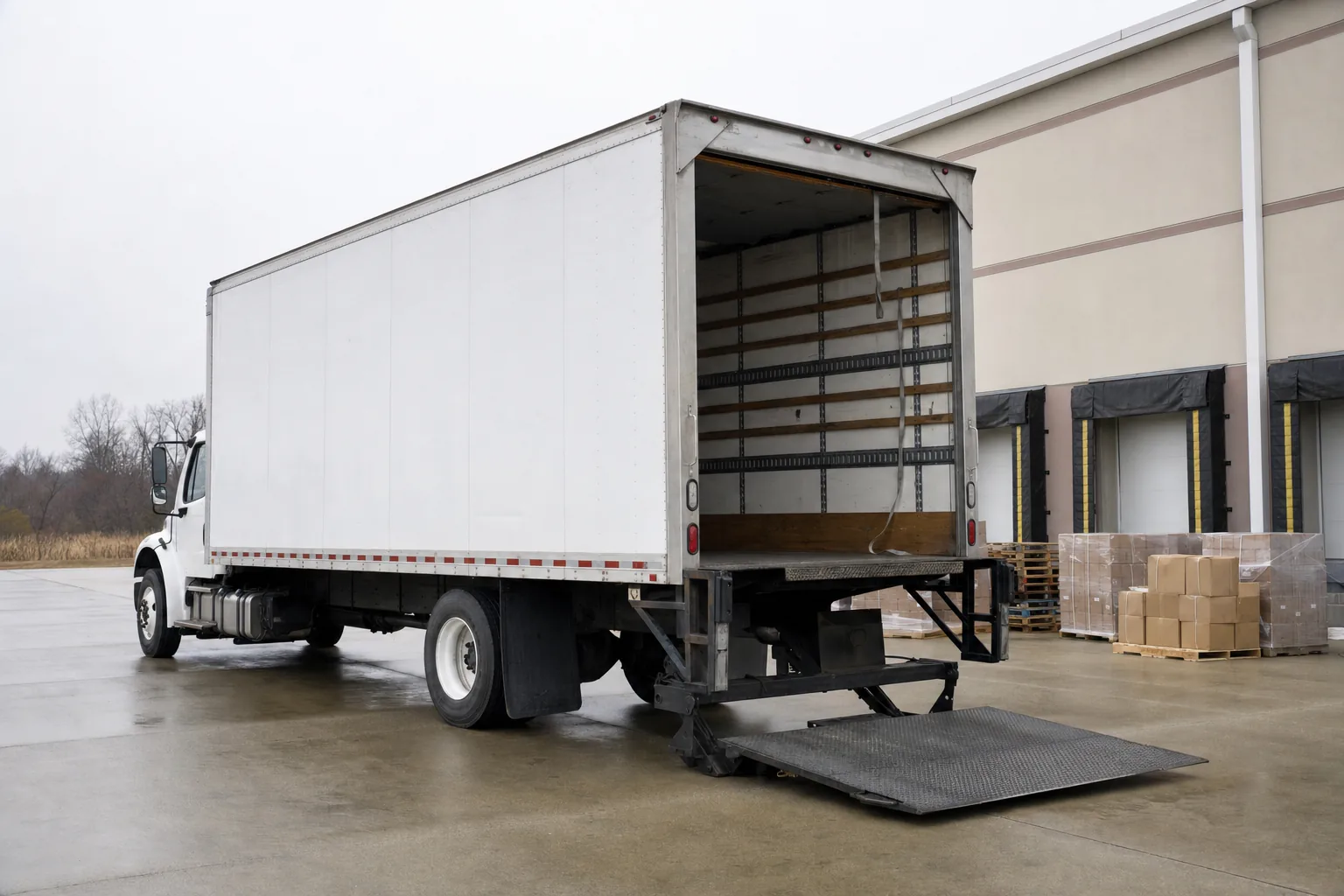


- Most drivers underestimate their real cost per mile by excluding maintenance, tire wear, unpaid deadhead, and their own labor.
- When those costs are included, freight that looks “good” on paper often delivers far thinner margins in reality.
- Cost per mile is not just a calculation – it defines your true break-even point on every load.
- Knowing your real cost per mile turns load selection from guesswork into discipline.
- The difference between staying busy and running a profitable operation is usually this number.
Where The Confusion Actually Begins
The confusion rarely starts while you’re rolling. It sets in later – parked somewhere quiet, the engine ticking as it cools, scrolling through loads that all seem almost right. The rate isn’t terrible. The miles look manageable. You tell yourself this one should work.
But when the week closes, the math never feels as solid as it should.
You stayed moving. You ran hard. And still, the money feels thin – thinner than the effort justified. Most drivers recognize this moment. Some chalk it up to “how trucking is now.” Others blame rates, fuel, brokers, dispatchers. All of those factors matter.
In most cases, though, the problem traces back to one number drivers believe they understand – and usually don’t.
Cost per mile.
For many drivers trying to understand their owner operator cost per mile, this is exactly where the confusion begins.
Ask a driver what their cost per mile is and the answer often comes quickly. Fuel. Truck payment. Maybe insurance. Divide by the miles and move on. It sounds reasonable, and more importantly, it feels manageable. That number makes borderline freight look acceptable. It makes slow weeks feel temporary instead of structural.
The problem is that it isn’t the number your truck is actually charging you.
What is The Real Cost Per Mile for Owner-Operators in 2026?
In 2026, most owner-operators running box trucks or Sprinters operate between $1.05 and $1.35 per mile in real all-in cost, depending on fuel prices, maintenance discipline, and deadhead percentage.
This number includes fixed costs, variable costs, unpaid miles, and owner compensation. This number directly determines what owner-operators actually take home each week.
The Costs Trucking Teaches You to Ignore
Trucking has a way of teaching you to ignore costs you don’t feel immediately. Anything that doesn’t hit weekly gets pushed aside. Insurance renewals. Maintenance that hasn’t happened yet. Tire wear that feels abstract until it isn’t. You don’t feel those costs mile by mile, so they don’t make it into your mental math.
But the truck doesn’t forget them.
This is why so many drivers misunderstand their true trucking operating costs per mile, even after years on the road.
Take a common expedited setup – a box truck or Sprinter running mixed regional freight. Say over the course of a month you run about 10,000 total miles, including repositioning and deadhead. Even a modest percentage of empty miles can dramatically shift your real operating cost.
Fuel comes out to roughly $5,500. Diesel prices tracked by the U.S. Energy Information Administration continue to fluctuate, which means this number rarely stays stable month to month.
Your truck payment is $1,200. Insurance is $900. Add another $300 for permits, ELD, tools, dispatch or admin costs. On paper, you’re at about $7,900 for the month.
Most drivers would stop there. Divide by 10,000 miles and you get $0.79 per mile. That feels safe. That makes a $1.40 or $1.50 run look like it has room. IRS mileage rates are not a proxy for real operating cost.
But the truck hasn’t stopped charging you.
What Real Cost Per Mile Looks Like in Practice
Every one of those miles moved you closer to your next service interval. Tires didn’t stay new. Components didn’t freeze in time. Even if nothing broke this month, value still came off the truck. Ignoring that doesn’t make it disappear – it just delays the bill.
Add a conservative maintenance reserve of $0.15 per mile and tire wear of another $0.05. That’s $2,000 more for the month. Now you’re at $9,900 total, or $0.99 per mile. And that’s still before paying yourself.
If this is a business – not just a truck that feeds itself – your labor has to exist in the math. Even a modest $1,500 monthly draw adds another $0.15 per mile. Suddenly your real cost is closer to $1.14 per mile.
This is what an honest box truck cost per mile or Sprinter van cost per mile looks like when the math is done completely.
Nothing dramatic happened. No breakdown. No bad broker. Just complete math.
When “Good Freight” Quietly Stops Working
Now go back and look at the freight that felt “pretty good.” That $1.45 load didn’t change – but what it means did. The margin that once felt comfortable is now thin enough that one bad deadhead, one slow unload, or one postponed repair can erase it.
This is the moment many drivers realize they never calculated their true trucking cost per mile in the first place.
When twenty percent of your miles are unpaid, the paid miles have to carry more weight than most drivers realize. Empty miles don’t feel expensive in the moment, but they raise the cost of every loaded mile that follows. That’s why drivers find themselves chasing the next run to “fix” the week instead of questioning whether the week was priced correctly to begin with. Before accepting any load, run a quick pre-booking check using this 60-second box truck load checklist.
Cost Per Mile as a Business Boundary
This is also why trucking feels tighter now, even when freight is moving.
Margins don’t forgive incomplete math anymore. Costs stack faster. Mistakes linger longer. One optimistic decision can undo two solid weeks. Industry analysts have repeatedly noted the disconnect between freight rates and actual profitability. For a full breakdown of average owner-operator earnings in 2026, including weekly gross and net numbers by equipment type, see our updated salary analysis.
Drivers who stabilize aren’t necessarily running more miles – they’re running fewer bad ones. Less panic freight. Less unpaid repositioning. More deliberate yeses, and more disciplined noes.
That shift doesn’t come from motivation or hustle. It comes from knowing your real floor.
Expedited drivers often learn this earlier than most. When you’re not chasing volume, every load has to justify itself. There’s less room for “I’ll make it up later.” Either the numbers work, or the truck stays parked. That constraint forces clarity, and clarity changes behavior.
Cost per mile isn’t just a calculation. It’s a boundary. It’s the line that tells you when to walk away – even when you’re tired of waiting, even when the rate almost works, even when moving feels better than sitting.
Once you know your break-even cost per mile, those decisions stop being emotional. If you don’t draw that line yourself, the market will draw it for you. And it won’t be generous.
The Number That Decides Your Future Either Way
Your real cost per mile exists whether you calculate it or not. You’re paying it on every mile you drive.
The only question is whether you’re aware of it – or letting it quietly decide your future for you.
Knowing your real cost per mile changes how you look at every load – but it only helps if the freight in front of you actually respects that number.
ExpeditedJobs focuses on expedited freight that makes sense for Sprinter vans, box trucks, and straight trucks – fewer filler miles, less guesswork, and more visibility into what you’re actually running. For drivers who already know their floor, it’s a way to stay disciplined instead of chasing the next “almost good” load.
If you’ve done the math and want freight that works with it, not against it, ExpeditedJobs is a good place to start.
Frequently Asked Questions
What is cost per mile in trucking?
Cost per mile is the total cost of operating your truck divided by the total miles driven. It includes fixed expenses (truck payment, insurance, permits), variable expenses (fuel, maintenance, tires), unpaid deadhead miles, and – if trucking is a business – your own labor. It represents the minimum amount each mile must earn to avoid losing money.
Why do so many drivers underestimate their real cost per mile?
Most drivers calculate cost per mile using only the expenses they feel immediately, such as fuel and truck payments. Costs that arrive later – maintenance, tire wear, depreciation, unpaid miles, and labor – are often ignored until they surface as a large bill. When those costs are excluded, the number looks safer than it actually is.
Should deadhead miles be included in cost per mile?
Yes. Deadhead miles still consume fuel, tires, time, and maintenance life. Excluding them understates your real operating cost and shifts the burden onto your paid miles. Even a modest amount of unpaid repositioning can materially raise your true cost per mile.
Is the IRS mileage rate a good way to estimate trucking costs?
No. IRS mileage rates are a tax simplification tool, not a proxy for real operating cost in commercial trucking. They are designed for mixed-use passenger vehicles and do not reflect the full cost structure of running a truck for profit.
How often should drivers recalculate cost per mile?
At a minimum, cost per mile should be reviewed quarterly. It should also be recalculated after major changes such as fuel price swings, insurance renewals, equipment changes, or shifts in how much deadhead you’re running. Cost per mile is not static – it moves with the business.
What is a break-even cost per mile?
Your break-even cost per mile is the point at which a load covers all operating expenses but leaves no profit. Any rate below that number loses money. Knowing this floor allows drivers to evaluate loads objectively instead of relying on gut feel or urgency.
Why can “good rates” still feel unprofitable?
A rate can look good in isolation but still underperform once all costs are accounted for. Thin margins, unpaid miles, delays, or deferred maintenance can erase the apparent profit. When drivers say they are busy but not getting ahead, cost per mile is usually the missing variable.
Does expedited freight change cost per mile?
Expedited freight doesn’t automatically lower cost per mile, but it can reduce the damage caused by deadhead and filler miles. When freight aligns better with a truck’s operating reality, it becomes easier to protect margins – provided the driver knows their real numbers.
How does knowing cost per mile change load decisions?
Once cost per mile is clear, load selection becomes disciplined instead of emotional. Decisions are based on math rather than urgency, boredom, or hope that the next run will “fix” the week. Over time, that discipline matters more than chasing higher headline rates.

Table of Content
- Where The Confusion Actually Begins
- What is The Real Cost Per Mile for Owner-Operators in 2026?
- The Costs Trucking Teaches You to Ignore
- What Real Cost Per Mile Looks Like in Practice
- When “Good Freight” Quietly Stops Working
- Cost Per Mile as a Business Boundary
- The Number That Decides Your Future Either Way
- Frequently Asked Questions