



Launching a new MC authority is only the first step. The real turning point comes when a carrier completes the first several broker-approved loads and begins building a performance record that brokers can trust. During the early weeks, most carriers discover that freight availability is not the main challenge – approval and credibility are.
Understanding how to secure the first 10 broker-approved loads is one of the fastest ways to move from “new authority risk” to a carrier profile that brokers actively call back.
Quick Answer: How new MC carriers get their first approved loads
New MC carriers secure their first approved loads by targeting brokers that accept new authorities, focusing on lower-risk lanes, maintaining complete onboarding records, and delivering the first shipments with clean paperwork and on-time performance. The first 5-10 completed loads create the initial credibility that expands freight access across broker networks.
Why the first 10 loads matter more than the first 1,000 miles
Many new carriers concentrate on running as many miles as possible immediately after activating their authority. However, brokers evaluate reliability more than early mileage totals. A carrier that completes 10 clean, documented loads often gains faster approval access than one that runs large mileage totals with inconsistent paperwork or communication.
Brokers don’t approve new carriers randomly – they score early performance aggressively, which is why many new authorities face rejection before understanding how brokers evaluate new MC authorities.
Most broker compliance systems track performance history, including delivery timeliness, documentation accuracy, and claims activity. Once several successful loads are recorded, the carrier profile begins moving out of the “new authority” risk category and into a more standard approval tier.
This is why experienced dispatchers often describe the first 30-60 days as a credibility-building phase, not a revenue-maximization phase.


Step 1: Target brokers that accept new authorities
Not all brokers operate under the same onboarding rules. Some require 90-day authority age minimums, while others approve new carriers after manual review. Many onboarding platforms such as RMIS, Carrier411, and SaferWatch flag new authorities automatically, but manual approval is still possible for many shipments.
New carriers should initially focus on:
- Brokers known to work with new authorities
- Regional freight networks
- Lower-risk shipments with flexible appointment windows
- Consistent lanes where reloads are predictable
This targeted approach improves the chances of securing early loads while avoiding unnecessary rejection cycles.
Step 2: Ensure onboarding and compliance profiles are complete
Many load rejections during the first weeks occur not because of authority age alone, but because onboarding records appear incomplete in broker systems. Even small inconsistencies between insurance filings, contact details, or compliance databases can delay approval.
Before booking early shipments, new carriers should confirm:
- Insurance filings show active status across verification systems
- Contact details match FMCSA registration records
- Carrier onboarding portals show “approved” or “active” status
- Required compliance documents are uploaded correctly
Completing these checks once can prevent repeated delays across multiple broker networks.
Step 3: Prioritize reliability over rate in the first weeks
Early loads should be selected for consistency, not necessarily the highest payout. Brokers closely monitor early service performance, and even one failed load can slow approval with multiple broker networks.
Loads with the following characteristics are ideal for early authority history:
- Predictable pickup and delivery schedules
- Reasonable mileage without extreme routing complexity
- Standard freight with lower claims exposure
- Brokers with clear communication channels
After several successful deliveries, negotiating leverage and freight access typically improve.
Step 4: Submit clean paperwork immediately after delivery
Documentation speed and accuracy are often underestimated factors in broker approval decisions. Many broker systems record how quickly proof-of-delivery and billing paperwork are submitted. Carriers that consistently submit accurate documents shortly after delivery often gain faster internal performance scoring improvements.
During the first 10 loads, carriers should aim for:
- Immediate proof-of-delivery submission
- Accurate rate confirmation documentation
- Correct invoice formatting
- Clear communication with broker billing teams
These steps build a reputation for reliability that spreads across broker networks.
Step 5: Maintain communication during early shipments
Communication issues are among the most common reasons brokers hesitate to reassign loads to new carriers. Consistent check-ins during pickup, transit, and delivery reassure brokers that the shipment is under control and reduces perceived risk.
Even short update messages can significantly influence internal broker notes and performance scoring systems. Over time, strong communication patterns often translate into repeat load offers.
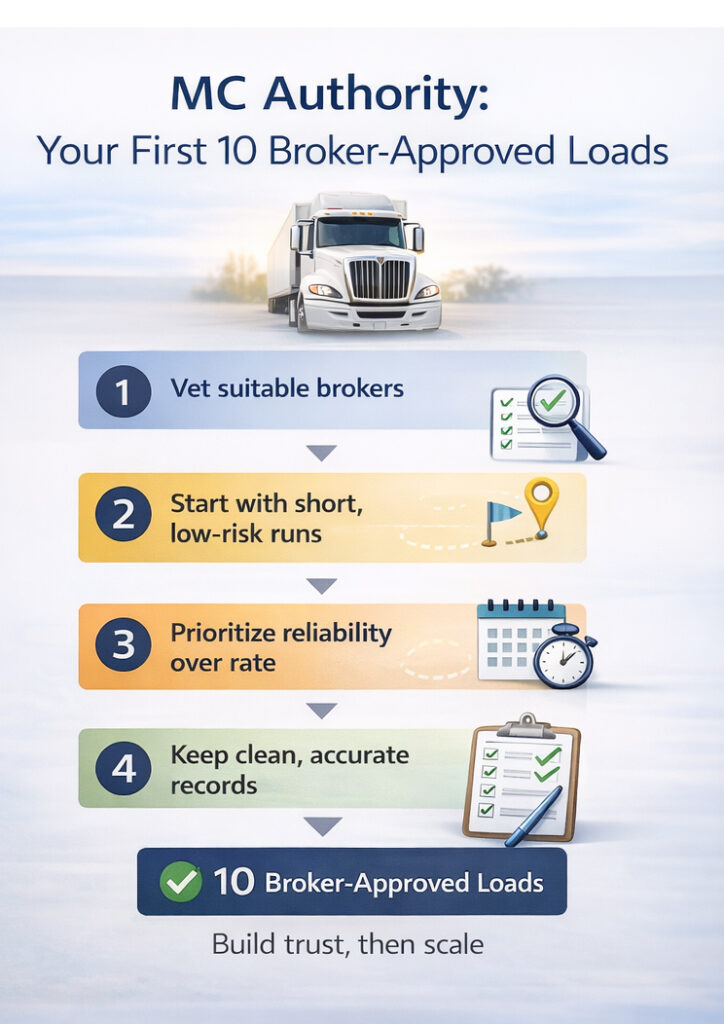
What typically changes after the first 10 loads
Once a carrier completes several successful shipments, internal broker systems begin to treat the authority differently. Instead of relying primarily on authority age, the evaluation increasingly reflects performance history. Carriers that demonstrate reliability during the first weeks often begin receiving:
- Faster approval responses
- Access to more consistent lanes
- Improved rate negotiation opportunities
- Direct outreach from brokers familiar with their service record
The shift is gradual, but noticeable for most carriers within the first 30-60 days of active operations.
This shift usually marks the transition out of the most fragile phase of a carrier’s launch, which is why the first 30 days under a new MC authority require a different approach than long-term operations.
Key Takeaways for New MC Load Strategy
- The first 10 completed loads establish early broker credibility.
- Many onboarding systems flag authorities under 60-90 days, but manual approval is still possible.
- Complete compliance records and synchronized insurance filings reduce approval delays.
- Reliability, communication, and clean paperwork matter more than early rate negotiation.
- Consistent early performance leads to faster access to better freight opportunities.
FAQ: Getting Your First Broker-Approved Loads
How many loads does a new MC need before brokers trust them?
Many carriers see noticeable improvements in broker approval after 5-10 successfully completed loads, depending on performance quality and communication consistency.
Do brokers automatically reject new authorities?
Some brokers apply authority-age filters, but many still approve new carriers through manual review if compliance records are complete and risk is acceptable.
How long does it take to secure the first 10 loads?
Most active carriers complete their first 10 loads within the first 30-45 days, depending on dispatch structure, lane selection, and broker relationships.
What helps new carriers get repeat loads faster?
On-time delivery, accurate documentation, and consistent communication significantly increase the likelihood of repeat freight offers.
Building credibility load by load
The first phase of a new MC authority is not defined by how many miles the truck runs – it is defined by how quickly the carrier builds a trusted performance record. Each successfully completed shipment reduces perceived risk, improves broker scoring visibility, and expands access to stronger freight networks.
For many new carriers, the fastest way to build early broker credibility is by running structured loads designed for new authorities, rather than guessing through open boards during the first weeks.
Starting a New MC and Ready to Run Your First Loads?
Structured freight can help new authorities complete their first broker-approved shipments and begin building a reliable performance record.

Table of Content
- Quick Answer: How new MC carriers get their first approved loads
- Why the first 10 loads matter more than the first 1,000 miles
- Need Your First Broker-Approved Loads?
- Step 1: Target brokers that accept new authorities
- Step 2: Ensure onboarding and compliance profiles are complete
- Step 3: Prioritize reliability over rate in the first weeks
- Step 4: Submit clean paperwork immediately after delivery
- Step 5: Maintain communication during early shipments
- What typically changes after the first 10 loads
- Key Takeaways for New MC Load Strategy
- FAQ: Getting Your First Broker-Approved Loads
- Building credibility load by load
- Starting a New MC and Ready to Run Your First Loads?


