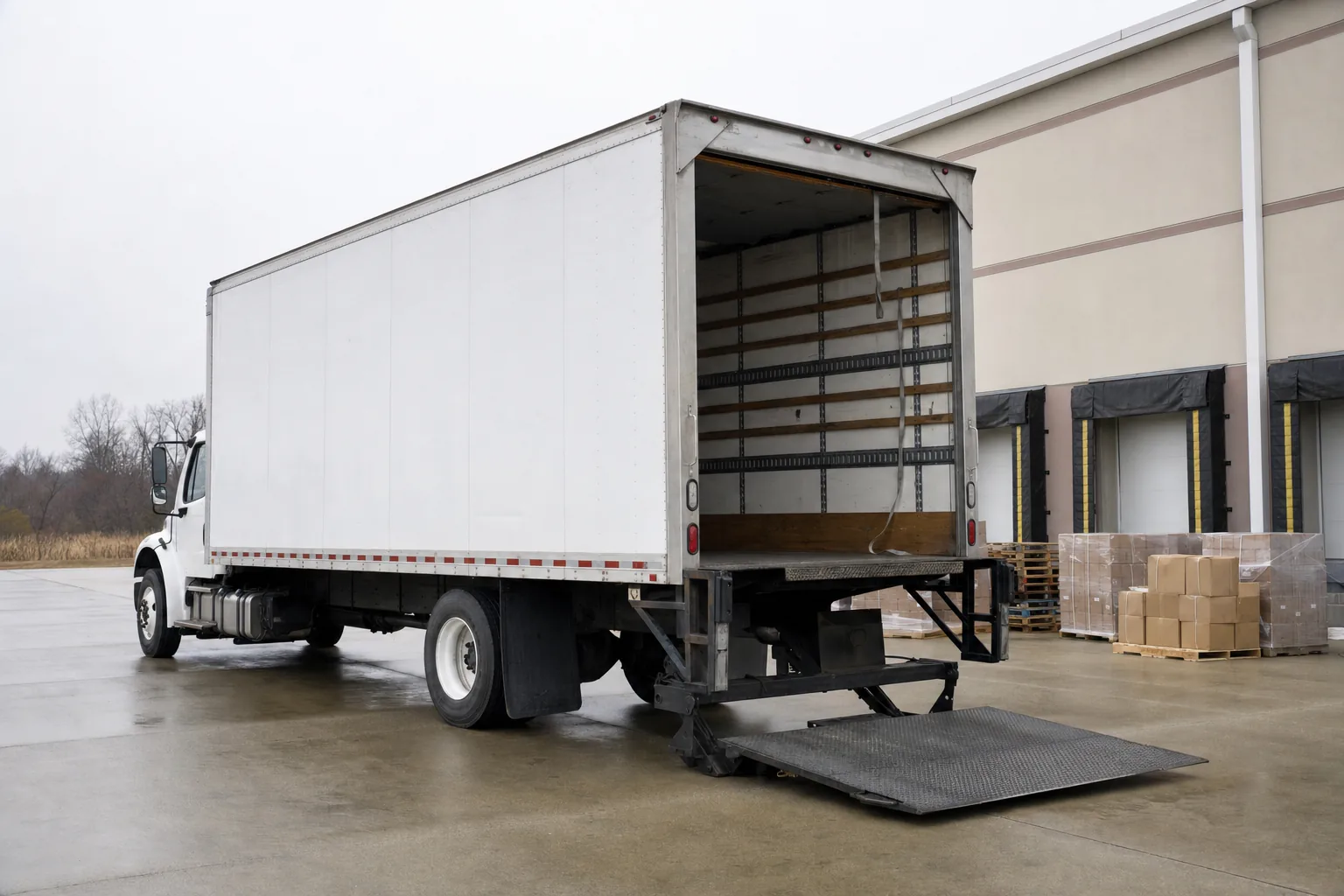


Most new owner-operators plan for month 2. That is the first mistake. The first month owner operator what to expect is almost never what they prepared for. That is not because the work is hard, but because the timeline does not match what they were told. Revenue does not start when the truck is ready. It starts when the system around the truck is ready. Those are not the same date.
This is the real sequence. Not the optimistic version.
The clock starts before you move a load
FMCSA processing for a new MC number takes 20 to 25 business days. That is the official window after application submission. It is not negotiable and it does not speed up if the truck is sitting idle.
Insurance must be active and filed before FMCSA releases operating authority. That means the insurance cost starts before the first dollar of revenue. Most new operators do not account for this overlap. They budget for insurance starting when they start hauling. The actual cost starts earlier.
ELD must be installed, registered with an FMCSA-approved provider, and paired to the vehicle before the first commercial move. This is not optional for anyone subject to the mandate, and setup takes time if the device is new.
Broker packets are a separate process. Each broker relationship requires a completed packet: W-9, operating authority, certificate of insurance, sometimes a vetting call. This does not happen once. It happens with every new broker, and most packets take 3 to 7 days to process before the broker will book freight with a new carrier.
Week 1 is administrative. That is the honest starting point.
The 21-day window problem
New MC authority is invisible to most brokers for three to four weeks after issuance. This is the part no one explains clearly before the decision is made.
Brokers pull carrier data from monitoring services. Those services update on their own schedule, not FMCSA’s. A brand-new MC may be fully legal and fully compliant (insurance active, authority granted) and still not appear as a bookable carrier in the systems brokers rely on.
That 21-day window is not a soft delay. It is a hard barrier. During that period, many load board offers will simply not come through. Brokers who would otherwise assign freight will see a blank record or a flag and move to the next carrier.
This is not a problem you can call your way out of. The data has to catch up on its own schedule.
Operators who do not plan for this window burn through cash waiting for calls that do not come. The ones who plan for it either stay active in their previous situation through the transition, or they enter with freight access for new owner-operators that does not depend on broker visibility from day one.
Week 2 and 3: what actually happens on the load boards
Assume authority is active. Assume ELD is installed. Assume the insurance certificate is filed. A new owner-operator goes to the load boards.
Here is what they find.
Most flatbed, reefer, and dry van brokers will ask for at least six months of operating history before offering consistent freight. Some ask for a year. A new MC number with zero loads completed does not meet that threshold. The broker is not being difficult. They are managing liability with an unknown carrier.
Box truck operators face a different version of the same problem. Smaller shipments and expedited moves are more accessible with a new MC, but the rates at this stage are not strong. Brokers know new carriers have few options. That is reflected in the offers.
The first calls to brokers with a brand-new MC usually go one of three ways. The broker does not call back. The broker says they are not set up for new MCs under six months. Or the broker offers a rate well below market, knowing the carrier is building history and has limited leverage.
None of this means the business is broken. It means the entry point matters more than the effort level.
What month 1 revenue actually looks like
Box truck operators in month 1 gross $4,000 to $8,000 on average. Not $15,000. Not $12,000. The $15,000 month 1 story exists, but it usually involves someone who entered with existing broker relationships, a freight program already in place, or pre-arranged loads before authority was even issued.
The math behind the $4,000 to $8,000 range is straightforward. Fewer load options mean lower average rates. Lower average rates mean fewer miles are worth taking. Some weeks are lost to administrative setup, broker onboarding, or the dead zone after a bad reload position. Month 1 also tends to carry the full weight of startup costs: insurance deposit, ELD fees, fuel, plates.
The gap between expectation and reality at this stage is not a motivation problem. It is a freight access problem. Operators who walked in expecting $12,000 in month 1 and made decisions based on that number (truck payments, living expenses, fuel advance strategies) face real pressure at week three when the bank account does not match the plan.
The cash flow gap nobody warns about
You delivered. The BOL is signed. The invoice goes out. Then nothing happens for three to four weeks.
Most brokers run Net 15 to Net 30. Loads delivered in Week 2 don’t pay until Week 4 or 5. Loads delivered in Week 3 pay in Week 5 or 6. During that gap, every cost is out of pocket: fuel, tolls, parking, the small repair you didn’t budget for, food on the road.
The American Transportation Research Institute’s 2025 Operational Costs of Trucking report puts the industry’s average cost of operating a truck at $2.26 per mile, with non-fuel marginal costs at a record $1.78 per mile. That number does not pause while a broker holds your invoice for 30 days. It accrues from the day you start moving.
Most operators arrive in Month 1 with enough cash to cover a fuel reserve and not much beyond that. The reserve is supposed to cover the trip cost. What it actually has to cover is the trip cost plus the 30-day timing gap before any of those completed loads turn into deposits.
That is what Week 3 pressure actually is. The work is done. The freight delivered. The bank account hasn’t moved. That gap is not a performance failure. It is a structural mismatch between when the broker pays and when the operator’s costs hit.
What actually determines month 1 income
It is not hustle. It is not how many broker calls get made per day. It is not load board refresh rate or negotiation skill, though those matter later.
Month 1 income is almost entirely determined by the freight access strategy in place before the first load runs.
Operators who enter with a structured freight program (a consistent set of lanes, a known freight volume, and a dispatch system that does not depend on the new MC being visible to every broker) earn earlier and earn more in month 1. Not because they work harder. Because the freight is available before the system catches up to their new authority.
Operators who go solo on load boards in month 1 are competing for freight while simultaneously being filtered out by the same brokers who post it. They are inside a system that is designed to exclude them until they build history.
That is a structural problem, not a personal one.
For operators looking at this honestly, the entry strategy is the income strategy. Structured freight access built around new MCs removes that barrier from day one. The freight program does not depend on a broker seeing a six-month-old MC number. The relationship is already in place when the operator starts.
The operators who survive month 1 intact
Surviving month 1 means ending the month with operating capital still available and a clear path to month 2. A surprising number of new operators do not reach that point, not because the business model is wrong, but because month 1 was more expensive and less productive than they planned for.
The operators who come through cleanly share a few patterns.
They entered with realistic revenue expectations of $4,000 to $8,000 for a box truck, not $15,000. They accounted for the gap between authority issuance and first load. They had cash reserves to cover at least four to six weeks of operating costs before revenue normalized. And critically, they did not rely on load boards as their only freight source in weeks one through three.
Freight partner relationships, freight programs, and structured dispatch arrangements are not just conveniences. At the new-MC stage, they are the difference between a month 1 that builds the business and a month 1 that drains it.
The honest Month 1 timeline
What new operators are told versus what actually shows up:
| Week | Expectation | Reality |
|---|---|---|
| Week 1 | On the road, first loads moving | Setup: authority, insurance, ELD, broker packets |
| Week 2 | Easy load board access | Most brokers won’t book a new MC; quality freight is filtered out |
| Week 3 | First income hits the account | Loads delivered, invoices sent, no payments arriving yet |
| Week 4 | Stable weekly routine | Still pricing in deadhead, broker patterns, lane economics |
None of this is unusual. It is the standard sequence for a new MC in a broker-driven market. The operators who plan for this version of Month 1 have reserves and a freight access strategy that does not depend on the load board. The ones who plan for the optimistic version run out of cash in Week 3.
Month 1 is a setup problem, not a performance problem
The new owner-operator who struggles in month 1 is almost never doing the wrong things. They are doing the right things in the wrong sequence, or they entered without accounting for the structural disadvantages of a new MC in a broker-driven market.
The timeline is fixed. FMCSA does not rush. Brokers do not waive their history requirements out of goodwill. The 21-day visibility gap does not shorten because the truck is ready.
What is not fixed is the freight access strategy. That decision is made before the first load runs. It is the one variable that consistently separates a productive month 1 from a survival month 1.
Enter with the right structure and the timeline works with you. Enter without it and the first month becomes a test of how long the reserve lasts.

Table of Content
- The clock starts before you move a load
- The 21-day window problem
- Week 2 and 3: what actually happens on the load boards
- What month 1 revenue actually looks like
- The cash flow gap nobody warns about
- What actually determines month 1 income
- The operators who survive month 1 intact
- The honest Month 1 timeline
- Month 1 is a setup problem, not a performance problem