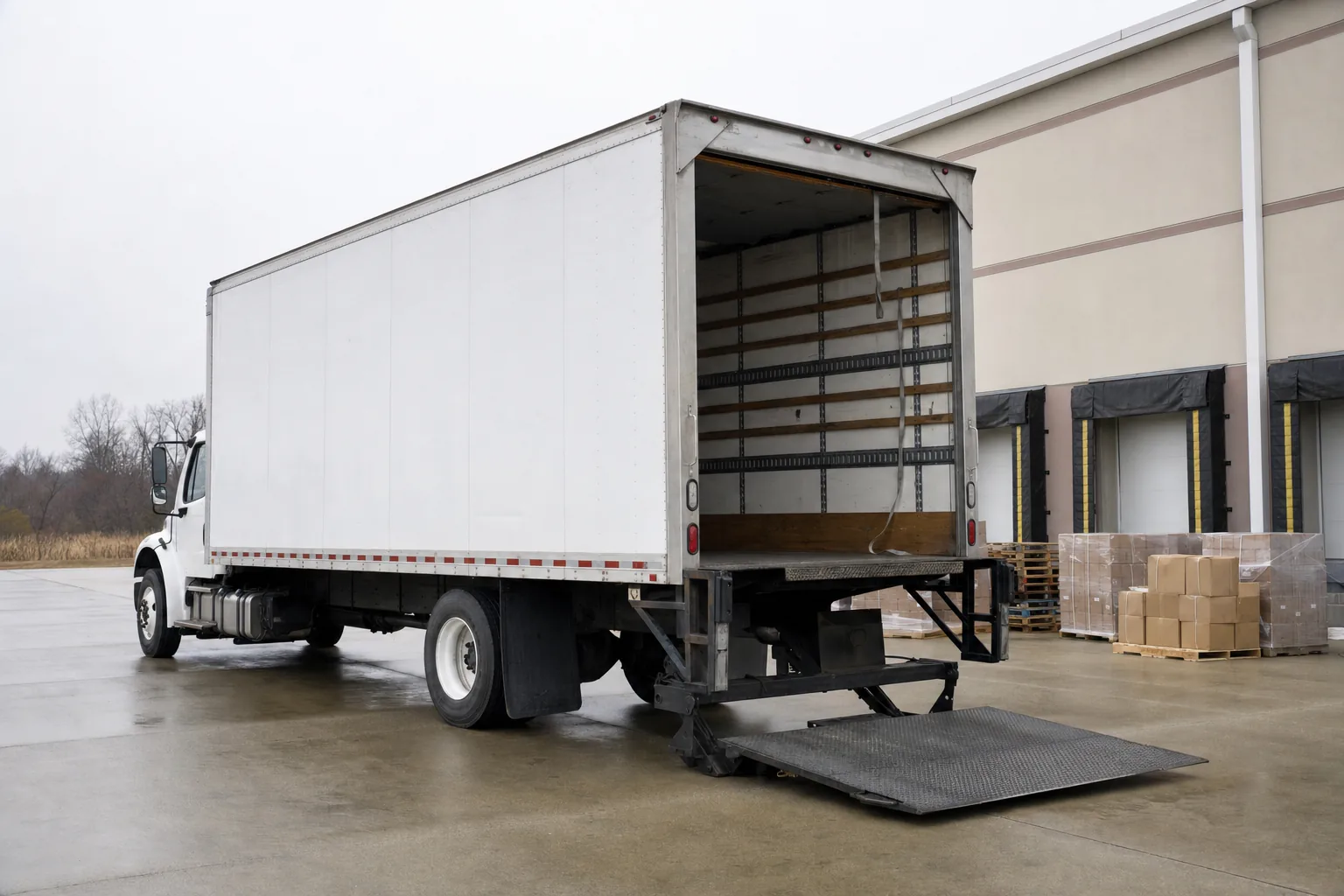



Detention pay is supposed to protect your income when a shipper or receiver burns your clock.
In reality, it’s one of the most misunderstood (and most frequently unpaid) parts of the load.
That’s why detention and layover aren’t “extra money.” They’re profit recovery – and if you don’t confirm the terms before you’re stuck, you can lose a full day’s earnings even on a load that looked good on paper.
Most drivers don’t lose detention because they didn’t wait long enough – they lose it because the paperwork didn’t match the broker’s process.
In 2026, box truck owner-operators are dealing with tighter margins, more appointment-driven freight, and warehouses that treat delays like normal operations. If you’re not protecting detention and layover correctly, you’re not running a business – you’re donating time.
This guide breaks down what detention pay really is, what layover pay covers, and the exact questions to ask so you stop getting trapped in unpaid waiting time.
Detention Pay Rules That Decide Your Week
- Free time matters more than the rate
- Detention start time rules are everything
- Proof requirements decide if you get paid
- If it’s not in writing, it’s not real
Why detention fights are getting worse in 2026
Detention problems aren’t new – but they’re getting harder to collect.
Appointment freight is tighter, dock schedules are packed, and warehouses are operating with less flexibility. The result is simple: more waiting time gets normalized, and owner-operators are expected to absorb the cost unless the paperwork is airtight. Waiting time isn’t just frustrating. It eats into your available hours and your ability to reload.
That’s why the best operators don’t “hope detention gets paid.”
They run a system that makes detention collectable – or they avoid freight where it won’t be.
Most owner-operators don’t lose money on detention because they were late or careless. They lose it because detention is rarely automatic – it’s conditional, and the conditions are often vague until you’re already stuck.
The pattern is familiar: you arrive on time, check in, and the clock starts bleeding. Two hours becomes four. Four becomes “just another delay.” Then the load finally moves – and the detention conversation starts.
That’s when the terms appear out of nowhere: detention wasn’t approved, the facility didn’t sign in/out times, free time starts after the appointment, or the payout is capped so low it barely covers the delay.
It’s not just frustrating. It’s a profit leak – and one of the main reasons box truck operators can run “good loads” all week and still finish with weak numbers.
Detention vs. layover vs. TONU (simple definitions)
Let’s keep this clean:
Detention pay
Money paid when you’re delayed at pickup or delivery beyond the “free time.”
Usually measured in $/hour.
Layover pay
Money paid when the delay becomes so long you can’t reasonably complete the load that day and you’re forced to sit overnight.
Usually paid as a flat amount (example: $150–$300, sometimes more).
TONU (Truck Ordered Not Used)
A cancellation fee when you were dispatched to a load, showed up (or were en route), and the shipper cancels or the load is not available.
Usually a flat fee.
Each one matters – but detention is the one that quietly destroys weekly profit because it happens constantly and drivers assume it’ll “work itself out.”
It won’t.


Who actually pays detention – and who approves it?
This is where a lot of owner-operators get misled.
Here’s the reality:
- The shipper/receiver causes the delay
- The broker controls the paperwork and approval
- The carrier/dispatch (or you, as the operator) must prove it happened
In many cases, the broker tries to recover detention from the customer (shipper/receiver). If the broker can’t collect it, they may deny it – even if the delay was real.
That’s why detention pay is less about “fairness” and more about terms + proof + process.
If the broker can’t validate it quickly, it becomes a dispute.
And disputes don’t pay bills.
What “free time” actually means (and why it decides your week)
Every detention conversation eventually comes down to one phrase: free time.
Free time is the window where the shipper or receiver can hold your truck – and legally, contractually, and practically pay $0 for the delay. It’s not a small detail. It’s the line that decides whether you get paid for waiting or absorb the loss yourself.
Most loads fall into a few common setups: one hour free, two hours free, or “no detention unless the delay exceeds two hours.” But the version that hurts owner-operators the most is when detention doesn’t start at check-in – it starts after the appointment time.
That difference sounds minor until you run the math.
Let’s say your appointment is at 2:00 PM. You arrive early and check in at 1:30 PM, thinking you’re doing the right thing. You don’t get a door until 4:30 PM. On your clock, that’s three hours of waiting.
But if the broker’s policy is “detention starts after appointment time,” then detention doesn’t start at 1:30 – it starts at 2:00. Now your three-hour wait becomes 2.5 hours “counted.” Subtract two hours of free time, and you’re left with 30 minutes of payable detention.
That’s how a real delay turns into “nothing payable” – not because you weren’t delayed, but because the rules were written to make most of the delay disappear.
Detention pay in 2026: what’s normal (and what’s a trap)
Detention rates vary by lane, broker, and facility, but most box truck owner-operators will see detention land somewhere in the $40-$75 per hour range. Some shippers pay more. Some brokers cap it hard – for example, a max payout of $150, even if you lose most of the day.
Still, the biggest problem usually isn’t the rate.
Example rate con language: “Detention: 2 hrs free, then $60/hr, billed in 30-minute increments, max $180 (requires signed in/out times).”
The real problem is whether detention is collectable at all.
Detention gets denied for predictable reasons: the broker says the proof isn’t sufficient, the driver didn’t notify in time, the rate confirmation language is vague, or the facility refuses to sign in/out times. Sometimes it’s a process issue. Sometimes it’s a paperwork issue. And sometimes it’s a quiet way of pushing the cost of delay back onto the owner-operator.
That’s why your job isn’t just to wait. Your job is to build a paper trail while you wait – because the paperwork is what turns detention from a “maybe” into a payable line item.
The 30-second detention check (before you roll)
Before you accept the load, confirm these three things in writing (text or email):
- Free time (pickup and delivery)
- When detention starts (check-in vs appointment time)
- Rate + cap (per hour + maximum payout)
This isn’t a full load checklist – it’s a detention-specific check that prevents the most common “unpaid delay” scenarios.
The 7 things you must confirm BEFORE you get stuck
This is the difference between detention pay that “exists” on paper – and detention pay that actually gets paid.
Most problems don’t happen because an owner-operator didn’t wait long enough. They happen because the rules weren’t confirmed upfront, the proof wasn’t collected correctly, or the broker’s process wasn’t followed in real time. If you want detention to be collectable, you need clarity on seven points before the delay becomes a dispute.
1) Confirm how much free time you have
Start with the simplest question – because it controls everything that comes after it.
Ask directly: Is it one hour free or two? And make sure you know whether that free time applies at pickup, delivery, or both. If the broker can’t answer quickly, that’s a warning sign. Clean freight has clean terms.
2) Confirm when detention starts (check-in vs appointment time)
This is the trap that costs drivers the most money.
Ask: Does detention start after check-in, or after the appointment time?
That one sentence decides whether your first hour or two of waiting even counts. Get the answer in writing – text or email is enough – because verbal confirmations disappear when it’s time to approve detention.
3) Confirm the detention rate (and don’t accept “it depends”)
Detention is usually measured in dollars per hour, but the rate only matters if it’s defined.
Ask: What is the detention rate per hour on this load?
If it’s not listed on the rate confirmation, assume it may turn into a fight later – especially if the facility is known for delays.
4) Confirm whether detention is capped
Some brokers will pay detention, but only up to a limit that doesn’t match real dock time.
Ask: Is detention capped – and what’s the maximum payout?
A low cap doesn’t always mean you should reject the load, but it does mean you should price the risk correctly. A “good rate” can turn into a weak day if the delay is predictable.
5) Confirm what proof is required to get paid
This is where most detention claims die.
Ask: What proof do you require for detention approval?
Some brokers want signed in/out times. Others accept BOL timestamps, gate check-in receipts, written facility confirmation, or documented tracking timestamps. If the broker requires signatures and the facility refuses to sign anything, you need a backup plan before you’re stuck trying to prove time you can’t document.
6) Confirm the notification rule (when you must report the delay)
Many brokers have a policy like: “You must notify us after one hour.”
If you wait too long to report the delay, the broker can deny detention even if the delay was real. Ask: When do you need me to report the delay so detention stays valid?
This isn’t about arguing later – it’s about following the process while it still matters.
7) Confirm layover rules if the delay turns into an overnight
Layover is separate from detention, and it needs to be treated that way.
Ask: If I’m not loaded or unloaded today, what is the layover pay and when does it apply?
Some facilities will roll appointments to the next day like it’s routine. For an owner-operator, that’s not routine – it’s lost revenue, lost reload opportunities, and a week that starts slipping.
What to say: scripts that get answers fast (and keep it professional)
You don’t need long conversations. You need clean, direct questions.
Script #1 – detention terms confirmation
“Just confirming detention terms: how much free time, when detention starts, and the rate per hour?”
Script #2 – check-in vs appointment time
“Does detention start after my check-in time or after the appointment time?”
Script #3 – delay notification
“If I’m waiting past free time, what’s the process to get detention approved? Who do I notify and when?”
Script #4 – layover protection
“If they roll me to tomorrow, what’s the layover pay and how do we document it?”
This is high-level professionalism. And brokers respond better to drivers who run like a business.
The documentation checklist (what to save while you’re waiting)
If you want detention to get paid, treat documentation like fuel: you need it to finish the week.
Save:
- arrival time screenshot (GPS or tracking app)
- check-in confirmation (guard shack, email, text)
- door assignment time (if provided)
- loaded/unloaded time
- BOL signed time (if possible)
- any written messages from the facility
- broker messages confirming detention terms
Even if detention doesn’t get paid on that load, this creates leverage for future loads:
- you identify problem facilities
- you avoid repeat delays
- you protect your weekly schedule
If detention gets denied: what to do next
This is usually the moment where drivers either get emotional – or they stop pushing entirely.
Both reactions are understandable. Neither one gets you paid.
When detention is denied, the best move is simple: respond like a business, not like someone asking for a favor. The goal isn’t to argue. The goal is to make the claim easy to approve.
Start by sending clean timestamps. Not a paragraph, not a story – just the facts. For example: arrived 1:27 PM, checked in 1:35 PM, door assigned 4:12 PM, unloaded 4:58 PM. That timeline instantly shows the delay without forcing anyone to interpret it.
Then attach proof that supports those times. A GPS screenshot, a check-in message, a gate receipt, a facility email – anything that confirms you were on-site and waiting. If the BOL includes relevant timestamps, include that too. The more straightforward the documentation, the less room there is for the claim to get stalled.
Next, reference the exact detention language on the rate confirmation. If the rate con says two hours free time and detention after that, quote it directly. That keeps the conversation anchored to the terms – not opinions.
Finally, ask one short question that forces clarity:
“What specific proof do you need to approve detention on this load?”
That single line does two things: it keeps you professional, and it pushes the broker to identify the real blocker instead of ending the conversation with “not approved.”
And once the load is done, document the facility for future decisions. If the same location repeatedly creates unpaid delays, that isn’t bad luck – it’s a pattern. And patterns are what quietly destroy weeks for box truck owner-operators.
Red flags: when detention is likely NOT getting paid
If you see these patterns, detention becomes a gamble:
🚩 “Detention only if shipper signs in/out times”
Many facilities won’t sign anything except the BOL.
If the broker demands signatures and the facility refuses, you lose.
🚩 “Detention starts after 4 hours”
That’s not detention – that’s unpaid time.
🚩 “Detention must be pre-approved”
Sometimes it’s real. Often it’s a stall tactic.
🚩 “We’ll take care of it later”
If it’s not in writing, assume it becomes a negotiation after delivery.
🚩 The broker avoids answering detention questions
If the terms are clean, it takes 10 seconds to confirm them.
Detention issues usually aren’t random. They’re often a partner quality problem. If you want to avoid repeat situations, read How to Vet Freight Partners before you commit to long-term freight relationships
Why this matters more for box trucks than most drivers realize
Box truck expediting is all about time efficiency.
You’re not hauling heavy freight at high RPM with huge buffers. Your advantage is speed, flexibility, and staying in motion.
So when a box truck loses half a day at a warehouse:
- your next pickup gets missed
- your reload window collapses
- your week turns into deadhead + downtime
- and the “good load” stops looking good
That’s why consistent, vetted freight isn’t just about rates.
It’s about fewer operational surprises.
The bottom line: detention is a business term – not a “nice-to-have”
Detention pay and layover pay are not bonus income.
They are your defense against the most common failure mode in expedited trucking:
time gets stolen, and nobody wants to pay for it.
If you confirm the terms, document delays correctly, and avoid repeat problem facilities, your week becomes more predictable – and your numbers stabilize.
And if you’re trying to run consistent freight, the goal isn’t to win every detention fight.
The goal is to stop taking freight where detention becomes a weekly routine.
Want steadier freight and fewer “surprise delay” weeks?
If you’re tired of unpredictable docks and last-minute schedule changes, ExpeditedJobs helps box truck owner-operators get matched with vetted loads running steadier lanes – so your week is built around consistency, not constant exceptions.
FAQs
1) When does detention pay start in trucking?
Detention pay usually starts after free time ends, but the exact start time depends on the rate confirmation terms. Some loads start detention after check-in, others after the appointment time.
2) How much is detention pay per hour in 2026?
Detention pay often falls in the $40–$75/hour range, but it varies by broker, lane, facility, and whether detention is capped.
3) What’s the difference between detention pay and layover pay?
Detention pay covers hourly delays at pickup or delivery. Layover pay applies when a delay forces you to stay overnight and continue the load the next day.
4) What is TONU in trucking?
TONU means Truck Ordered Not Used. It’s a cancellation fee paid when you were dispatched to a load and the shipper cancels or the freight isn’t available.
5) Can I get detention pay without signed in/out times?
Sometimes, yes – but many brokers require signed times for approval. If the facility won’t sign, you may need alternate proof like check-in documentation, GPS timestamps, or written confirmation.
6) What proof do brokers require for detention pay?
Common proof includes:
- signed in/out times
- BOL timestamps
- gate check-in receipts
- emails/texts from the facility
- GPS/tracking timestamps
What One Unpaid Detention Day Actually Costs You
Detention gets argued as a question of whether the rate offered is fair. The more useful question is what the delay costs you, because that figure is yours, it comes out of your own books, and nobody on the other end of the phone can dispute it.
Two costs stack up, and operators usually count only the second.
Cost one: your fixed cost per operating day
Add up everything that bills whether the wheels turn or not: truck payment, insurance, permits and registration, phone, ELD subscription, parking, and the maintenance reserve you set aside each month. Then divide:
Fixed cost per operating day = monthly fixed costs ÷ days you actually operate per month
That is what a lost day costs before you consider any load you did not run. It is also the number most operators have never worked out, which is why a long wait feels annoying rather than expensive.
Cost two: what you would otherwise have earned
Take your own average net per operating day over the last sixty days (net, after fuel and running costs, not gross revenue). A day spent at a dock does not produce it. Add the two together:
Cost of a lost day = fixed cost per operating day + average net per operating day
Compare that total against what detention pay is offering on the load and one thing becomes obvious quickly: detention pay is a partial recovery, not compensation. It softens the day; it does not buy the day back. That is the real reason to confirm free time, start time, rate, and cap before you roll rather than negotiate them while you are sitting in the yard. After the fact you are asking for a favour, before the fact you are agreeing to a term.
The quarterly number worth tracking
Once a quarter, count the hours you spent waiting and how many of those hours were actually paid:
Paid-detention share = hours paid ÷ hours waited
Then break it out by broker and by receiver. A customer with long free time who pays reliably is a completely different business proposition from one with the same wait who never pays, even when the rate per mile is identical. Kept over a few months, that single ratio is a better tool for deciding who you work with than any conversation about rates, and it is the kind of evidence that makes the conversation about rates go your way.

Table of Content
- Detention Pay Rules That Decide Your Week
- Why detention fights are getting worse in 2026
- Detention vs. layover vs. TONU (simple definitions)
- Tired of Losing Time at Shippers?
- Who actually pays detention – and who approves it?
- What “free time” actually means (and why it decides your week)
- Detention pay in 2026: what’s normal (and what’s a trap)
- The 30-second detention check (before you roll)
- The 7 things you must confirm BEFORE you get stuck
- What to say: scripts that get answers fast (and keep it professional)
- The documentation checklist (what to save while you’re waiting)
- If detention gets denied: what to do next
- Red flags: when detention is likely NOT getting paid
- Why this matters more for box trucks than most drivers realize
- The bottom line: detention is a business term – not a “nice-to-have”
- Want steadier freight and fewer “surprise delay” weeks?
- FAQs
- What One Unpaid Detention Day Actually Costs You