
Find Freight You Can Count On
Find consistent freight, fair pay, and routes that fit your lifestyle. Whether you run one truck or manage a fleet, we'll connect you with reliable loads and trusted partners who help you stay on the road and keep earning.
- 100%of earnings go to you
- 93%loads come directly from customers
- $15M+paid to drivers
- 38k+monthly loads count


Cargo Van Owner Operator Jobs in Texas
Own a cargo van in Texas and ready to run OTR? See if your setup fits.
We connect owner-operators with long-haul freight opportunities based on location, equipment, and availability, under our authority or your own MC, with dispatch support.
Why Cargo Van Owner-Operators Choose ExpeditedJobs
ExpeditedJobs is built for owner-operators who want to run OTR rather than local delivery or courier work.
Longer-Distance Freight
Our cargo van program focuses on OTR opportunities, with runs typically starting around the 400-mile range.
Know the Load Before You Accept
See the mileage, delivery requirements, and agreed pay before accepting an available load.
No Fixed or Dedicated Lanes
Freight changes with customer demand. Available loads are matched based on your location, equipment, availability, and current opportunities.
Run Under Our Authority
Qualified owner-operators can lease on and operate under ExpeditedJobs’ authority. If you already have active authority, you may also qualify through our Carrier Partner program.
Dispatch Support
Get support coordinating available loads and deliveries while you’re on the road.
Do You Qualify for Texas Cargo Van OTR Work?
These opportunities are for Texas-based cargo van owner-operators who are ready to run longer-distance OTR freight.
Location
Based in Texas and available for interstate OTR freight.
OTR Availability
Ready for longer-distance runs, typically around 400+ miles, including multi-day travel when required.
License & Documents
Valid driver’s license, active vehicle registration, required medical documentation where applicable, and qualifying driving record.
Authority
Run under ExpeditedJobs’ authority or bring your own active DOT/MC authority and required coverage.
Vehicle
Commercial high-roof or extended cargo van. 2015 or newer preferred.
Cargo Capacity
Minimum 120-inch cargo length and 1,500-lb payload capacity, with appropriate cargo securement.
How ExpeditedJobs Works for Texas Cargo Van Owner-Operators
We keep the process simple so you can spend less time applying and more time on the road.
Apply
Tell us where you’re based, what cargo van you operate, and your OTR availability.
Get Verified
Submit the required driver and vehicle documents for review.
Start Receiving Opportunities
Once approved, you can receive available OTR load opportunities that match your location, equipment, and availability.
You decide which available loads work for you.
Texas Cargo Van OTR Opportunities: Quick Facts
| Who It's For | Texas-based cargo van owner-operators |
|---|---|
| Operating Model | OTR / long-haul expedited freight |
| Typical Run Distance | Around 400+ miles |
| Dedicated Lanes | No. Loads are opportunity-based |
| Driver Location | Texas-based |
| Equipment | Commercial cargo vans |
| Own MC Required? | No. Qualified owner-operators can run under our authority |
| CDL Required? | Generally no for qualifying cargo van setups |
| Pay Schedule | Weekly |
| Dispatch Support | Yes |
Consistent opportunities for 400+ mile runs.
Choose loads that fit your schedule and goals.
No forced dispatch, run under our authority.
Why Texas Works for OTR Cargo Van Owner-Operators
Texas puts cargo van owner-operators close to several major freight markets and interstate gateways.
I-35 connects Laredo, San Antonio, Austin and Dallas–Fort Worth, while I-10 connects Houston with West Texas and I-45 links Houston and Dallas. For an OTR operator, that puts several major freight markets within reach from a Texas base.
Dallas–Fort Worth
The state's warehouse and distribution belt and the northern corner of the corridor, where I-35, I-20, I-30 and I-45 meet. Retail replenishment, tech and telecom equipment move out of DFW in volume, including freight that missed its original truck and now has to go today.
Houston
Combines major port, industrial, manufacturing, and distribution activity with access to I-10 and I-45. Energy, chemical and industrial shipping is concentrated here, in a metro where stopped equipment costs more per hour than the shipment does.
San Antonio
Sits along I-35, connecting Central and South Texas with major interstate freight routes. It is roughly half a day up the road from the Laredo crossings, which puts it in reach of border freight without being on the border.
Austin
Semiconductor, electronics and medical device shipments that are small, high-value and time-sensitive. That is the profile that tends to move in a van rather than wait for space on a trailer.
Laredo
One of the country's major U.S.–Mexico freight gateways and an important point for cross-border manufacturing supply chains. Texas carries more truck freight across the Mexican border than any other state, and I-35 north out of Laredo is the road most of it takes.
El Paso
A second major border crossing, at the western end of I-10. It puts West Texas within range of cross-border manufacturing freight and of runs heading toward New Mexico, Arizona and Southern California.
Good to know: ExpeditedJobs does not operate fixed or dedicated Texas lanes. Available freight depends on current customer demand, pickup location, equipment requirements, timing, and driver availability.
What Kind of Freight Moves by Van in Texas
Examples of freight commonly suited to expedited van transport in Texas include the categories below, all light, urgent, and expensive to be late with. These are examples from the Texas freight market, not a description of loads available through ExpeditedJobs.

Cross-border manufacturing parts
Components clearing customs at Laredo or El Paso that are needed on a production line the same day. Plants running just-in-time do not hold a spare week of inventory, so the shipment moves as soon as the paperwork clears.
Distribution recovery out of DFW
Retail replenishment, tech and telecom equipment, and the shipments that missed their scheduled truck. A shipment that misses a cutoff in a distribution belt this size often moves in a van.
Energy and industrial parts
Pumps, valves, instrumentation and replacement components around Houston and the Gulf Coast, where an idle unit costs far more per hour than the freight bill.
High-value electronics and medical
Semiconductor, electronics and medical device shipments out of Austin and San Antonio. They are small, valuable, and often moved directly rather than waiting for consolidation.
A Texas base does not mean Texas freight. It means you are parked where a lot of urgent freight starts. Where a run ends depends on the load you accept.
Running OTR Out of a Texas Base: What to Plan For
Texas is a home base, not a service area. These are the practical costs and conditions worth planning for before the first run.
Distance is the normal case
Dallas to Atlanta is a long day. Dallas to Chicago is a long two. OTR van work is measured in single long runs rather than short hops, and the state is wide enough that even in-state runs are real mileage.
Tolls are a line item
The Dallas–Fort Worth and Houston metros are heavily tolled. A transponder is worth having, and tolls belong in your cost-per-mile rather than arriving as a surprise at settlement.
Heat is a maintenance cost
A loaded van running Texas summers goes through tires, cooling and brakes faster than the same van in a milder climate. Keep the maintenance margin for it.
Border-adjacent freight is unforgiving about time
Cross-border freight can be highly time-sensitive, so fast communication and document readiness matter.
Ready to Run OTR From Texas?
If you're based in Texas, have a qualifying cargo van, and are ready for longer-distance OTR freight, apply to see if ExpeditedJobs is a fit for your setup.
Frequently Asked Questions
Texas cargo van OTR opportunities: what owner-operators ask most.
Are there dedicated or fixed lanes for Texas cargo van owner-operators?
No. ExpeditedJobs does not operate fixed or dedicated lanes. Available freight changes based on customer demand, pickup location, equipment requirements, timing, and driver availability.
Do I need to be based in Texas to apply?
For these Texas OTR opportunities, yes. They are intended for cargo van owner-operators based in Texas and available for longer-distance OTR freight.
What is the typical run distance for cargo van loads?
Our cargo van program focuses on longer-distance OTR freight, with runs typically starting around the 400-mile range. Exact mileage varies by available load.
Does ExpeditedJobs offer local cargo van work in Texas?
This program is focused on OTR freight rather than local courier or city delivery work. Owner-operators applying for these Texas opportunities should be prepared for longer-distance interstate runs.
Do I need a CDL to run a cargo van?
Most standard cargo van setups do not require a CDL. Requirements depend on vehicle weight, configuration, cargo, and applicable regulations.
Do I need my own MC number to run with ExpeditedJobs?
No. Qualified owner-operators can run under ExpeditedJobs’ authority. Owner-operators who already have their own active authority may also qualify through the Carrier Partner program.
How does dispatch work if there are no dedicated lanes?
Available loads are matched based on current freight demand, your location, equipment, and availability. You receive the details of an available opportunity before deciding whether it works for you.
How often do cargo van owner-operators get paid?
Settlements are processed weekly for completed loads.
Does ExpeditedJobs guarantee a certain number of loads or weekly income?
No. Load availability and earnings vary based on customer demand, location, equipment, timing, and driver availability. ExpeditedJobs does not guarantee a fixed number of loads, dedicated lanes, or specific weekly earnings.
I'm based in Dallas. Will I only be running Texas loads?
No. Available freight follows customer demand rather than a map, so a Texas base is where a run starts, not where it has to end. Being based in Texas means you are positioned near several major freight markets and border gateways, not that your loads stay inside the state.
Which Texas cities do these cargo van opportunities usually start from?
Most Texas freight activity is concentrated along the I-35, I-10 and I-45 corridor that connects Laredo, San Antonio, Austin, Dallas–Fort Worth and Houston, with El Paso as a second border gateway on I-10. Being based on or near that corridor puts you closer to available freight, but ExpeditedJobs does not operate fixed or dedicated lanes from any of these cities.
Do Texas tolls and summer heat affect my operating costs?
Yes. The Dallas–Fort Worth and Houston metros are heavily tolled, so a transponder and a toll allowance belong in your cost-per-mile. Running loaded through Texas summers also increases wear on tires, cooling and brakes compared with milder climates. Both are ordinary costs of a Texas base rather than program requirements.
Helpful Insights

Cargo Van Expediting: Complete 2026 Starter Guide (Non-CDL Path)
Cargo van expediting is one of the only freight businesses someone can start without a CDL. That low entry barrier is also the reason competition stays high and the per-mile rates stay tight. The honest version of starting in 2026: real numbers, real equipment costs, and the truth about what cargo van actually pays before […]
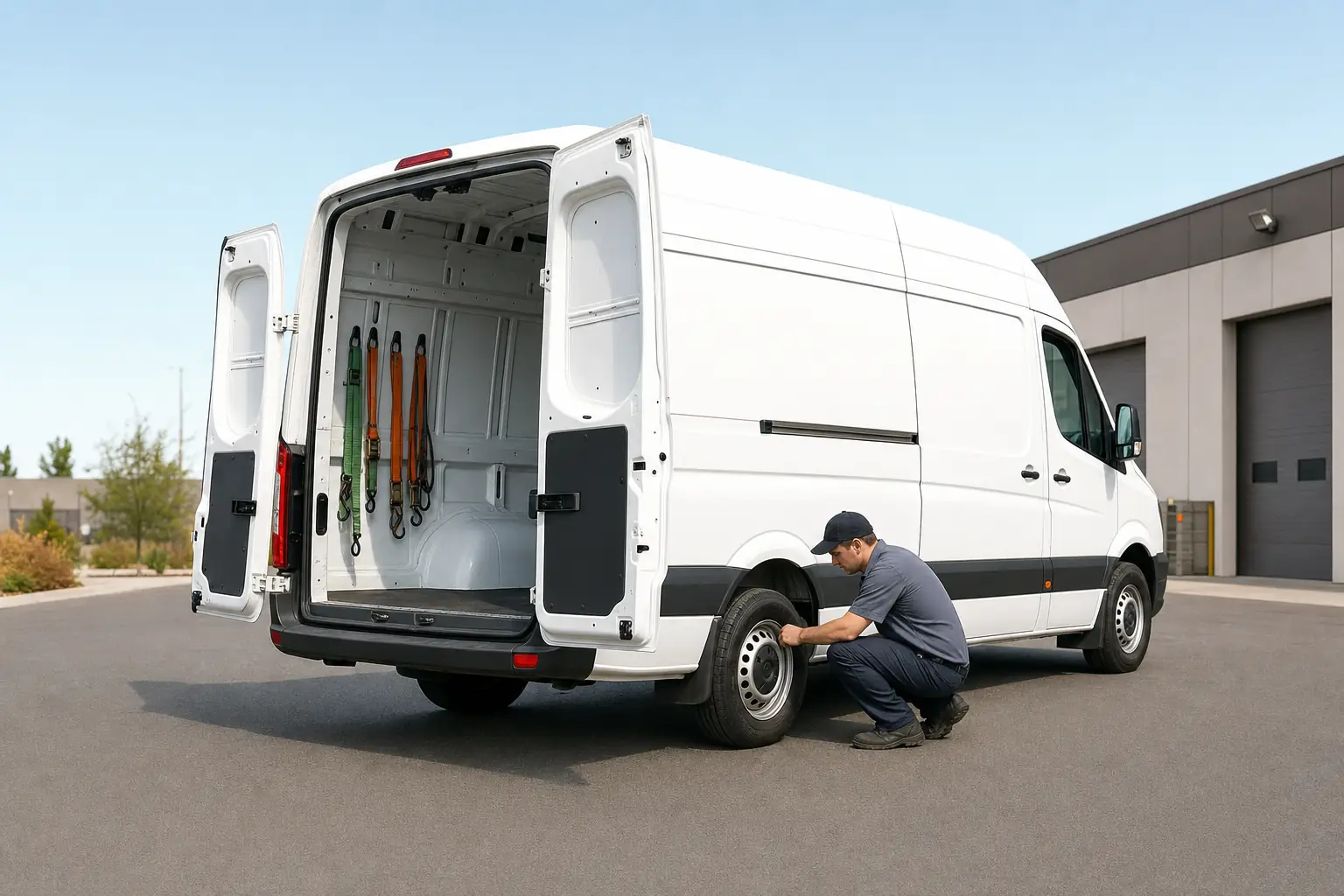
Cargo Van Owner-Operator Requirements: What You Need Before Your First Load
Short answer You need a full-size cargo van with a usable deck, a legal way to haul interstate (your own FMCSA authority or a lease onto a carrier), insurance that meets the federal floor and whoever tenders the load, and documents that survive a compliance check. No CDL. The federal liability minimum under 10,001 lbs […]

Why Your Best Week and Your Worst Week Pay the Same: What Cargo Van Owner-Operators Really Make
Your best week and your worst week often pay the same once fixed costs clear. Here is why owner-operator income swings, and how to smooth the curve with a floor you can plan around.
Before we start, how can we address you?