

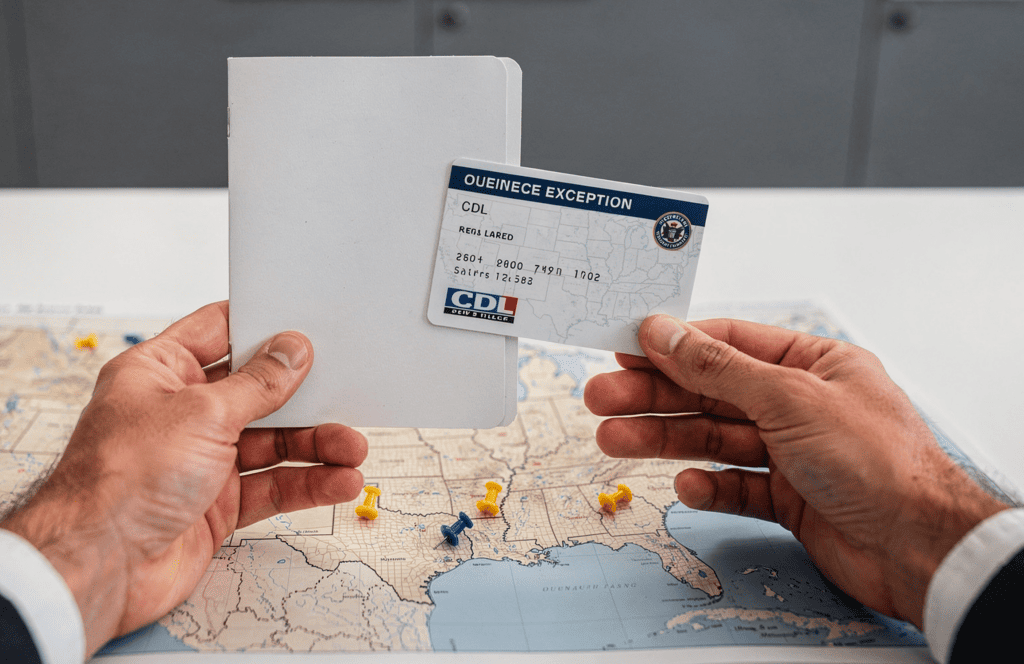
When the emergency stay on FMCSA’s non-domiciled CDL rule landed, thousands of drivers hoped the worst was over. A lot of people expected DMVs to immediately go back to processing renewals, upgrades, and new applications the way they did before the rule went into effect.
That hasn’t happened.
Even though the stay puts the new rule on pause, most states have not restarted the old system. Instead, DMVs across the country are taking a cautious approach – reviewing their procedures, auditing their past issuances, or simply refusing to act until they know where the court case is headed. That hesitation leaves non-domiciled CDL holders stuck waiting, with very few answers and even fewer options.
What the Stay Actually Did – and Didn’t Do
The court’s stay doesn’t replace FMCSA’s interim final rule; it only freezes it. FMCSA even confirmed that nothing prevents states from issuing non-domiciled CDLs under the previous regulations. So legally, the path is open.
But practically, very few states are stepping forward.
Many agencies worry that restarting now might force them to reverse course again later. Others are checking their own compliance before making any moves. And several states say switching back and forth between systems is too disruptive for DMV operations.
So while the stay removed a barrier, it didn’t solve the core issue: states don’t want to make changes until they know the final outcome.
Most States Have Not Restarted Non-Domiciled CDL Processing
The majority of states – including Colorado, Michigan, New York, Ohio, Pennsylvania, South Dakota, Texas, Virginia, and Washington – reported that they are not issuing or renewing non-domiciled CDLs at this time.
Their reasons vary:
– Ohio is completing a detailed compliance review before making any decisions.
– Virginia says that switching back temporarily would disrupt training programs and licensing workflows.
– Pennsylvania, under scrutiny after a high-profile case involving a non-domiciled CDL holder wanted overseas, is taking an especially cautious stance.
– South Dakota and Washington, previously flagged by FMCSA, don’t want to resume until they know their processes fully comply with federal requirements.
– Texas, one of the largest issuers, is conducting a broad internal review with no timeline for a restart.
Different explanations, same outcome: everything stays paused.
Arizona Is the Exception – But Only for a Limited Group
Arizona is one of the few states that has taken any action. It has begun issuing non-domiciled CDLs again, but only for a narrow list of applicants:
- U.S. citizens
- Permanent residents
- Individuals with H2A, H2B, or E2 visas
This mirrors the restricted categories from the interim final rule, not the broader eligibility that existed before it. For most non-domiciled drivers, Arizona’s move doesn’t change much.
California and Nevada Are Going Even Further
While most states are simply staying paused, two states have taken dramatic steps backward.
California’s internal audit identified 17,000 non-domiciled CDLs issued incorrectly. The state is now sending out notices and canceling those CDLs within 60 days. Drivers report being denied renewals, corrections, and even routine medical card updates – despite showing the court stay.
Nevada has eliminated its limited-term CDL program for good, canceling nearly 1,000 existing licenses. This isn’t a temporary measure tied to the lawsuit – it’s a permanent policy change.
For drivers in either state, renewals are not an option.
Is Anyone Renewing? A Few Offices Are
A small number of drivers have reported successful renewals or issuances in:
- New Jersey
- Delaware
- Florida
But these cases appear to depend on individual DMV locations, not statewide decisions. Drivers visiting other offices in the same state have been turned away. This inconsistency adds yet another layer of uncertainty.
Why Most States Aren’t Ready to Act
Across the country, state agencies keep returning to the same core concerns. Many remember being flagged by FMCSA in the past and don’t want to risk a repeat, especially when federal funding and compliance are at stake. Others point out that shifting back to the old system isn’t as easy as flipping a switch – it would require retraining staff, updating internal workflows, and reconfiguring DMV systems that were already adjusted once this year.
And hovering over all of it is the simple fact that the court stay is temporary. With no final ruling in place, states are hesitant to make a move they may need to reverse again.
Given all of these pressures, maintaining the pause feels, to many agencies, like the safest and most stable option for now.
What This Means for Drivers Right Now
For most non-domiciled CDL holders, the landscape remains unchanged:
- Most states are still not processing renewals
- California and Nevada are actively canceling CDLs
- It may be difficult to get appointments or updates
- CDL schools may hesitate to enroll non-domiciled applicants
- DMV experiences vary widely from office to office
It’s a difficult position to be in – especially when your CDL determines whether you can stay on the road.
No CDL Is Not the End of The Road
The court stay opened the possibility for renewals. However, most states have decided not to act on it.
With CDL renewals paused or uncertain in many states, some drivers are choosing not to sit idle while regulations catch up. Instead, they focus on work that doesn’t require a CDL renewal at all. For drivers in that position, exploring non-CDL owner-operator jobs built around vetted freight can be a practical way to stay operational while licensing issues are resolved.

Table of Content
- What the Stay Actually Did – and Didn’t Do
- Most States Have Not Restarted Non-Domiciled CDL Processing
- Arizona Is the Exception – But Only for a Limited Group
- California and Nevada Are Going Even Further
- Is Anyone Renewing? A Few Offices Are
- Why Most States Aren’t Ready to Act
- What This Means for Drivers Right Now
- No CDL Is Not the End of The Road