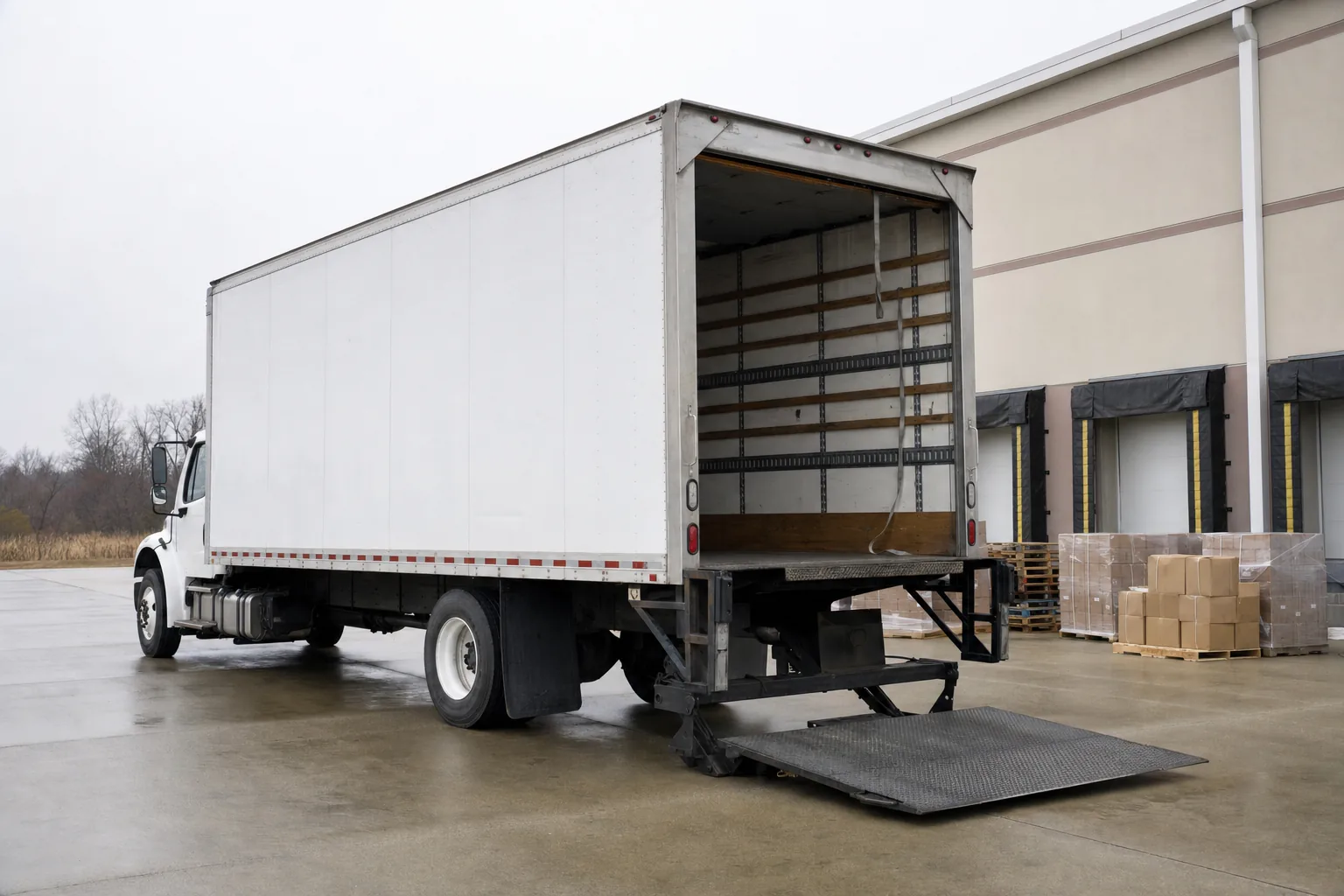


Straight box trucks are often positioned as the safe upgrade in expediting. Bigger than a sprinter, cheaper than a tractor, flexible enough to touch more freight without fully committing to CDL OTR life.
Operationally, that framing is incomplete.
Straight box trucks don’t fail because the market collapses or because operators “can’t hustle.” They fail because small inefficiencies compound faster than most operators expect – and straight trucks sit right at the edge where those inefficiencies become expensive.
This article looks at straight box truck expediting the way operators actually experience it: at the weekly settlement level, not the per-load level. What works. What quietly breaks. And why many trucks look busy on paper but underperform in reality.
Bigger Trucks Don’t Break the Rules – They Narrow Them
The first mistake most operators make is assuming that bigger equipment automatically widens opportunity. On the surface, that logic makes sense. A straight box truck does unlock freight that sprinters can’t touch – from heavier, palletized shipments to longer-haul lanes that pay more per trip.
In practice, though, straight trucks don’t expand freedom. They reduce the margin for error.
Yes, they open access to:
- higher advertised per-mile rates
- palletized and heavier freight
- longer-haul lanes unavailable to sprinters
But expediting is not rewarded by access alone. It’s rewarded by flow – the ability to move cleanly from one load to the next without losing time, position, or margin.
That’s where straight trucks demand more discipline:
- tighter lane planning, not reactive routing
- higher reload density to avoid forced repositioning
- fewer “bridge loads” taken on hope rather than structure
Sprinters survive on speed and flexibility. They can absorb imperfect decisions and recover faster when plans break.
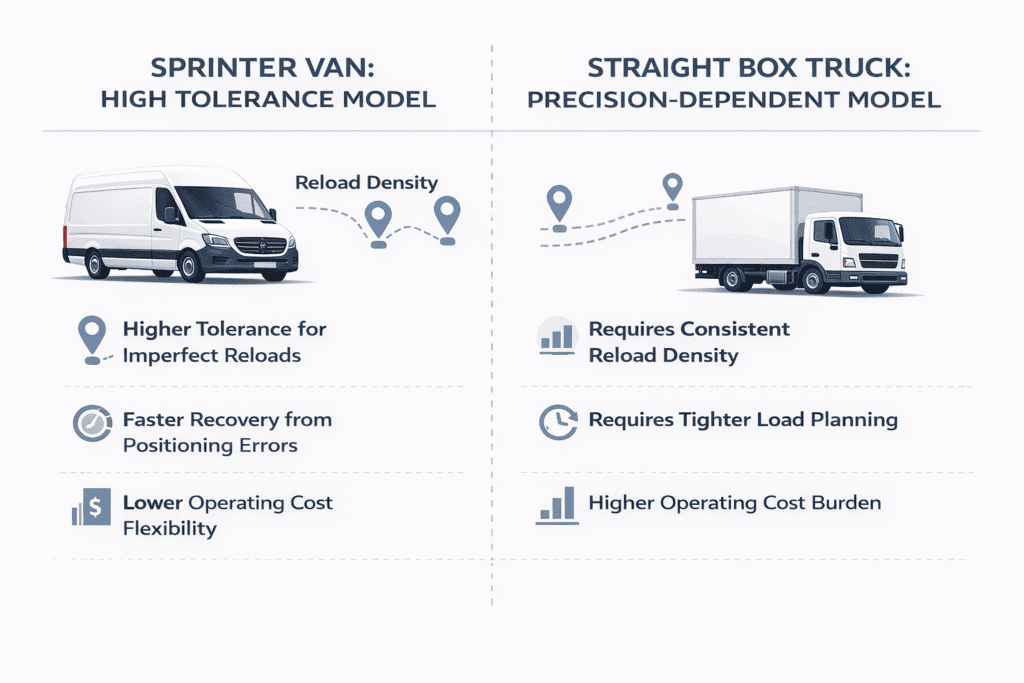
Straight trucks don’t have that cushion. They survive on precision. That difference defines almost everything that follows in straight box truck expediting.
Why Per-Load Rates Lie to Straight Truck Operators
This is where many operators push back – and understandably so. When you look at load boards or rate confirmations, straight trucks often appear to be winning. The numbers look solid, sometimes even compelling.
On the surface, straight trucks commonly show:
$2.20-$2.80 per mile
Higher gross per trip than cargo vans
Clean, “good-looking” single-load math
The issue isn’t that these numbers are wrong. It’s that weekly math behaves very differently than load math.
When dispatch and settlement data from expedited operations are reviewed at the week level, a consistent pattern shows up:
– Straight trucks average 1.6-2.1 loads per week on true expedite lanes
– Sprinters average 2.8-3.5 loads per week in comparable markets
– Idle time between loads is on avarage 30% longer for straight trucks
That gap is easy to ignore when you’re focused on the current rate confirmation. It becomes impossible to ignore when you’re reviewing the settlement.
A simplified example shows how quickly this plays out:
Straight box truck
2 loads × 1,000 miles × $2.40 = $4,800 gross
Sprinter van
3 loads × 800 miles × $1.90 = $4,560 gross
On paper, the difference looks minor – almost negligible. After fuel, insurance, maintenance, and deadhead are accounted for, it rarely is.
Cost Per Mile Compounds Faster in Straight Trucks
Straight truck CPM is not just “sprinter CPM plus a little.” It escalates structurally. Typical operating ranges (non-driver wage included):
| Cost Category | Sprinter | Straight Box Truck |
| Fuel | $0.38–$0.45 | $0.55–$0.68 |
| Insurance | $0.12–$0.18 | $0.22–$0.32 |
| Maintenance | $0.10–$0.15 | $0.18–$0.26 |
| Fixed Overhead | Lower | Higher |
Most straight trucks operate between $0.95 and $1.25 all-in CPM, depending on size, age, and financing.
This matters because straight trucks don’t lose money when rates drop. They lose money when inefficiency creeps in. Which brings us to the real killer.
Deadhead Destroys Straight Trucks Faster Than Rates Ever Will
Deadhead is not equally harmful across equipment types. What might be an inconvenience in a sprinter can become a structural problem in a straight box truck.
For straight trucks, empty miles compound faster because:
- Fuel burn per empty mile is higher
- Insurance and fixed costs don’t pause when the truck isn’t loaded
- Reload zones are fewer and farther apart, especially on true expedite lanes
Individually, none of these factors looks catastrophic. Together, they change the math.
Operational benchmarks make this clear. Straight truck operations that remain consistently profitable tend to keep deadhead below 18-20%. Once deadhead drifts higher, performance deteriorates quickly. Many struggling operators operate at 30-40% deadhead, often without realizing how far outside the safe zone they are.
At roughly 30% deadhead, even strong per-mile rates stop protecting weekly margins. The truck may stay busy, but the week doesn’t close well. That’s why operators often say:
“The loads pay well, but the settlements don’t.”
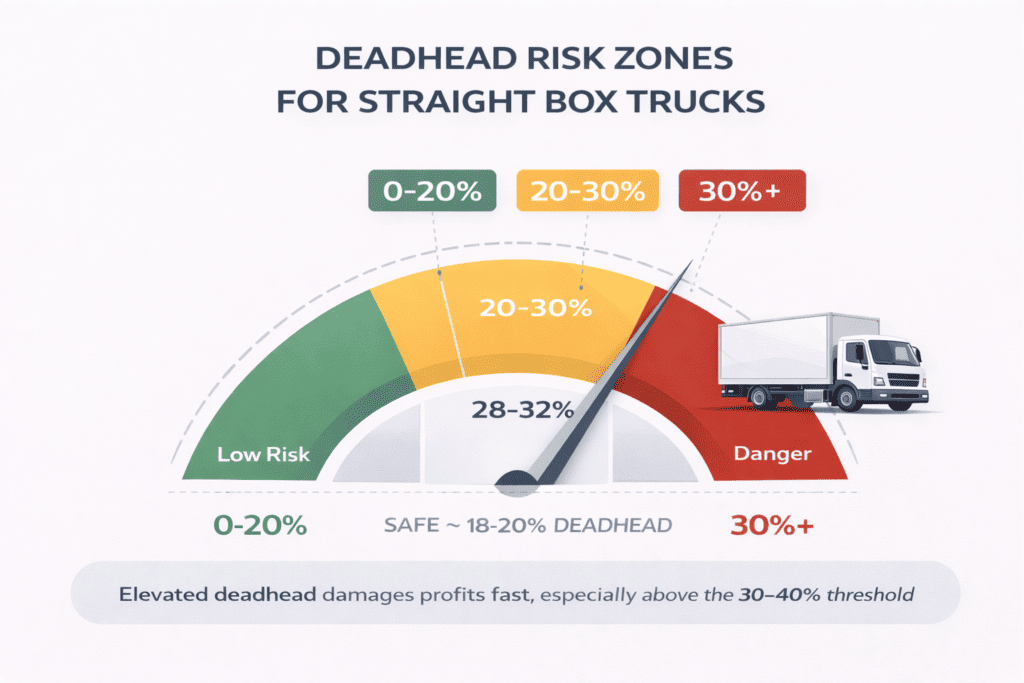
They’re not imagining it. At that level of empty miles, the math really does break – not on the rate confirmation, but at the end of the week.
The Hidden Cost Nobody Budgets For: Partial Utilization
Straight trucks frequently haul freight that uses only a portion of what the equipment is built for. In real operations, it’s common to see loads that occupy 40-60% of available cube or 50-70% of weight capacity.
The problem isn’t underutilization by itself. It’s that operating costs scale as if the truck were fully utilized, regardless of how much space or weight the load actually uses.
That gap creates a silent capacity tax:
– you pay for size you don’t monetize
– you lose dock flexibility compared to smaller equipment
– you absorb full operating costs without freight density
This issue becomes most visible in specific situations:
– 22-26 ft straight trucks, where excess cube is hardest to fill
– spot-market expedite lanes, where freight is irregular
– mixed-freight booking environments, where loads are not designed for straight trucks
Bigger equipment only pays when capacity is consistently sold, not when it’s occasionally justified by a single good load. That distinction is easy to miss on a rate confirmation – and expensive to ignore over a full week.
Straight Trucks Have a Lower Error Tolerance (This Is the Real Shift)
This is the part most operators underestimate – not because it’s complicated, but because it runs against instinct. Sprinters forgive mistakes. Straight trucks amplify them.
Decisions that are survivable in a sprinter become expensive in a straight box truck:
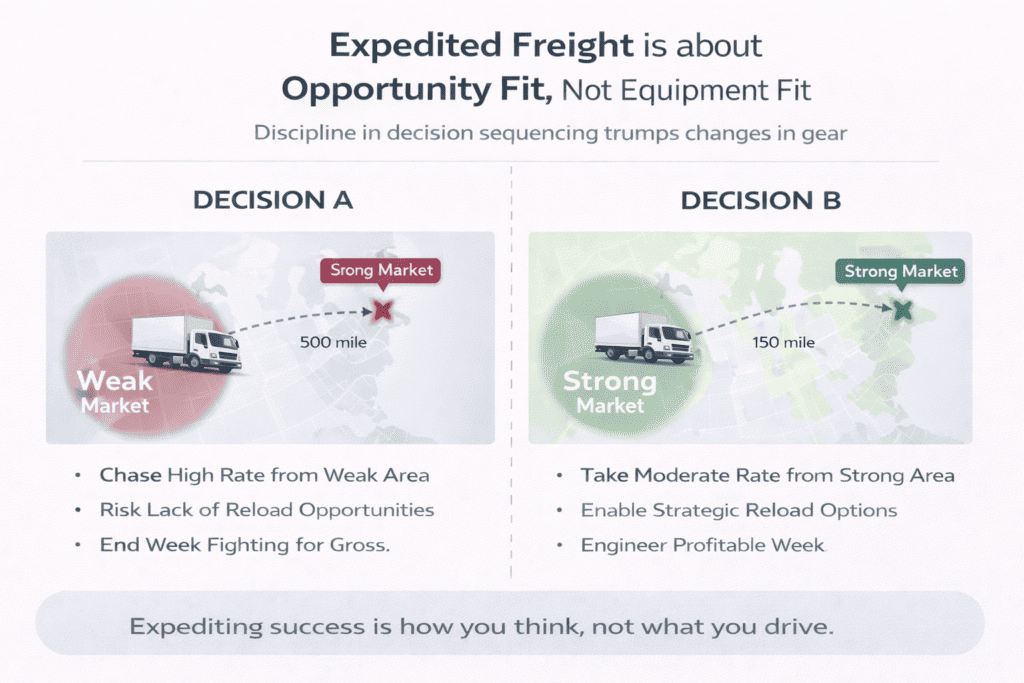
- taking a “bridge load” with no realistic reload plan
- chasing a hot rate into a weak freight zone
- staying active instead of staying positioned
This is where mindset quietly breaks operations. Straight truck expediting often requires planned inactivity – the discipline to wait when moving would create a worse next position.
Sitting in the right market can outperform moving in the wrong direction.
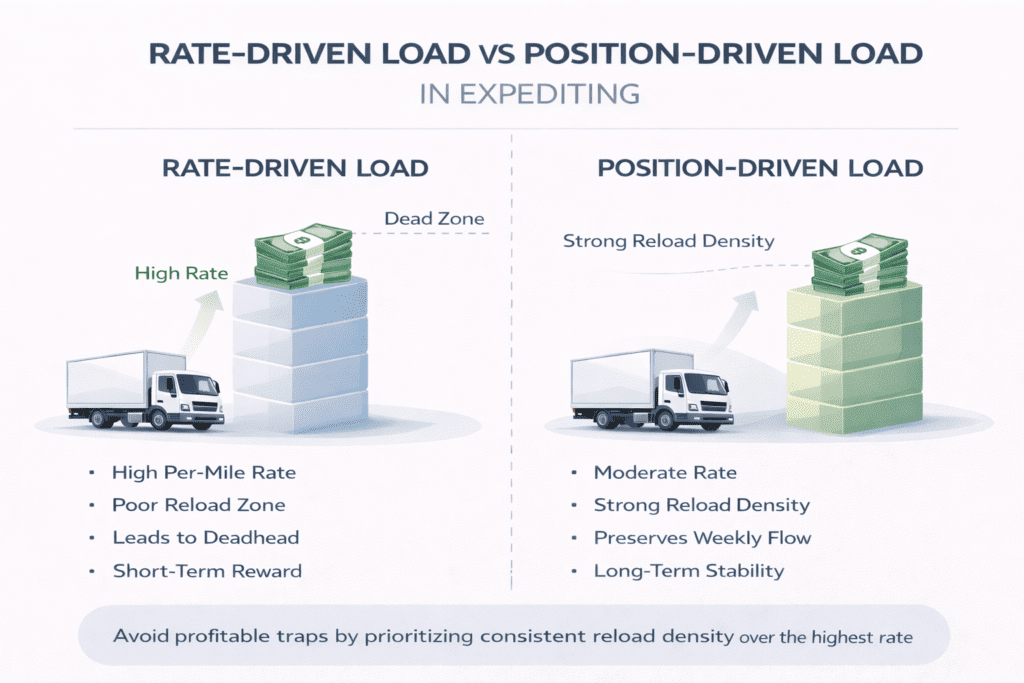
That feels wrong – until you see the settlement.
The Three Straight Box Truck Models That Actually Work
Not all straight truck operations struggle. The ones that work tend to follow specific structural models – not because the operators are more aggressive, but because the operation itself is designed to limit volatility.
1. Regional Repeat-Lane Operations
This is the most stable straight truck setup.
These operators focus on:
– manufacturing corridors
– medical and regulated freight zones
– familiar docks with predictable reload behavior
The tradeoff is intentional. They often earn:
– lower per-mile rates
– higher weekly consistency
Not all straight truck operations struggle. The ones that work tend to follow specific structural models, the same patterns you see across successful owner-operator jobs that prioritize equipment fit over raw volume.
In straight truck expediting, stability routinely outperforms upside. Predictable flow beats chasing the best-looking rate.
2. Dedicated-Lite OTR (Structured, Not Spot)
At a glance, this model resembles traditional OTR. Operationally, it behaves very differently. Instead of chasing one-off loads, these operators run with:
- repeat freight types
- a limited, familiar broker pool
- strict lane discipline
- planned repositioning rather than reactive deadhead
Operators using this structure consistently outperform pure spot-market straight trucks by 15-25% annually, even when headline rates look similar.
The advantage doesn’t come from hustle – it comes from structure.
3. Mid-Size Straight Trucks (16–20 ft)
This is the most misunderstood segment in straight truck expediting.
From an operational standpoint, mid-size straight trucks offer:
– lower insurance thresholds
– easier access to urban docks
– better alignment with expedited palletized freight
– reduced deadhead exposure
Many operators overshoot this size, assuming bigger equipment is safer. In practice, oversized straight trucks often increase risk by reducing flexibility and reload density.
Bigger only pays when it’s consistently filled. Otherwise, it becomes a liability.
Why Load Boards Undermine Straight Truck Performance
Load boards are designed to maximize broker optionality, not to optimize equipment performance. That distinction matters far more for straight trucks than most operators realize.
At a system level, load boards have structural blind spots:
– cube sensitivity is rarely disclosed, even though it directly affects straight truck utilization
– reload density is unknown, leaving operators to guess what happens after delivery
– lane outcomes are invisible, making it impossible to evaluate sustainability ahead of time
Straight trucks don’t need endless choices. They need freight certainty – confidence that a load fits the equipment and leads somewhere viable next.
When load boards become the primary strategy instead of a supplemental tool, predictable patterns emerge:
- margin volatility increases as repositioning grows
- dispatch quality degrades under reactive decision-making
- weekly performance becomes unstable, even during strong rate periods
Used correctly, load boards are a useful input. Used as the foundation of a straight truck operation, they quietly undermine it.
For straight trucks, load boards are a tool – not a business model.
Dispatch Alignment Determines Survival
Straight trucks expose dispatch quality faster than any other equipment. The margins are thinner, the repositioning costs are higher, and small mistakes compound quickly. What might go unnoticed in a sprinter shows up almost immediately in a straight truck’s weekly settlement.
Certain red flags tend to appear early:
- dispatchers incentivized by acceptance rate, not outcome
- no meaningful weekly planning horizon beyond the current load
- reactive load selection driven by urgency instead of positioning
When these patterns exist, the truck may stay busy – but performance degrades underneath the surface. High-performing straight truck operations align dispatch incentives very differently. The focus shifts to:
- weekly net performance, not single-load gross
- deadhead reduction across the entire week
- lane sustainability, not one-off opportunities
Dispatch should win only when the truck wins. If the incentives are misaligned – if dispatch performance improves while the truck’s results decline – failure isn’t dramatic, but it is inevitable. In straight truck expediting, that mismatch always shows up in the numbers.
Why Curated Freight Is Not Optional for Straight Trucks
Sprinters can survive chaos. Straight trucks cannot.
The difference isn’t skill or effort – it’s tolerance. Straight trucks amplify inefficiency, which is why freight quality matters more than freight volume at this equipment level.
Curated freight improves outcomes in three critical ways:
- equipment-to-load fit, reducing partial utilization
- reload probability, limiting forced repositioning
- weekly margin stability, even when individual rates fluctuate
This is why experienced straight truck operators tend to move away from pure spot markets over time – even during strong rate cycles. The issue isn’t access. It’s sustainability.
The goal isn’t more freight.
It’s fewer, structurally compatible loads that allow the truck to perform as designed.
That shift – from availability to alignment – is where straight truck operations either stabilize or quietly fail.
The Question That Determines Straight Truck Success
The wrong question most operators ask is: “Are there box truck loads available?”
There always are. The right question is more uncomfortable: “Is this freight designed for my equipment – consistently?”
Straight box truck expediting only works when a few non-negotiable conditions are met:
- capacity is monetized, not just occasionally justified
- deadhead is controlled across the entire week
- lanes are intentional, not reactive
- dispatch decisions are disciplined, not urgency-driven
- weekly math overrides per-load emotion
When those conditions exist, straight trucks are powerful income tools. They deliver stability, predictability, and leverage that smaller equipment can’t always achieve.
When they don’t, failure doesn’t come as a blow-up. Operators don’t crash – they stall. Weeks feel busy but unrewarding. Margins thin quietly. Fatigue replaces confidence. Eventually, they exit without a clear moment of collapse.
Straight box truck expediting doesn’t punish effort. It punishes misalignment.
And the operators who last are the ones who learn to ask the harder question early – before the settlement forces the answer.
Final Insight
Straight box trucks don’t fail because the market is bad. They fail when precision is replaced by motion. The operators who survive don’t chase freight.
They engineer weeks – planning lanes, controlling deadhead, and protecting flow even when tempting rates flash on a screen.
In straight truck expediting, that difference isn’t philosophical. It’s measurable. And over time, it’s everything.

Table of Content
- Bigger Trucks Don’t Break the Rules – They Narrow Them
- Why Per-Load Rates Lie to Straight Truck Operators
- Cost Per Mile Compounds Faster in Straight Trucks
- Deadhead Destroys Straight Trucks Faster Than Rates Ever Will
- The Hidden Cost Nobody Budgets For: Partial Utilization
- Straight Trucks Have a Lower Error Tolerance (This Is the Real Shift)
- The Three Straight Box Truck Models That Actually Work
- Why Load Boards Undermine Straight Truck Performance
- Dispatch Alignment Determines Survival
- Why Curated Freight Is Not Optional for Straight Trucks
- The Question That Determines Straight Truck Success
- Final Insight